
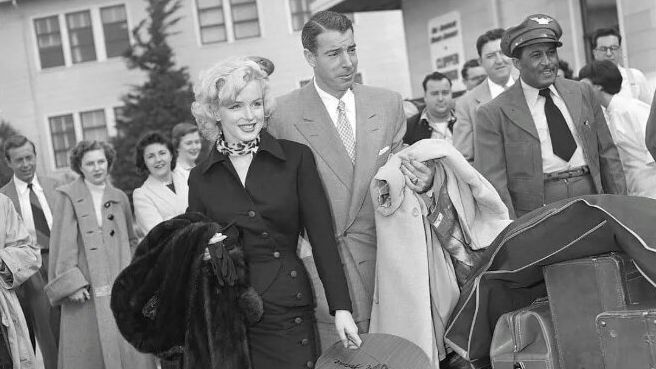
Marilyn Monroe is the paradigm of 20th century Hollywood movie-stardom. She’s the ultimate bombshell. The embodiment of the sex symbol. The blueprint
Marilyn Monroe is the paradigm of 20th century Hollywood movie-stardom. She’s the ultimate bombshell. The embodiment of the sex symbol. The blueprint for our contemporary understanding of fame and its perils, and one of the most evident and undeniable archetypes of beauty—just ask Kim Kardashian.
Today, June 1, Marilyn Monroe would have turned 100. She died in 1962 just two months after turning 36, and the public fixation with her pin-up persona and the inner workings of her complicated interpersonal life has since grown exponentially, and at times turned macabre. It should come as no shock that Marilyn Monroe, who was born Norma Jeane Mortenson and was famously not a natural blonde, is remembered not only as the identity she created for herself and for the public, but for her image and the artifacts she’s left behind—a woman disembodied, a ghost kept alive by both myth and grisly obsession.
To mark the occasion, Heritage Auctions is auctioning 101 lots online containing personal items that belonged to Norman and Hedda Rosten, two close friends of Monroe for the last seven years of her life, bequeathed to them over the course of their friendship.

The lots include a wide range of ephemera and other more prominent artifacts that include a 1956 Western Union telegram from Monroe to Norman, an American Airlines post card the actress sent in 1955 to her then-husband Arthur Miller that pictures a plane on one side and reads “Guess where I am? Love, Marilyn,” and an intimate eight-page letter from Miller to Monroe estimated to have been written around 1960 in which he lays bare the tormentousness of their relationship at its breaking point.
“I know that had you never met me you would still suffer depressions [sic]. But there is something I do which is actively destroying you,” Miller writes in one passage. In another, he admits to his emotional distance and apologizes throughout for having infamously written that he felt that Monroe was at times a burden to him in his personal diary, which she later discovered. He speaks of putting aside his work in order to aid her straighten her affairs and working conditions (“There is no one other person in the world whose humiliation I would have gone to such lengths to prevent…”). Miller is torn between spending time on his own development, it seems, and taking care of Monroe. “I need you healthy, Marilyn, and I need the feeling of your belief in me and my love,” he writes, “Without the last I am a goner…”
The starting bid for the memorabilia of such emotional turmoil? $50,000. (A love letter from Joe DiMaggio to Monroe sold for close to $80,000 at auction in 2014.)


COMMENTS