
movie review VOICEMAILS FOR ISABELLE
movie review
VOICEMAILS FOR ISABELLE
Running time: 118 minutes. Rated TV-14 (sexual content, alcohol operate, suggestive jokes, constant foul language and some comedic violence). On Netflix.
Netflix is giving me rom-com whiplash.
On June 5, Jennifer Lopez starred in an execrable one for the streamer called “Office Romance” — I wonder what that’s about! — which embarrassingly failed to bring Jenny from the Aughts’ Hollywood heyday back to life.
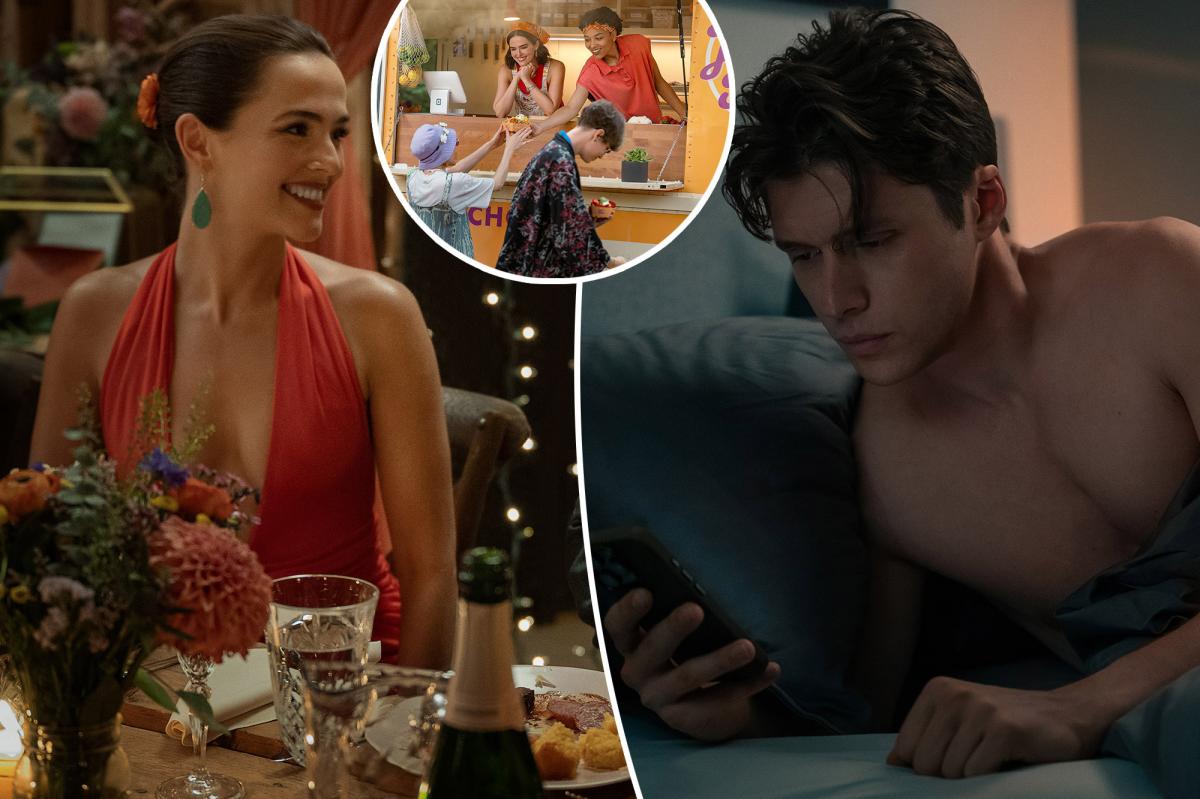
And then just two weeks later arrived the infinitely better “Voicemails for Isabelle,” a sweet and comical if stalkerish movie that nostalgically harks back to the 2010s and those love-centric films that often came with a heaping scoop of heartache.
Watching Netflix’s tries has been like plucking flower petals: I love them, I love them not, I love them, I love them not.
This one, I like.
Given the rawly emotional tone of “Isabelle,” you’d think it was based on a popular young-adult novel. Yet it’s neither about teens nor adapted from a book. Writer-director Leah McKendrick’s characters are in their twenties and the plot is original. Of course, her movie is also keenly aware that no romance film is ever fully original.
“You’re so dramatic,” says Isabelle (Ciara Bravo), who suffers from cystic fibrosis, to her worried sister Jill when her health deteriorates. “This is not ‘A Walk to Remember’.”
Responds Jill (Zoey Deutch): “But is it ‘A Fault in Our Stars’?”
The pair are inseparable best friends and we watch them cutely grow up together from 2010 to 2026 — jamming out to “Dancing On My Own” by Robyn, showing playground bullies who’s boss and starting accidental kitchen fires.
As Isabelle’s worsening condition keeps her at home, Jill is able to spread her wings, go to prom and meet boys. Still, the sisters make a habit of ringing each other constantly, so Isabelle can live vicariously through Jill’s phone.
When she suddenly dies, a despondent Jill keeps leaving diary-like, frequently hilarious phone messages for her — unable to cope with the loss.
Only her overdue sister’s number has, unbeknownst to Jill, been reassigned — to a stud!
That’s Wes (Nick Robinson), an Austin, Texas, businessman who raptly listens to her voicemails like they’re episodes of his favorite soap opera. He becomes so enamored with Jill that he takes a work trip to San Francisco, where she works in the pastry shop of a jackass “Top Chef” contestant (Nick Offerman), and seeks her out. He uses his knowledge of Jill to flirt. That scheme works and they date.
The drama is that smitten Wes, while well intended, neglects to mention to his modern girl that he’s been devouring her personal recordings for weeks as if they were a podcast.
That’s, erm, a little weird. And “Voicemails for Isabelle” shares a bit in common with the Police song “Every Breath You Take.” It sounds like an easy-listening hit until you pay close attention to the serial-killer lyrics.
You’ll get over that. Because McKendrick is very careful with the tone of her movie, and impressively circumnavigates creep territory. As the complications and Wes’ guilt pile up, the film successfully argues that he fell for the most vulnerable and candid version of Jill. So what if he did it through textbook invasion of privacy?
This shrewd director knows two truths: Viewers will always give heated people the benefit of the doubt, and the core audience for this flick dreams that some guy who owns a house with a pool will become so obsessively infatuated with them, too.
McKendrick is also lucky to have Deutch, an energetic, idiosyncratic and underrated actress who everybody is finally starting to catch onto. She makes the overly campy bakery scenes, in which Offerman goes full Gordon Ramsay and forces his employees to compete with each other, funnier than they deserve to be.
And Deutch’s natural pep, and believable anguish, pairs well with Robinson’s relaxed coolness, almost like a touring comedy act. They have a sparky chemistry, which is another reason we choose to forgive Wes’ lies that in real life would make a juicy episode of “Maury.”
The ending scene, which I’m sure many of you will find predictable but I did not, is an immensely satisfying button on a movie made for a night of ugly crying and binge-eating baked goods.


COMMENTS