
A great adaptation doesn't always have to be a faithful adaptation. While audiences often judge movies based on how closely they follow their source
A great adaptation doesn’t always have to be a faithful adaptation. While audiences often judge movies based on how closely they follow their source material, films and novels are fundamentally different mediums. Some filmmakers choose to preserve every major plot point, while others take dramatic liberties, often for the better.
While this understandably frustrates many readers, it’s also frequently the correct move, sometimes even ensuring that the film is superior to the book it was based on. With that in mind, this list looks at some movies that were not very faithful to their original novels, yet still work well as films.
‘Harry Potter and the Order of the Phoenix’ (2007)
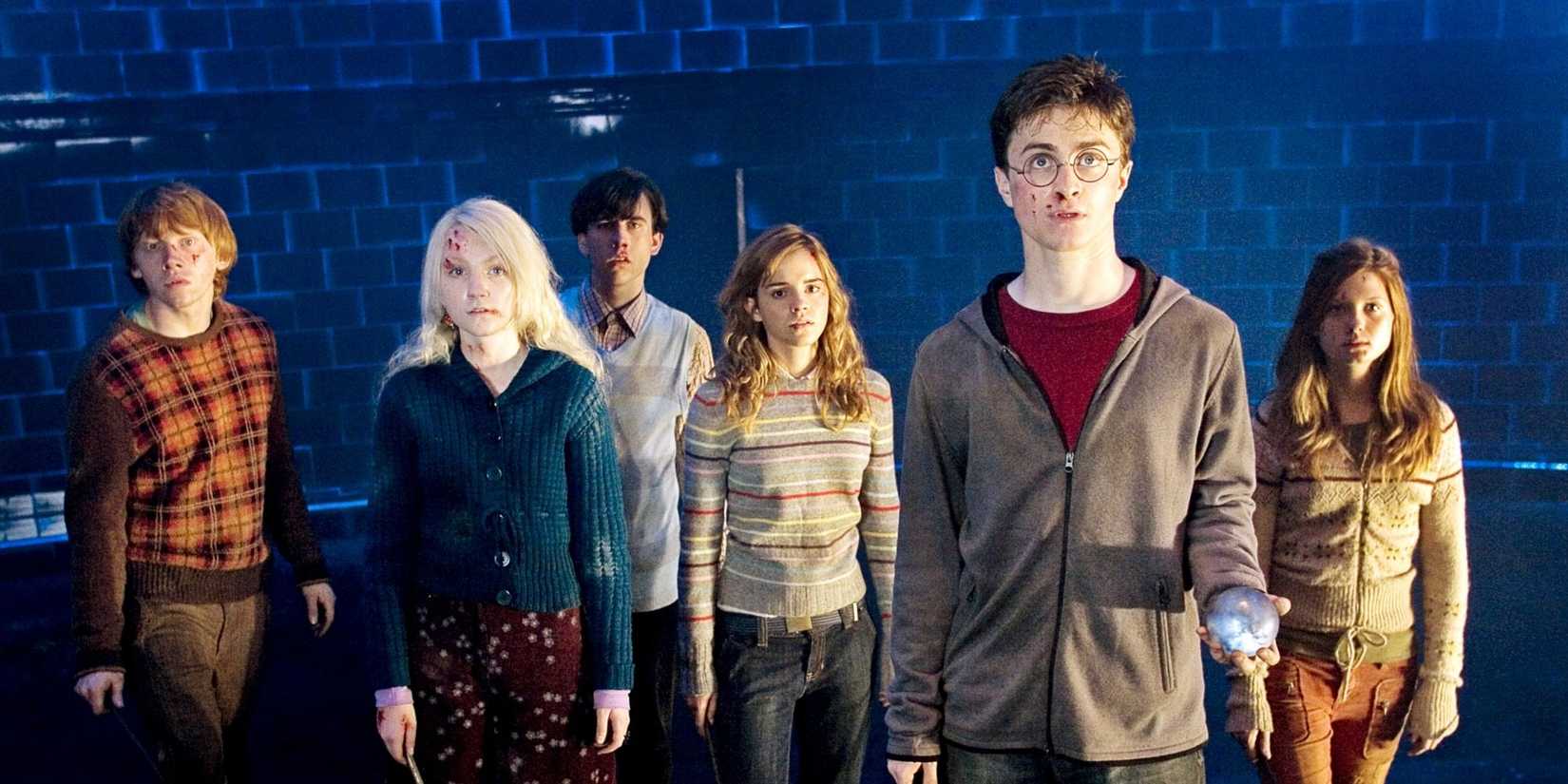
“You’re the weak one. And you’ll never know love or friendship. And I feel sorry for you.” Harry Potter and the Order of the Phoenix follows Harry’s (Daniel Radcliffe) fifth year at Hogwarts as he struggles with the return of Lord Voldemort (Ralph Fiennes), increasing hostility from the Ministry of Magic, and the arrival of the tyrannical Dolores Umbridge (Imelda Staunton). It’s the longest book in the series, clocking in at a whopping 766 pages, and yet it’s the shortest movie, meaning that countless scenes and subplots were cut.
For instance, the film leaves out the visit to St. Mungo’s hospital, Neville’s expanded role, Grawp’s larger storyline, the Occlumency lessons, Harry’s relationship with Cho, the full extent of the Department of the Mysteries, and even a proper explanation of the prophecy itself. Nevertheless, the movie is still entertaining and briskly paced, culminating in one of the franchise’s most intense finales.
‘Who Framed Roger Rabbit’ (1988)
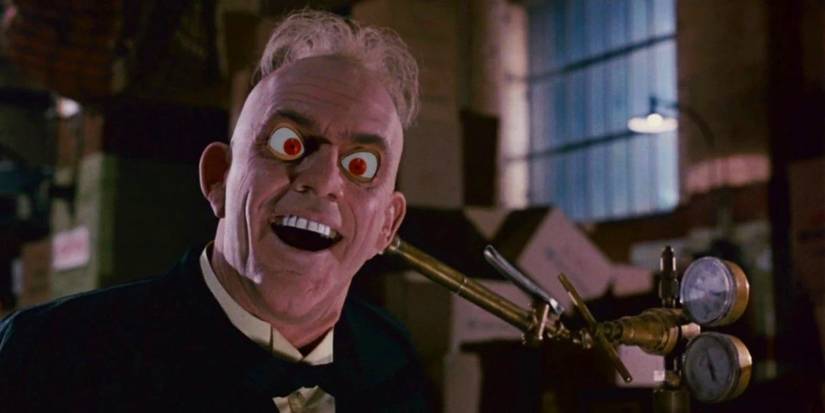
“I’m not bad. I’m just drawn that way.” This ’80s classic follows private detective Eddie Valiant (Bob Hoskins) as he investigates a murder involving the notable cartoon rabbit Roger Rabbit (voiced by Charles Fleischer). In the process, Eddie discovers a conspiracy that threatens both the human and cartoon worlds. At first glance, Who Framed Roger Rabbit appears to be a straightforward adaptation of Gary K. Wolf‘s novel Who Censored Roger Rabbit? In reality, the film changes so much that it is essentially a completely different story.
The novel features comic-strip characters rather than animated cartoon stars, employs an entirely different mystery, focuses more on censorship, and shares little more than a handful of character names with the finished movie. All of Robert Zemeckis’ changes were for the better. The groundbreaking combination of live-action and animation still looks astonishing decades later, while the noir-inspired mystery provides a surprisingly sophisticated narrative foundation.
‘World War Z’ (2013)
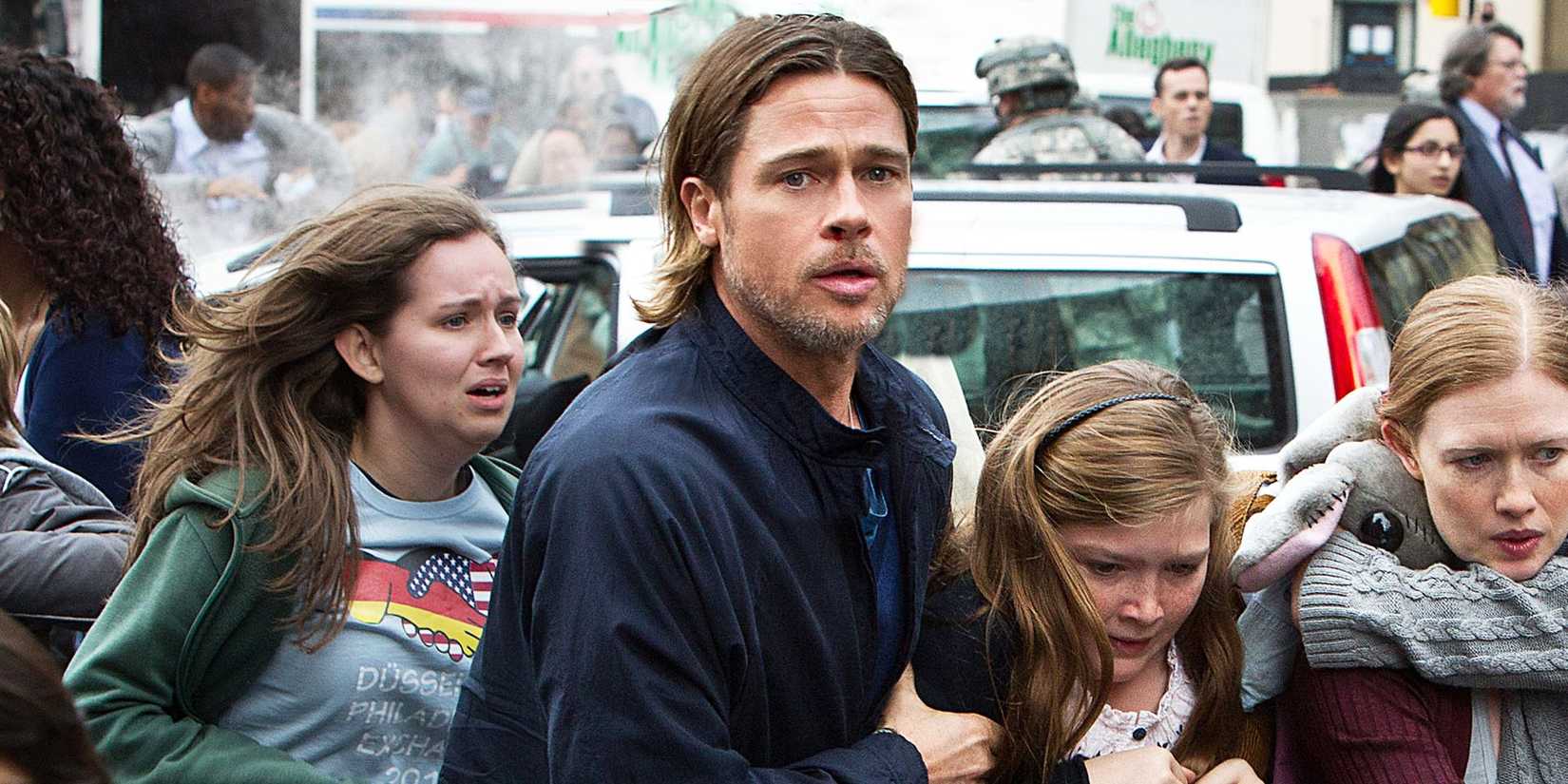
“Movement is life.” Creating an entertaining novel spin on zombie tropes is tough, but director Marc Forster pulled it off with World War Z. Nevertheless, it’s striking how much the film diverges from the source material. Max Brooks‘ novel is structured as an oral history of a global zombie war, consisting of interviews with survivors from around the world. It focuses on politics, military strategy, and the social consequences of catastrophe rather than a single protagonist. The film abandons that structure entirely.
Instead, it follows former United Nations investigator Gerry Lane (Brad Pitt) as he travels across the globe searching for a way to stop a rapidly spreading zombie pandemic that threatens humanity’s survival. As an adaptation, the movie discards much of what made the book distinctive. Many readers were understandably disappointed that the film retained little beyond the title and basic zombie premise.
‘Howl’s Moving Castle’ (2004)
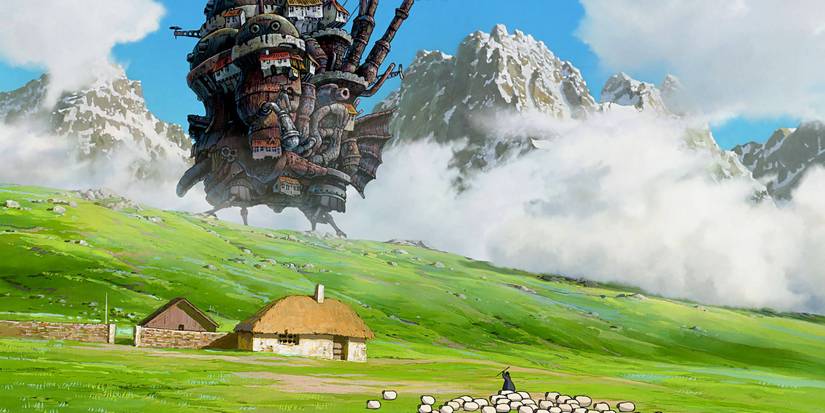
“A heart’s a heavy burden.” This Miyazaki gem tells the story of Sophie (voiced by Chieko Baisho), a adolescent woman who is transformed into an elderly woman by a witch’s curse. Seeking a way to break the spell, she encounters the mysterious wizard Howl (Takuya Kimura) and becomes involved in a magical conflict that threatens an entire kingdom. The movie is a classic in its own way, very much fitting within its creator’s signature aesthetic, though it does change a lot from Diana Wynne Jones‘ novel.
Many plot details are altered, several character arcs are simplified, and Miyazaki introduces entirely novel political and anti-war elements that are largely absent from the book. Overall, where the novel focuses more on clever plotting, colorful magic, and the chemistry between Sophie and Howl, the film is more lyrical, using the fantasy setting to explore war, pacifism, love, and personal transformation.
‘Children of Men’ (2006)
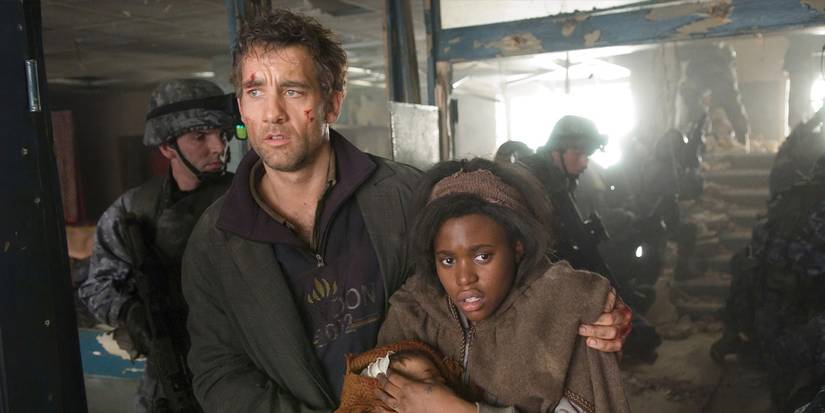
“As the sound of the playgrounds faded, the despair set in.” Set in a future where humanity has become infertile and no children have been born for nearly two decades, Children of Men follows disillusioned bureaucrat Theo Faron (Clive Owen) as he becomes responsible for protecting a adolescent woman (Clare-Hope Ashitey) who may hold the key to humanity’s survival. The film is based on P.D. James‘ novel, but director Alfonso Cuarón makes sweeping changes to the story.
Indeed, while the two versions begin with the same premise, they quickly take it in different directions. Where the novel revolves around political intrigue and philosophical debates about power, the movie leans into its identity as a survival thriller focused on escorting one pregnant woman to safety through a collapsing society. In this regard, most of the film’s major events were created specifically for the adaptation.
‘Breakfast at Tiffany’s’ (1961)
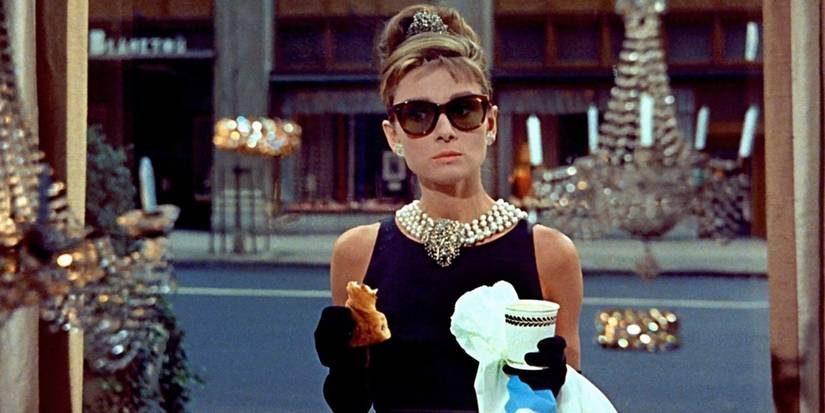
“Anybody who ever gave you confidence, you owe them a lot.” Here’s a beloved movie adaptation that the original author famously disliked. In Breakfast at Tiffany’s, struggling writer Paul Varjak (George Peppard) becomes fascinated by his eccentric neighbor, Holly Golightly (a peak-stardom Audrey Hepburn), a charming socialite drifting through New York City in search of wealth, stability, and belonging. Their friendship deepens, and both characters are forced to confront uncomfortable truths about themselves and their futures.
The movie was adapted from a novella by Truman Capote, author of In Cold Blood. His version is darker, more ambiguous, and considerably less romantic. Holly herself is a more complicated and morally ambiguous figure, something that the producers clearly felt wouldn’t go down well with mainstream movie audiences. The original ending, in particular, is bittersweet and unresolved, while in the film it’s a elated one.
‘The Silence of the Lambs’ (1991)

“A census taker once tried to test me. I ate his liver with some fava beans and a nice Chianti.” Jodie Foster turns in one of her strongest performances here as FBI trainee Clarice Starling, who seeks the facilitate of imprisoned serial killer Hannibal Lecter (a brilliant Anthony Hopkins) in order to catch another murderer known as Buffalo Bill (Ted Levine). Jonathan Demme crafts this setup into one of the smartest and most stylish horror-thrillers of all time.
Compared to many entries on this list, the Silence of the Lambs movie is relatively faithful. However, it still simplifies and streamlines aspects of the book, reducing some of its procedural detail and internal character development. The novel delves deeper into the characters’ backstories and gives us a front-row seat to their thoughts, something a movie obviously can’t really do. Fortunately, the performances are robust enough to compensate.
‘Blade Runner’ (1982)

“It’s too bad she won’t live. But then again, who does?” Blade Runner features Harrison Ford as Rick Deckard, a former police officer tasked with hunting down escaped replicants, bioengineered beings nearly indistinguishable from humans. But as Deckard tracks his targets through a rain-soaked futuristic Los Angeles, he begins questioning the nature of humanity and his own place within the world. This tale was based on Philip K. Dick‘s groundbreaking novel Do Androids Dream of Electric Sheep?, though Ridley Scott very much puts his own stamp on it.
The world-building is very different in the movie, and numerous plot points are jettisoned. Similarly, the novel’s emphasis on empathy and religion is largely replaced by a more existential exploration of memory, mortality, and identity. These tweaks are largely improvements. Not to mention, the inventive, immersive visual style of the movie is something that the book lacks completely.
‘The Bourne Identity’ (2002)

“Look at what they make you give.” The Bourne Identity begins when an unconscious man (Matt Damon) is rescued from the Mediterranean Sea with no memory of who he is. He slowly uncovers clues about his identity, gradually learning that he possesses extraordinary combat skills and is being hunted by powerful forces determined to eliminate him. This smash-hit, hugely influential action banger was based on Robert Ludlum‘s bestselling novel from 1980, though it makes many, many changes.
While the movie borrows the central setup, several character names, and the concept of Jason Bourne, it reinvents the conspiracy, the villains, Bourne’s past, and much of the plot. The Cold War context is removed, too, and the movie very much makes Bourne an assassin, while the novel is more ambiguous. In miniature, Ludlum’s novel is a dense, globe-spanning espionage thriller about false identities, whereas Doug Liman’s movie is a tense, character-driven action thriller.
‘The Shining’ (1980)

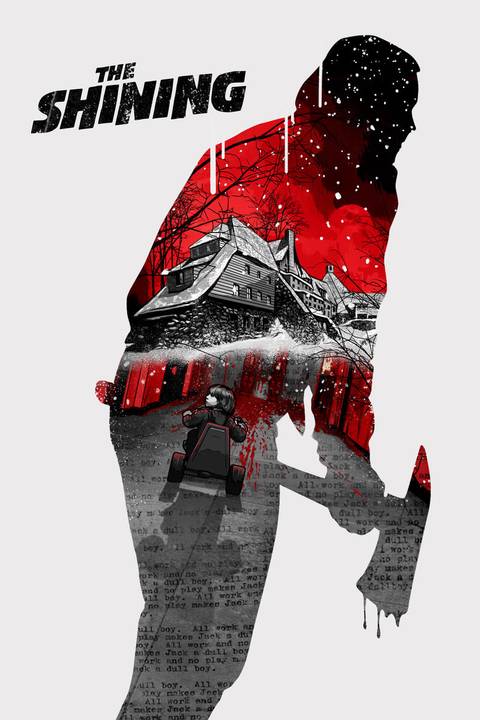
“Here’s Johnny!” Here’s another that irked the author of the original book. Based on Stephen King‘s novel, Stanley Kubrick‘s horror classic centers on Jack Torrance (Jack Nicholson), an aspiring writer who accepts a job as winter caretaker of the isolated Overlook Hotel, where he grows increasingly unstable. However, the book and movie differ dramatically in characterization, themes, supernatural elements, and even the ending.
Likewise, in the novel, Jack starts out as a fundamentally decent man who is slowly corrupted by the hotel. In the movie, Jack appears unstable almost from the beginning. On top of that, the Overlook Hotel is much more explicitly supernatural in the book. The film, by contrast, is more open-ended, allowing for multiple interpretations, including purely psychological ones. Nevertheless, the movie is still a masterpiece in its own right, even if it’s not great as a faithful adaptation.


COMMENTS