
Animation is unusually well suited to the miniseries. A creator gets enough time to build a world, deepen a cast, and let an idea breathe without stre
Animation is unusually well suited to the miniseries. A creator gets enough time to build a world, deepen a cast, and let an idea breathe without stretching the story until its original purpose disappears. A movie makes that a bit tough. But when the format works, every episode feels necessary and the narrow runtime becomes part of the design rather than a restriction.
These six miniseries exploit that freedom in wildly different ways. Comparing them to legacy animated films like Toy Story or Up would be unfair because these ones aren’t necessarily giving a message as much as they’re building a world through animation and liberty of having multiple episodes to do so. Let’s get started.
6
‘The Liberator’ (2020)
Image via Netflix
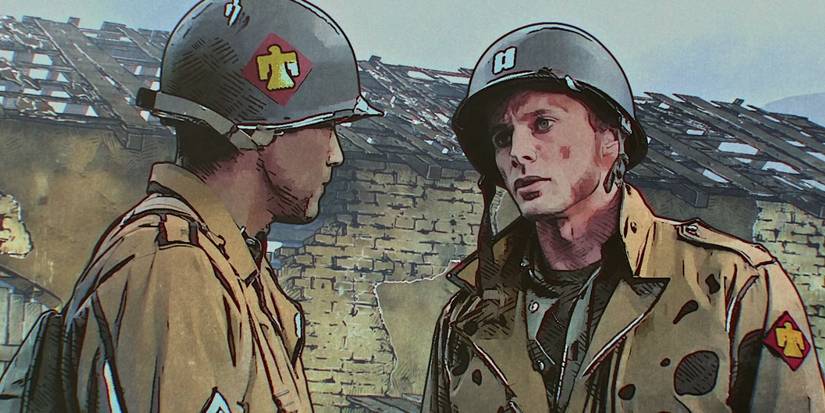
The Liberator dramatizes the World War II campaign of U.S. Army officer Felix Sparks (Bradley James) and the men who fought alongside him through some of the European theater’s most punishing battles. The four-part Netflix miniseries follows their movement from Italy toward Germany, eventually reaching the liberation of the Dachau concentration camp. Its historical foundation comes from Alex Kershaw’s nonfiction book about Sparks and the 157th Infantry Regiment, giving the series a much larger canvas than its compact running time initially suggests.
What immediately separates it from conventional war television is the visual treatment. The Liberator used Trioscope Enhanced Hybrid Animation, combining filmed performances with CGI and animated environments to create images that sit somewhere between live action, rotoscoping, and painted war illustration. The technique can take a little time to adjust to, yet it gives battlefields a haunted quality that fits material built around exhaustion and accumulated loss. Four episodes also keep the story disciplined. There is no room to romanticize every mile of the campaign. For viewers who want animation aimed squarely at adult historical drama, this remains a fascinating place to start.
5
‘Carol & the End of the World’ (2023)
Key art for Carol & the End of the WorldImage via Netflix
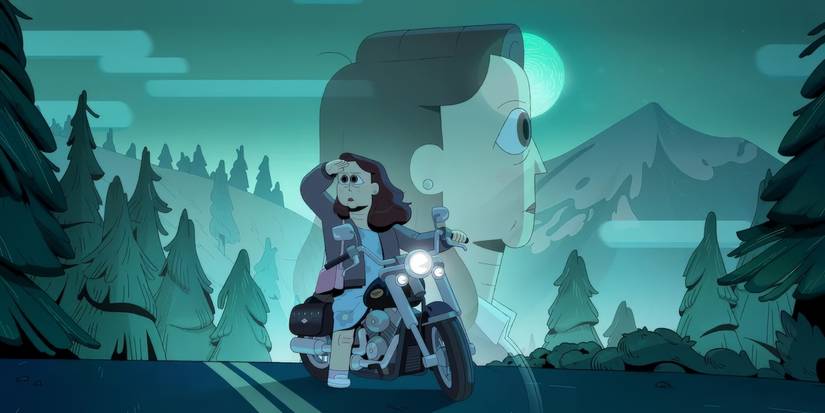
Most apocalypse stories ask how humanity survives. Carol & the End of the World begins after survival has effectively stopped being the question. A mysterious planet is heading toward Earth, extinction is approaching, and much of humanity responds by abandoning ordinary responsibilities in favor of travel, pleasure, experimentation, and whatever unfinished dream suddenly feels urgent. Carol Kohl (Martha Kelly) reacts differently. She is a serene middle-aged woman who still finds comfort in routine and has no idea why everybody else seems so naturally equipped for the end of existence. Netflix released the ten-episode narrow series in December 2023.
That premise gives creator Dan Guterman room to explore a wonderfully unfashionable question. What if a meaningful life can include repetition, spreadsheets, coworkers, familiar errands, and people whose importance only becomes obvious after enough ordinary days together? Carol eventually finds an office filled with others who are also drawn toward structure, and the workplace gradually becomes less about employment than companionship. The muted animation fits her personality beautifully because the series has little interest in turning extinction into constant spectacle. It is witty, deeply strange, and surprisingly comforting. Anyone who has ever felt guilty for wanting a serene life while everyone else appears to be chasing something bigger may find Carol unusually uncomplicated to understand.
4
‘Maya and the Three’ (2021)
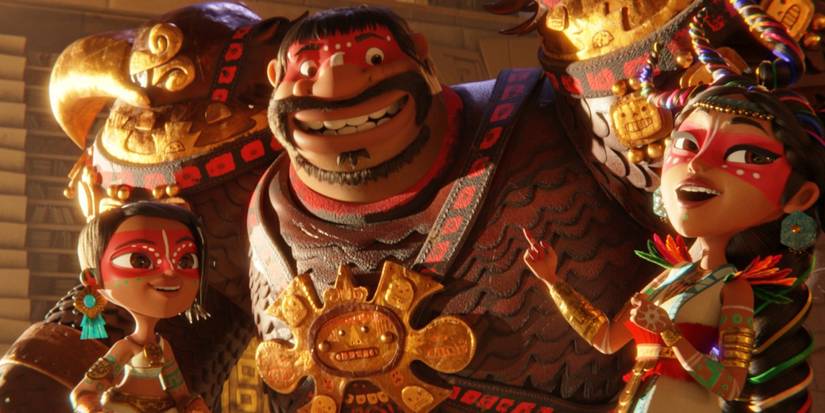
Image via Netflix
Maya and the Three is exactly the kind of animated fantasy that deserves a enormous screen and somebody nearby who appreciates ridiculously frosty gods. It is a nine-chapter fantasy adventure about Maya (Zoe Saldaña), a warrior princess whose fifteenth birthday celebration is interrupted by a terrifying demand from the gods. Her kingdom faces destruction unless she is surrendered, so Maya sets out to fulfill an historic prophecy by finding three legendary warriors who can support her challenge Lord Mictlan (Alfred Molina) and the forces gathering against her people. Creator Jorge R. Gutiérrez built that quest through a fantasy world inspired by Mesoamerican and other Latin American cultures, filling the journey with gods, monsters, kingdoms, family history, and enormous action.
The sheer visual confidence makes the miniseries special. Characters have exaggerated silhouettes, temples rise with impossible scale, gods can be pretty and grotesque in the same frame, and battle scenes feel designed around animation rather than translated from live-action staging. Maya also gets to be brave without becoming emotionally invulnerable. Her pride creates problems, her family relationships shape the quest, and the companions she gathers gradually turn the prophecy into something more personal than assembling a fantasy team. Nine episodes give the mythology enough room to feel substantial while preserving the momentum of one giant adventure.
Collider Exclusive · Universe Personality Quiz
Which Iconic Universe Do You Belong in the Most?
Star Wars · Lord of the Rings · Harry Potter · Game of Thrones · Star Trek
Five legendary universes. Five completely different visions of what the world could be — or already was. One of them is the world your instincts, your values, and your particular way of existing were built for. Eight questions will tell you which one.
Star Wars
Lord of the Rings
Harry Potter
Game of Thrones
Star Trek
FIND YOUR UNIVERSE →
01
What gives your life its deepest sense of meaning?
Every universe is built around a different answer to this question.
ABeing part of something larger than myself — a cause, a rebellion, a fight for freedom that outlasts me.
BThe journey itself — the places I’ll go, the companions beside me, the world I’ll discover on the way.
CLearning — unlocking what I’m capable of, understanding the world’s hidden mechanics, growing into something more.
DLegacy — the name I leave behind, the power I build, the mark I make before the world moves on without me.
EUnderstanding — exploring what exists beyond the horizon and asking what it means to be alive in a universe this extensive.
NEXT QUESTION →
02
Which kind of world do you most want to inhabit?
The environment shapes who you become. Choose carefully.
AA galaxy of planets, each with its own culture — connected by conflict, trade, and the Force.
BAncient lands of breathtaking beauty, deep history, and a creeping darkness at the edges.
CA world hidden inside our own — full of wonder, community, and magic waiting to be learned.
DA brutal, pretty continent where power is everything and every alliance is a calculation.
EA future where humanity has reached the stars — and must decide what kind of species it wants to be.
NEXT QUESTION →
03
How do you prefer your conflicts resolved?
The shape of a world’s conflicts tells you everything about its soul.
AThrough sacrifice and courage — someone has to make the impossible choice so others don’t have to.
BThrough fellowship — the impossible becomes possible when the right people walk the same road.
CThrough growth — confronting what you fear, understanding what you lack, and becoming equal to the challenge.
DThrough strategy — outthinking, outmaneuvering, positioning yourself so the outcome was never in doubt.
EThrough dialogue — finding the third option, the peaceful resolution, the answer that doesn’t require a body count.
NEXT QUESTION →
04
Who do you want beside you when things get arduous?
Your ideal companions reveal the world you were made for.
AA diminutive crew — a pilot, a rogue, a warrior — each broken in their own way, unbeatable together.
BA fellowship of different kinds of people, bound by purpose and deepened by the long road.
CFriends who grew up alongside me — who knew me before I knew myself, and stayed anyway.
DAllies whose loyalty I’ve earned — and tested — and whose ambitions align with mine, for now.
EA crew of brilliant, curious, principled people from every corner of known space.
NEXT QUESTION →
05
What is your relationship with power?
How you seek, wield, or resist power is the map of who you are.
AI want to exploit it to protect — and I’m terrified of what I might become if I’m not careful.
BI distrust it. The most significant power in this story is the courage to give it up.
CI want to earn it — through knowledge, through effort, through becoming someone worthy of it.
DI want to wield it. Preferably before someone else decides to wield it against me.
EI want to understand it — its structures, its limits, its ethical dimensions. Power without accountability is the real threat.
NEXT QUESTION →
06
How does your universe treat good and evil?
A world’s moral architecture tells you more about it than any map.
AThere is a obscure side and a delicate side — and the choice between them is always present, always personal.
BEvil is real and historic and patient — and goodness, however diminutive, is the only thing that can undo it.
CGood and evil are real, but they live inside people — and people are complicated, always capable of both.
DGood and evil are mostly a matter of perspective and proximity. Power is the only truthful currency.
EEvil is usually the result of ignorance, fear, or broken systems — and understanding it is the first step to solving it.
NEXT QUESTION →
07
What role would you naturally fall into?
Every universe has archetypes. Which one fits you without trying?
AThe reluctant hero — ordinary origins, extraordinary moment, changed forever by the choice to act.
BThe unlikely carrier — the one nobody expected to matter most, quietly bearing the weight of everything.
CThe student — not yet who I’ll become, learning through every mistake, growing into something the world needs.
DThe player — edged enough to see the game for what it is, ambitious enough to try to win it.
EThe explorer — drawn to the unknown, driven by curiosity, most alive when standing somewhere no one has stood before.
NEXT QUESTION →
08
What do you ultimately believe about the future?
The answer to this is the clearest window into which universe already lives inside you.
AThat hope is real — that even in the darkest galaxy, a recent hope is always possible.
CThat even the smallest person can change the course of the future, if they have the courage to try.
CThat love and friendship and doing what’s right will matter in the end, even when everything says otherwise.
DThat the wheel keeps turning — that power shifts, winters end, and what endures is those willing to fight for it.
EThat humanity — or whatever we become — is capable of extraordinary things, if we choose to be.
REVEAL MY UNIVERSE →
Your Universe Has Been Chosen
You Belong In…
Your answers point to the iconic universe your values, your instincts, and your particular way of seeing the world were built for. This is where you would find your people — and your purpose.
Star Wars
You believe in the cause — in the idea that freedom is worth fighting for even when the odds are impossible and the empire is extensive.
- You are drawn to the moral clarity of a universe where hope itself is a form of resistance.
- You’d find your people in the Rebellion — a ragtag coalition of true believers held together by conviction more than resources.
- Star Wars is fundamentally a story about ordinary people choosing to matter in an extraordinary conflict — and that is exactly your kind of story.
- The Force may or may not be with you. But the will to exploit it for something larger than yourself certainly is.
Lord of the Rings
You understand, in the deepest part of yourself, that the journey matters as much as the destination — and that the world’s beauty is worth protecting even at great cost.
- Middle-earth is a world of historic wonder, deep friendship, and a darkness that only retreats when enough diminutive acts of courage accumulate.
- You would thrive here because you value the fellowship more than the glory — the road more than the arrival.
- Tolkien’s universe rewards patience, loyalty, and the willingness to carry something weighty across a very long distance.
- Those are not burdens to you. They are simply how you move through the world.
Harry Potter
You believe that love, loyalty, and doing what’s right are not naive sentiments — they are the most powerful forces in any world, magical or otherwise.
- The Wizarding World is a place of wonder hidden in plain sight, where learning is transformative and the bonds you form at school follow you into every battle.
- You would flourish here because you take both the magic and the friendships seriously — and you understand that one without the other is incomplete.
- Harry Potter’s universe ultimately rewards those who choose to stand for something even when standing is terrifying.
- That choice — made quietly, without guarantee — is something you understand completely.
Game of Thrones
You see the world clearly — its power structures, its hypocrisies, its brutal arithmetic — and you are not paralysed by that clarity. You exploit it.
- Westeros is a world that rewards intelligence, adaptability, and the willingness to understand that every alliance is also a negotiation.
- You would survive here — possibly thrive here — because you don’t confuse the world as it is with the world as you’d like it to be.
- Game of Thrones is a story about what happens when the idealists and the realists collide. You are edged enough to know which one lasts longer.
- Winter always comes. You are already prepared.
Star Trek
You believe the future is worth building — that curiosity, cooperation, and the expansion of understanding are not just ideals but the most practical path forward for any civilisation.
- Star Trek is a universe where the questions matter as much as the answers, and where encountering something utterly alien is cause for wonder rather than fear.
- You would belong here because you are fundamentally hopeful about what intelligence and decency can achieve — while being truthful about how tough that achievement is.
- The Federation is the universe’s most ambitious thought experiment: what if we actually got better?
- You don’t just hope that’s possible. You think it’s the only thing worth working toward.
↻ RETAKE THE QUIZ
3
‘Cyberpunk: Edgerunners’ (2022)
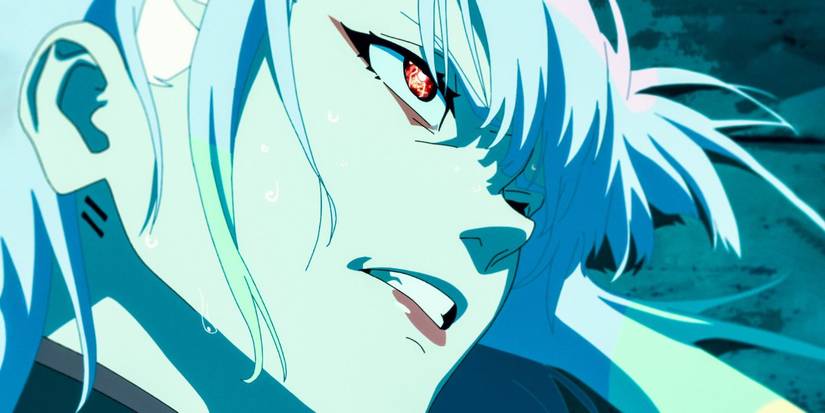
Image from Netflix animated series ‘Cyberpunk: Edgerunners’Image via Netflix
Night City has always promised that enough money, technology, or ambition can transform a person. Cyberpunk: Edgerunners follows David Martinez (Zach Aguilar), a gifted teenager living near the bottom of that hierarchy who enters the mercenary underworld after his life collapses. Cybernetic implants allow people to rebuild their bodies into weapons, but every upgrade carries physical and psychological consequences. David quickly discovers that becoming powerful enough to survive Night City may also mean becoming exactly the kind of person the city knows how to consume. Netflix’s original run tells that story across ten episodes set inside the world of Cyberpunk 2077.
Studio Trigger brings speed, color, and physical exaggeration to a setting already drowning in sensory overload, then uses that style to make the quieter relationships hit harder. David’s connection with Lucy (Emi Lo) gives him something beyond survival to imagine, while the wider crew makes the edgerunner lifestyle feel seductive before its costs become impossible to ignore. The action can be spectacularly violent, but the real hook is watching ambition get confused with destiny. Night City keeps telling people they can become legends because legends are easier to market than fit adults with reasonable expectations. Edgerunners understands that joke and still makes you desperately want these people to beat the odds.
2
‘Pluto’ (2023)
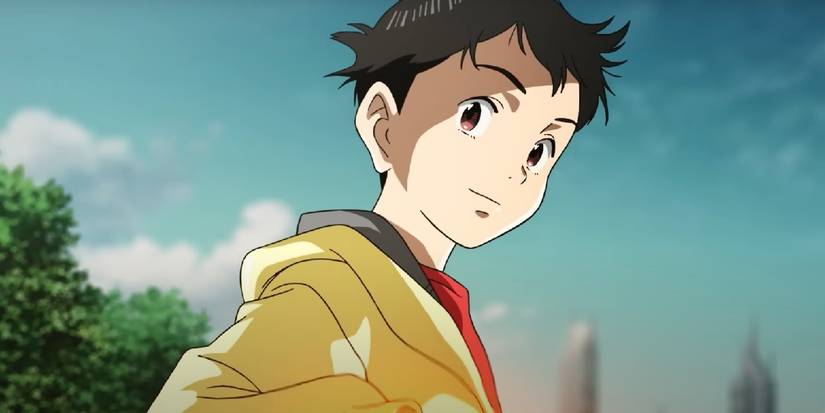
A adolescent boy in the anime PlutoImage via Netflix
Pluto reimagines a celebrated Astro Boy storyline as an eight-episode science-fiction murder mystery centered on Gesicht (Shinshū Fuji), a robot detective working for Europol. Someone is systematically killing the world’s most advanced robots along with humans associated with robot rights, and each crime points toward a larger pattern involving war, memory, hatred, and the uneasy relationship between artificial life and the humans who created it. Naoki Urasawa and Takashi Nagasaki developed the manga from Osamu Tezuka’s The Greatest Robot on Earth story, giving a classic adventure premise the weight of a political and psychological thriller.
The eight long episodes allow individual robots to become people before the larger mystery claims them. Gesicht carries memories he cannot entirely trust. Atom (Yōko Hikasa) approaches emotion from another direction. North No. 2 (Kōichi Yamadera), one of the series’ most memorable figures, wants to move beyond the violence he was designed to perform and discovers music as another way of understanding life. Those stories turn the central question of robot consciousness into something intimate rather than theoretical. The animation rarely needs to shout because a mechanical hand, a hushed room, or one hesitant conversation can already carry enormous weight. Pluto is clever without becoming emotionally distant, which is exactly why its ideas about artificial life stay with you.
1
‘Over the Garden Wall’ (2014)
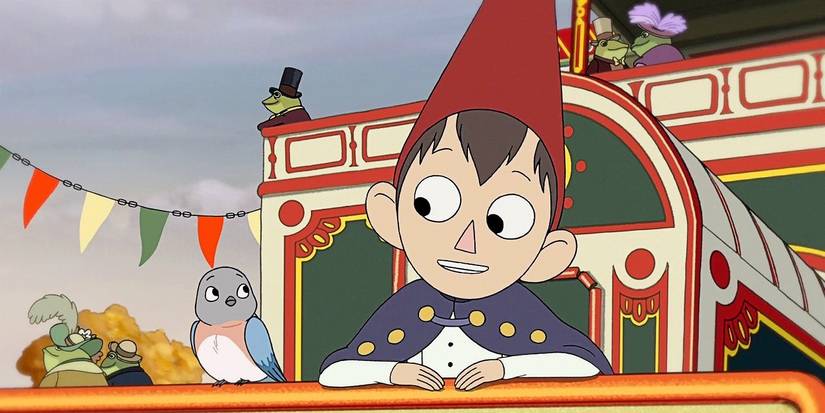
Wirt and Beatrice standing on the edge of the frog boat in Over the Garden Wall.Image via Cartoon Network
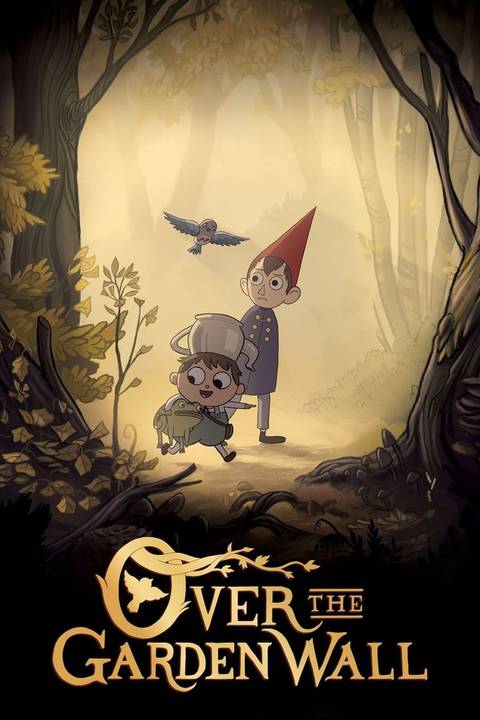
Over the Garden Wall is the best. It’s different. It follows half-brothers Wirt (Elijah Wood) and Greg (Collin Dean) after they become lost in a mysterious forest called the Unknown and begin searching for a way home. Their journey brings them into villages, schools, taverns, graveyards, strange celebrations, and encounters with people who seem to belong to different pieces of American folklore. A talking bluebird named Beatrice (Melanie Lynskey) becomes their unreliable guide, while the Beast (Samuel Ramey) waits somewhere deeper in the woods. Cartoon Network aired the ten roughly eleven-minute chapters across five consecutive nights in November 2014, making it the network’s first miniseries.
Its greatness comes from how much atmosphere and character fit inside such a small amount of television. Patrick McHale drew on elderly Americana, folk imagery, opera, early animation, and autumnal storybook art, while the Blasting Company’s music gives the Unknown a history that seems to extend far beyond Wirt and Greg. Wirt’s anxiety and Greg’s fearless imagination create a sibling energetic that can be hilarious in one chapter and painfully tender in another, and the strange people they meet rarely feel like disposable stops along the road. The entire series can be watched in about the time many movies need to finish their second act. Somehow it still feels like you have traveled somewhere. That is why returning to the Unknown every autumn has become such an uncomplicated tradition for so many animation fans.
Over the Garden Wall
Release Date
2014 – 2014
Network
Cartoon Network
Showrunner
Patrick McHale
Directors
Nate Cash

