
Crime stories have always worked well on television because they give the audience an immediate question that needs answering. Somewhere around the 1
Crime stories have always worked well on television because they give the audience an immediate question that needs answering. Somewhere around the 1990s, though, the genre became much more interested in going beyond just that. This was the era when crime shows became darker, messier, and increasingly interested in exploring morally grey concepts, including corrupt detectives, understandable criminals, and mysteries that exposed problems much bigger than a single arrest.
That shift opened up countless novel directions for crime TV, from intimate character dramas to family tragedies and even psychological thrillers. Here is a list of the 10 best crime shows released since 1990 that prove just how much can be done with one good mystery.
10
‘The Shield’ (2002–2008)
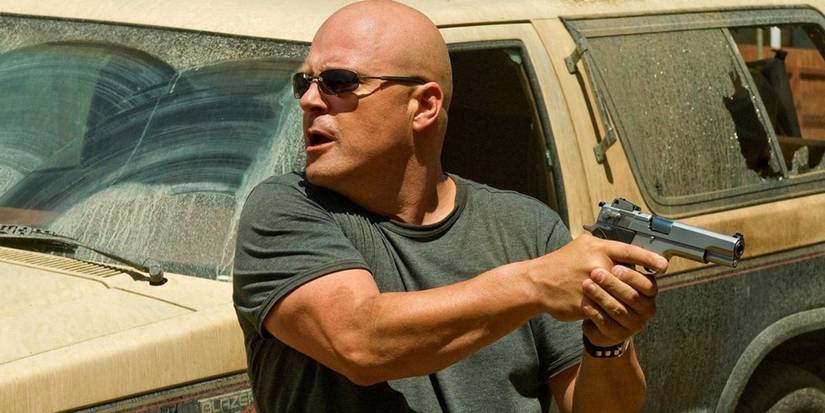
The Shield perfectly sets up its stakes in the very first episode. The series follows Vic Mackey (Michael Chiklis), the leader of an experimental LAPD Strike Team in the fictional Farmington district of Los Angeles. Vic and his men are extremely good at getting criminals off the streets, but they also steal money, plant evidence, beat suspects, and routinely ignore the law in the name of the greater good. That’s not it, though, because in the pilot, the audience sees Vic murder fellow detective Terry Crowley (Reed Diamond) after discovering that he has been placed on the team to investigate him. From that moment forward, there is no pretending that the protagonist is just a tough cop bending a few rules.
That single decision gives The Shield seven seasons of consequences to work with, where every victory comes with a cost. Through its premise, the series explores how corruption spreads, not just through one man, but through everyone who benefits from staying close to him. No plot ever feels disposable because the show ensures that Vic and his team keep dealing with the choices they make, even if they happened seasons earlier. More importantly, The Shield refuses to make any of this comfortably black and white. Vic can be effective, devoted, and even sympathetic in one moment, then completely horrifying in the next. That moral gray area is deliberately uncomfortable, because the show is less interested in telling the audience who the good guys are than forcing them to sit with what happens when results start mattering more than the rules.
9
‘Mindhunter’ (2017–2019)

Mindhunter feels almost nothing like a conventional crime show, and that is exactly why it became such an vital one. The series, set in the 1970s, follows FBI agents Holden Ford (Jonathan Groff) and Bill Tench (Holt McCallany) as they begin interviewing imprisoned murderers to understand why people commit seemingly inexplicable crimes. Psychologist Wendy Carr (Anna Torv) eventually joins them to turn those disturbing conversations into a system for identifying patterns in criminal behavior. Instead of spending every episode chasing a novel killer, much of Mindhunter simply puts its characters in a room with fictional versions of real-life serial killers, including Ed Kemper and Richard Speck, to hear why and how they committed their gruesome crimes. In theory, the show does not sound as suspenseful as a established crime thriller.
In fact, the audience always knows how a story is going to end, but the conversation that leads to it is the show’s main weapon. Every pause, uncomfortable question, and casual confession gives Holden and Bill another piece of a language that law enforcement is still learning how to exploit. Even when their research helps with busy cases, the real breakthrough is watching them slowly realize that violent criminals can be studied rather than dismissed as monsters who simply cannot be understood. The show stripped away most of the genre’s familiar beats and proved they were never indispensable in the first place. The killers are often already behind bars, so the tension comes from understanding them rather than catching them, and David Fincher’s direction only makes that restraint more effective.
8
‘Broadchurch’ (2013–2017)

Broadchurch deserves to be remembered as a crime classic. The show begins with the body of 11-year-old Danny Latimer being found on a beach in a peaceful Dorset town. DI Alec Hardy (David Tennant) is brought in to lead the investigation alongside local detective Ellie Miller (Olivia Colman), but the two approach the case from completely different positions. Hardy is an outsider who assumes anyone could be guilty, while Miller has spent years living among the same people she is now supposed to investigate. As the two investigate Danny’s family, friends, and neighbors, they uncover enough secrets to realize that almost everyone in town has something to hide.
Broadchurch might sound like a established whodunit, but it’s much more than just that. The series understands how a crime like this can completely change an entire town. Every novel suspect calls friendships, marriages, and families into question, while the growing media attention turns Danny’s family’s private grief into a circus for the entire country to watch. Broadchurch explores its mystery with a lot of emotional weight. The show can spend long stretches away from clues and interrogations without ever losing momentum because it builds its narrative around what the investigation is doing to its characters involved, not just where it’s leading.
7
‘Dept. Q’ (2025–Present)

Dept. Q is one of the greatest crime shows of recent times, and it has just gotten started. The series follows DCI Carl Morck (Matthew Goode), who is at the lowest point of his career after a shooting leaves one officer dead and his partner paralyzed. Carl returns to work carrying plenty of guilt and even less patience for the people around him. His superiors respond by putting him in charge of Department Q, a novel cold-case unit buried in the basement and created mostly as a PR stunt. Carl barely wants the made-up job, but that changes when he begins looking into the disappearance of prosecutor Merritt Lingard (Chloe Pirrie), who vanished from a ferry years earlier. What everyone else believes to be a dead end starts producing enough inconsistencies to convince Carl and his novel assistant, Akram (Alexej Manvelov), that Merritt may never have fallen overboard at all. On the other hand, the audience learns that the prosecutor is in fact alive and being held captive somewhere.
From there, the mystery operates in two directions as the audience patiently waits for both sides to finally meet in the middle. The investigation is gripping because the audience is in on this secret, while Carl has no idea whether he is looking for a missing person or a body. The case gives the detective purpose just when he thought he would never find it again, which gives weight to every breakthrough. That balance between suspense and heart is what makes Dept. Q feels so satisfying. The frigid case keeps tightening, but the real progress is watching a department created to hide unwanted people become the one place where all of them start proving their worth.
6
‘Adolescence’ (2025)

Adolescence is easily one of the most haunting crime series of all time, and the fact that it manages to tell such a compelling story in just four episodes is a testament to its brilliance. The show opens with the police storming the home of 13-year-old Jamie Miller (Owen Cooper) and arresting him for murdering his classmate Katie. His father, Eddie (Stephen Graham), is convinced there must be some terrible mistake, and Jamie repeatedly insists that he has done nothing wrong. However, by the end of the first episode, the audience learns the horrible truth that the police had evidence of Jamie’s carrying out the horrible attack all along. From there, the show shifts from a whodunit to an exploration of why a teenage boy would do something so heinous in the first place. The following episodes follow Jamie’s friends and classmates, his sessions with psychologist Briony Ariston (Erin Doherty), and his family’s life after the arrest.
There is no killer to catch here. Instead, the show examines how bullying, warped ideas of masculinity, and social media shaped Jamie, and the fact that all of it feels entirely plausible is what makes Adolescence so much more unsettling than a normal murder mystery. Even the decision to film every episode in one continuous take serves that idea, because there is never a convenient cut away from this suffocating ordeal. It makes the story feel frighteningly real, almost like the audience is watching something that could already be happening behind closed doors in any ordinary family.
5
‘Fargo’ (2014–2024)

Fargo takes the world of the Coen brothers’ 1996 film and turns it into an anthology where every season tells a completely different crime story. The first installment follows mild-mannered insurance salesman Lester Nygaard (Martin Freeman), whose chance encounter with mysterious drifter Lorne Malvo (Billy Bob Thornton) pushes him toward a decision that completely destroys his ordinary life. Meanwhile, deputy Molly Solverson (Allison Tolman) begins piecing together what actually happened, even as almost everyone around her underestimates both Lester and the danger surrounding him. Later seasons move to different decades, families, and crimes, but they all exist inside the same strange moral universe.
That anthology format is exactly what makes Fargo work. The show can completely replace its cast and storyline without losing its identity because its real subject has always been what happens when ordinary people make one terrible choice and then keep making worse ones to cover it up. What’s really fascinating, though, is how the criminals are rarely the only engaging people in the room. Fargo gives just as much weight to the more normal characters who keep pushing toward the truth even when doing the right thing seems hopelessly naive. The show is a brilliant balancing act between absurdity and the genuine good in people. It constantly reinvents almost everything about itself but still feels consistent, and that is no compact feat.
4
‘Better Call Saul’ (2015–2022)

Better Call Saul takes a character audiences already know but in a completely different featherlight. The show is set years before the events of Breaking Bad, and introduces Saul Goodman as Jimmy McGill (Bob Odenkirk), a struggling Albuquerque lawyer who is still desperately trying to prove that he can build an truthful career. That becomes much harder because of his complicated relationship with his older brother Chuck (Michael McKean), a respected lawyer who never believes Jimmy has left his conman instincts behind. At the same time, Jimmy’s relationship with fellow lawyer Kim Wexler (Rhea Seehorn) gives him someone who sees both the good in him and, eventually, the thrill he gets from bending the rules. Running parallel to all of this is Mike Ehrmantraut’s (Jonathan Banks) gradual descent into Albuquerque’s criminal world, which slowly brings the legal and cartel sides of the story closer together.
Now, since the audience already knows Saul Goodman, they know exactly where Jimmy is going to end up. The tension comes from watching the diminutive decisions that lead to that point. The way Jimmy starts using his Saul persona to avoid dealing with everything he has lost grounds his transformation into something more than just pure chaos. Nothing in the show happens without leaving some kind of emotional or moral scar behind. By the end, the series turns a character who once felt like comic relief into one of television’s most tragic examples of how basic it is to become the person everyone always expected Saul to be, even when he tried his best to change that.
3
‘Breaking Bad’ (2008–2013)

No list of the best crime shows is ever complete without Breaking Bad. The show begins with high school chemistry teacher Walter White (Bryan Cranston) finding out that he has cancer and deciding to exploit his scientific knowledge to cook meth with former student Jesse Pinkman (Aaron Paul). At first, Walter claims he is only doing it to leave money behind for his family, but that excuse becomes harder to believe as he gets deeper into Albuquerque’s criminal world. Walt’s choices eventually bring him into conflict with drug distributors, cartel figures, and people far more unsafe than he ever expected to meet. However, the most engaging part is how much he starts to enjoy it all.
Walter is given multiple opportunities to stop, but every time he survives one disaster, he becomes more convinced that he deserves his newfound power. On the other hand, Jesse moves in the opposite direction, almost scared of the consequences of his and Walter’s actions. That contrast gives the show most of its tension. More importantly, Breaking Bad has an almost ruthless sense of cause and effect. Small decisions made seasons earlier return with enormous consequences, so the story never feels like it is inventing trouble as it goes. By the final season, Walter’s downfall feels less like a twist than the inevitable result of all of his choices, and that kind of intentional storytelling remains evergreen.
2
‘The Sopranos’ (1999–2007)

The Sopranos is another classic that redefined the crime genre by giving the world a morally complicated antihero who was both despicable and surprisingly basic to root for. The show follows New Jersey mob boss Tony Soprano (James Gandolfini) as he tries to manage his equally stressful professional and personal lives. Tony starts seeing psychiatrist Jennifer Melfi (Lorraine Bracco) after he begins experiencing regular panic attacks that disrupt his carefully controlled image. That decision immediately gives the series an unusual perspective into the mob world. Instead of just watching Tony threaten rivals, order violence, and settle disputes, the audience also watches him sit in a peaceful office and try to explain why none of it makes him elated.
That contradiction is what makes The Sopranos so much richer than a conventional gangster story. Tony can be frightening, entertaining, vulnerable, and selfish at the same time without the show ever pretending those qualities cancel each other out. Therapy gives him the language to understand himself, but understanding his behavior does not automatically make him willing to change it. That is why the criminal plots never feel separate from the character drama. Every power struggle, betrayal, and family argument reveals another part of the same world Tony has built for himself. The Sopranos thrives on its uncomfortable honesty, but that is also why it has gone down in history as the greatest crime dramas of current television.
1
‘The Wire’ (2002–2008)

The Wire made an entire city its main character, and that gave the show an identity that remains unique even today. The story begins with Baltimore detective Jimmy McNulty (Dominic West) pushing his department to investigate the Barksdale drug organization, led by Avon Barksdale (Wood Harris) and his much more business-minded partner Stringer Bell (Idris Elba). Police surveillance slowly gives them a window into how the organization works, but the show spends just as much time with the people being investigated as the detectives. Drug dealers, addicts, officers, informants, and neighborhood kids all become fully realized characters rather than pieces of a standard police procedural.
However, The Wire just keeps pulling the camera further back. Later seasons move through Baltimore’s struggling docks, city politics, public schools, and eventually the local newspaper to show how each institution eventually spills into the other. The most realistic thing about the show is how it never presents crime as a problem that disappears when the police arrest someone. It actually takes the audience through the very bureaucratic process of solving crime and refuses to divide its world neatly between criminals and seemingly respectable people. The show unfolds with an ambition that is challenging to contain, but that scale never comes at the expense of its character. Every season adds another layer to Baltimore without making the previous one feel less vital, until the audience realizes that The Wire was always about the systems that allow the same problems to survive long after individual criminals, cops, and politicians are gone.

The Wire
- Release Date
-
2002 – 2008-00-00
- Network
-
HBO
- Directors
-
Ernest R. Dickerson, Ed Bianchi, Steve Shill, Clark Johnson, Daniel Attias, Agnieszka Holland, Tim Van Patten, Alex Zakrzewski, Anthony Hemingway, Brad Anderson, Clement Virgo, Elodie Keene, Peter Medak, Rob Bailey, Seith Mann, Christine Moore, David Platt, Dominic West, Gloria Muzio, Jim McKay, Leslie Libman, Milcho Manchevski, Robert F. Colesberry, Thomas J. Wright

