
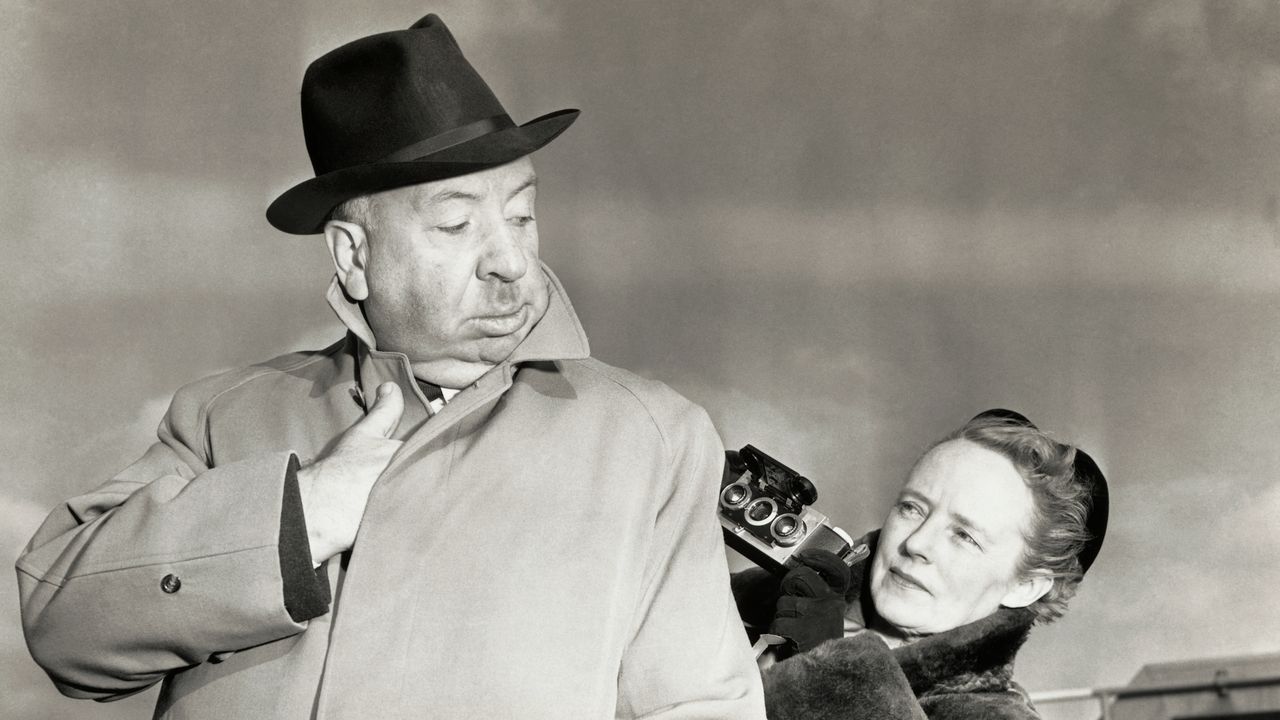
In 1925 an article in the film magazine Pictures and the Picturegoer was titled “Alma in Wonderland,” and it included the lines, “Little Alma Reville
In 1925 an article in the film magazine Pictures and the Picturegoer was titled “Alma in Wonderland,” and it included the lines, “Little Alma Reville is nothing like as unsophisticated as she looks, as some tough film guys have discovered to their cost. A glance at her past career explains why she today occupies so unique a position in European films.” The magazine went on to describe how, as a woman with the eye for detail that only women have, Reville was particularly suited for her job. “A man glancing at a passing girl observes that she is pretty, attractive, or ugly as the case may be, but a woman, obtaining the same fleeting glance, will be able to describe with terrible exactitude every garment she was wearing, how long she has had them, of what material they were made, where they were bought and at what cost.” While there’s much to those words that sounds dated from our perspective today, they point to a truth: Alma Reville was an exceptional person.
As early as 16, Reville already knew she wanted to pursue a career in film, but unlike most newborn women her age, she didn’t want to be one of those actors starting to appear on movie posters. She wanted to be part of the process of making the films that fascinated her. Her parents didn’t think it was the best idea, and to support dissuade her, they asked a producer friend to find her a job in the industry, in an editing room, “far removed from all the supposed glamour and excitement of the studio itself.”
Their plan failed, however. Reville was incredibly cheerful in her role, and it turned out to be a position with potential. It didn’t take long for her to rise through the ranks at the company and become a second assistant director. By the time she was already a well-regarded figure at the studio, a newborn graphic designer was hired to oversee the dialogue cards for the films—his name was Alfred Hitchcock.
They worked together for two years but rarely spoke to each other, until one day she received a call. Hitchcock was going to be an assistant director on a film by Graham Cutts and needed to hire an editor. According to their daughter, Patricia Hitchcock, who wrote Alma Hitchcock: The Woman Behind the Man, the interview was brief; Reville politely told her future husband that the salary he was offering was inadequate and left the room, but he followed her and raised his offer. She accepted. After working together on Woman to Woman, they would then both go to Germany to work on The Blackguard. At the end of the production of that film, they got engaged, and she began contributing her ideas to the director’s films. “After each shot,” Hitchcock admitted, “I’d turn back to my fiancée, asking, ‘Was it all right?’” Hitchcock and Reville were married on December 2, 1926. Recalling those moments in his famed conversations with François Truffaut, Hitchcock confessed: “I’d never been out with a girl in my life. I’d never had a drink in my life.”
Hitchcock and Reville began writing screenplays together, and between The Ring in 1927 and Stage Fright in 1950, she contributed to such vital films as Rebecca, Suspicion, Saboteur, The Paradine Case, and Shadow of a Doubt—not only as a screenwriter, but also, at times, as a script supervisor and second-unit director. She also worked with other directors, but her strongest and most fulfilling film partnership was with her husband.

