
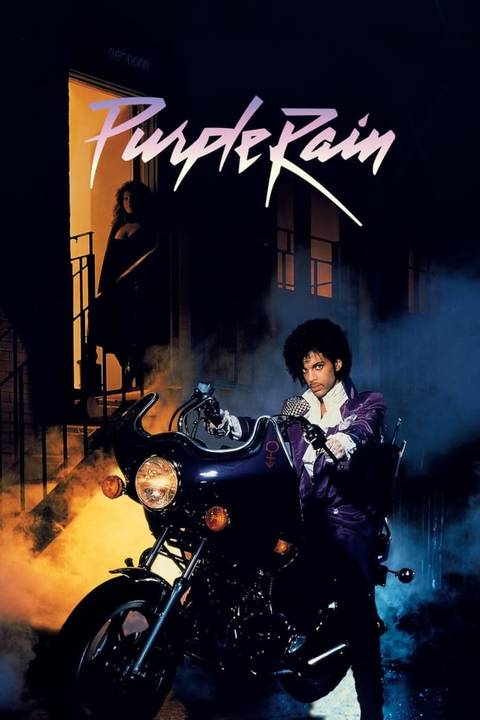
It's the Artist Formerly Known as Prince. Born Prince Rogers Nelson to musician parents, the multi-instrumentalist was practically raised on music and
It’s the Artist Formerly Known as Prince. Born Prince Rogers Nelson to musician parents, the multi-instrumentalist was practically raised on music and lyrics. By the time he entered the cutthroat industry in the tardy ’70s, he already knew how to maneuver around music executives, shaping his own genre-blending sound.
On his own, Prince was a true one-man band, often playing nearly every instrument on his records. Still, he was also a collaborative artist, performing with equally iconic backing bands — from The Revolution to The Family. Across different eras and projects, only a select few songs remain definitive. Without further ado, here are the most perfect Prince songs, ranked.
10
“Raspberry Beret” (1985)
If Abbey Road is a deliciously psychedelic tune, it would be “Raspberry Beret.” The tantalizing tart of lush string instruments, Middle Eastern finger cymbals, and acoustic guitar all combine to create one vibey sing-along tune. Describing an attraction to a girl wearing a raspberry-colored beret, the song clearly delivers its flirtatious message without being overtly crass.
“Raspberry Beret” saw its popularity skyrocket thanks to its equally energetic music video. Channeling Sgt. Pepper’s Lonely Hearts Club Band–era The Beatles, Prince and the Revolution perform on a colorful platform, surrounded by synchronized dancers. There’s also a bit of inside lore: Pat Smear — later of Nirvana — appears as one of the dancers and was nearly fired during filming.
9
“I Wanna Be Your Lover” (1978)
Before he became His Royal Badness, Prince was once an underselling performer. His debut album, For You, performed poorly commercially, and Warner Brothers was unhappy. In five weeks, Prince recorded his sophomore album of the same name. Its first track, “I Wanna Be Your Lover,” ultimately became the aspiring singer’s saving grace.
“I Wanna Be Your Lover” feels like the perfect introduction to a youthful Prince, just on the brink of stepping into his unapologetic versatility. Told largely from a confident perspective, many of its lines begin with “I wanna…,” before giving way to a keyboard-synthesizer jam. It reflects a self-assured mindset from an artist rebounding after a poorly performing debut.
8
“1999” (1982)
Prince definitely has a thing about the apocalypse. Inspired by a Nostradamus special he watched during a hotel stop, “1999,” written in 1982, is his vision of what the year might look like—and it isn’t pretty. But Prince doesn’t let the doom and gloom cloud his judgment day.
Released two years before “Purple Rain,” “1999” has a diminutive precursor to the singer’s future hit—”the sky was all purple.” Both songs also share that end-of-the-world feel. But unlike “Purple Rain” and the desire for a loving connection, “1999” is about keeping spirits up while destruction is everywhere. No one knows exactly when the world is ending, but some days feel like it. As Prince sings, death is imminent, so you might as well “dance my life away.”
7
“Kiss” (1986)
Prince may be a larger-than-life personality, but he loves his women just as they are—nothing more, nothing less. Not to say he prefers them “normal.” As he lays out in “Kiss,” he’s drawn to women who are simply themselves. Their presence alone is enough to turn him on, without needing to be “beautiful,” “rich,” or “cool.”
Forgoing his dramatic belts for a raspy, tight falsetto, Prince lets loose in “Kiss.” Emotionally-laden lyrics are typically his forte, but so is humor. By the third verse, “Kiss” takes a cheeky turn when Prince lists out hyper-specific requirements of what he wants in a woman: “Act your age, mama, not your shoe size / You don’t have to watch Dynasty to have an attitude.”
Collider Exclusive · Oscar Best Picture Quiz
Which Oscar Best Picture
Is Your Perfect Movie?
Parasite · Everything Everywhere · Oppenheimer · Birdman · No Country
Five Oscar Best Picture winners. Five completely different visions of what cinema can be — and what it can do to you. One of them is the film that was made for the way your mind works. Ten questions will figure out which one.
Parasite
Everything Everywhere
Oppenheimer
Birdman
No Country for Old Men
FIND YOUR FILM →
01
What kind of film experience do you actually want?
The best movies don’t just entertain — they leave something behind.
ASomething that pulls the rug out — that makes me think I’m watching one kind of film and then reveals I’m watching another entirely.
BSomething overwhelming — amusing, gloomy, absurd, and genuinely moving, all at once.
CSomething grand and weighty — a film that makes me feel the full scale of what I’m watching.
DSomething formally daring — a film that pushes what cinema can even do.
ESomething lean and relentless — pure tension with no wasted frame.
NEXT QUESTION →
02
Which idea grabs you most in a film?
Great films are driven by a central obsession. What’s yours?
AClass, inequality, and what people are willing to do when desperation meets opportunity.
BIdentity, family, and the chaos of trying to hold your life together when everything is falling apart.
CGenius, moral responsibility, and the catastrophic weight of a decision you can never take back.
DEgo, legacy, and the terror of becoming irrelevant while you’re still alive to watch it happen.
EEvil, chance, and whether moral order actually exists or if we just tell ourselves it does.
NEXT QUESTION →
03
How do you like your story told?
Form is content. The way a story is shaped changes what it means.
AGenre-twisting — I want it to start in one lane and migrate into something completely different.
BMaximalist and genre-blending — comedy, action, drama, sci-fi, all in one ride.
CEpic and non-linear — cutting between timelines, building a mosaic of cause and consequence.
DA single unbroken flow — I want to feel like I’m living it in real time, no cuts to safety.
ESpare and precise — every scene doing exactly what it needs to do and nothing more.
NEXT QUESTION →
04
What makes a truly great antagonist?
The opposition defines the protagonist. What kind of opposition fascinates you?
AA system — concealed, structural, and almost impossible to fight because it has no single face.
BThe self — the ways we sabotage, abandon, and fail the people we love most.
CHistory — the unstoppable momentum of events that no single person can stop or redirect.
DThe industry — the machinery of culture that chews up talent and spits out irrelevance.
EPure, implacable evil — a force so certain of itself it becomes almost philosophical.
NEXT QUESTION →
05
What do you want from a film’s ending?
The final note is the one that lingers. What do you want it to sound like?
AShock and inevitability — a conclusion that recontextualises everything that came before it.
BEarned emotion — I want to cry, laugh, and feel genuinely hopeful, even if the world is a mess.
CDevastation and grandeur — an ending that makes me sit in silence for a few minutes after.
DAmbiguity — something that leaves enough open that I’m still thinking about it days later.
EBleakness — an candid refusal to pretend the world is tidier than it actually is.
NEXT QUESTION →
06
Which setting pulls you in most?
Where a film takes place shapes everything — mood, stakes, what’s even possible.
AA gleaming newfangled city with a hidden underside — beauty masking rot, wealth masking desperation.
BA collapsing suburban life that opens onto something infinite — the multiverse of a single ordinary person.
CThe corridors of power and science at a world-historical turning point — where decisions echo for decades.
DThe grimy, alive chaos of New York and Hollywood — fame as both destination and trap.
EVast, indifferent landscape — desert and highway where violence arrives without warning or reason.
NEXT QUESTION →
07
What cinematic craft impresses you most?
Every great film has a signature — a technical or artistic element that makes it unmistakable.
AProduction design and mise-en-scène — every frame composed to carry meaning beneath the surface.
BEditing and tonal control — the ability to move between registers without losing the audience.
CScore and sound design — music that becomes inseparable from the dread and awe of what you’re watching.
DCinematography as performance — the camera not recording events but participating in them.
ESilence and restraint — what’s left unsaid and unshown doing more work than any dialogue could.
NEXT QUESTION →
08
What kind of main character do you root for?
The protagonist is the lens. Who you choose to follow says something about you.
ASomeone clever and resourceful who makes increasingly perilous decisions under pressure.
BSomeone overwhelmed and ordinary who turns out to be capable of something extraordinary.
CA brilliant, tortured figure whose gifts and flaws are inseparable from each other.
DA self-destructive artist whose ego is both their superpower and their undoing.
EA still, principled person trying to make sense of a world that has stopped making sense.
NEXT QUESTION →
09
How do you feel about a film that takes its time?
Pace is a choice. Some films sprint; others let tension accumulate slowly, deliberately.
AI love a sluggish build when I know the payoff is going to be seismic — patience for a devastating reveal.
BGive me relentless momentum — I want to feel breathless and emotionally spent by the end.
CEpic runtime doesn’t scare me — if the material demands three hours, give me three hours.
DI want it to feel propulsive even when nothing is technically happening — restless energy throughout.
EDeliberate and unhurried — I want dread to accumulate in the spaces between the action.
NEXT QUESTION →
10
What do you want to feel walking out of the cinema?
The best films leave a mark. What kind of mark do you want?
AUnsettled — like I’ve just seen something I can’t fully explain but can’t stop thinking about.
BMoved and energised — like the film reminded me what actually matters and gave me something to hold onto.
CHumbled — like I’ve been in the presence of something genuinely critical and overwhelming.
DExhilarated — like I’ve just seen cinema doing something it’s never quite done before.
EHaunted — like a frigid, still dread that stays with me for days.
REVEAL MY FILM →
The Academy Has Decided
Your Perfect Film Is…
Your answers have pointed to one Oscar Best Picture winner above all others. This is the film that was made for the way your mind works.
Parasite
You are drawn to films that operate on multiple levels simultaneously — that begin in one genre and quietly, brilliantly migrate into another. Bong Joon-ho’s Parasite is a film about class, desire, and the architecture of inequality that manages to be darkly amusing, deeply suspenseful, and genuinely shocking across a single extraordinary running time. Your instinct is for cinema that hides its true intentions until the moment it’s ready to reveal them. Parasite is exactly that — a film that rewards close attention and punishes assumptions, right up to its devastating final image.
Everything Everywhere All at Once
You want it all — and this film gives you all of it. The Daniels’ Everything Everywhere All at Once is one of the most maximalist films ever made: action comedy, multiverse sci-fi, family drama, existential crisis, and a genuinely earned emotional core that sneaks up on you amid the chaos. You are someone who responds to ambition, who doesn’t want cinema to choose between being entertaining and being meaningful. This film refuses that choice entirely. It is overwhelming by design, and its overwhelming nature is precisely the point — because the feeling of being crushed by infinite possibility is exactly what it’s about.
Oppenheimer
You are drawn to cinema on a grand scale — films that understand history not as a backdrop but as a force, and that place their characters inside that force and watch what happens. Christopher Nolan’s Oppenheimer is a film about the terrifying gap between what we can do and what we should do, told with the full weight of one of the most consequential moments in human history behind it. You want your films to feel critical without feeling self-important — to earn their ambition through sheer craft and the gravity of their subject. Oppenheimer does exactly that. It is enormous, complicated, and refuses basic comfort.
Birdman
You are drawn to films that foreground their own construction — that make the how of the filmmaking part of the what it’s about. Alejandro González Iñárritu’s Birdman, shot to appear as a single continuous take, is cinema examining itself through the cracked mirror of a fading actor’s ego. You respond to formal daring, to the feeling that a film is doing something that probably shouldn’t be possible. Michael Keaton’s performance and Emmanuel Lubezki’s restless camera create something genuinely unlike anything else — a film that is simultaneously about creativity, relevance, self-destruction, and the impossibility of ever truly knowing if your work means anything at all.
No Country for Old Men
You are drawn to cinema that trusts silence, that refuses to explain itself, and that treats dread as a form of meaning. The Coen Brothers’ No Country for Old Men is a film about the arrival of a recent kind of evil — implacable, arbitrary, and utterly indifferent to the moral frameworks we apply to make sense of the world. It is one of the most formally controlled films ever made, and its controlled restraint is what makes it so terrifying. You want your films to haunt you, not comfort you. You are not interested in resolution if resolution would be dishonest. No Country for Old Men is candid in a way that most cinema never dares to be.
↻ RETAKE THE QUIZ
6
“If I Was Your Girlfriend” (1987)
Behind every album are hundreds of unreleased projects in an artist’s arsenal. For Prince, it was his Camille album. A year before his ninth album, Prince experimented with vocal pitch-shifting, which allowed him to sing in an androgynous register. From there, he created his feminine alter ego, Camille.
Prince was notable for his marriages and high-profile girlfriends, but he was never tied to a singular definition of intimacy. In “If I Was Your Girlfriend,” he explores the connections between lover, best friend, and confidante. Love doesn’t have to exist strictly within heterosexual or romantic norms, but can move across different forms without stiff labels.
5
“Little Red Corvette” (1983)
Nothing screams sexy quite like a flashy car. “Little Red Corvette” is an allegory for steamy one-night stands — the risqué thrill of spending a few intimate hours with someone, only to never see them again. Like his red Corvette, Prince makes sure he’s got “enough gas” to drive it “straight into the ground.”
Except Prince didn’t write the song in a red Corvette. Keyboardist Lisa Coleman shares the genesis behind the track: Prince borrowed her pink-and-white Mercury Montclair and wrote it in the back, inspired by his time with Denise Matthews (some of her hair was wrapped on the window handle). Better a Montclair than an overrated Mercedes.
4
“Sign o’ the Times” (1987)
Prince’s funkalicious “Sign o’ the Times” proves one thing: there’s no reason for pop stars to avoid being political—not in a “vote for the President” sense, but in staying socially aware. There’s a tendency to separate art from the real world as a product of imagination. However, Prince uses his craft to comment on the troubles of his decade.
Written in 1986, “Sign o’ the Times” references several alarming crises. Whether it’s the HIV/AIDS epidemic or the Space Shuttle Challenger disaster, Prince questions if humankind is truly advancing or creating even more suffering instead. Yet the song isn’t purely bleak. Despite these signs of the times, Prince advocates for love as an act of resistance.
3
“Nothing Compares 2 U” (1985)
No other breakup song is more visceral and relatable than “Nothing Compares 2 U.” Leave it to Prince to illustrate the symptoms of losing your lover in everyday scenarios. Whether it’s having “dinner in a fancy restaurant” or visiting “the doctor,” there’s no remedy that can cure the loss of a relationship.
Although Prince wrote the ballad for The Family in 1985, his version of “Nothing Compares 2 U” didn’t achieve the same popularity as Sinéad O’Connor’s 1990 rendition. She took several artistic liberties of her own — much to Prince’s approval. Not long after her cover, he revisited the song and released his own version in 1991, finally having his moment with it as well.
2
“When Doves Cry” (1984)
Written for Prince’s semi-autobiographical film Purple Rain, “When Doves Cry” plays over a montage alternating between the girl he lost and the tense relationship he shares with his father. As the lyrics suggest, the apples don’t fall far from the tree: “Maybe I’m just like my father, too bold / Maybe you’re just like my mother, she’s never satisfied.”
Generational trauma aside, “When Doves Cry” is inspired by Prince’s relationship with Susan Moonsie of Vanity 6. What’s more fascinating is that the song lacks a bassline, a rarity for an ’80s dance pop track. Prince might have made a name for himself with his flamboyant production, but he also knows how to hold back and still deliver attitude.
1
“Purple Rain” (1984)
“I never wanted to be your weekend lover / I only wanted to be some kind of friend.” Leave it to Prince to lament the desire for something deeper, rather than a fleeting, casual fling. But “Purple Rain” yearns for even more. Evoking the apocalyptic imagery of an actual purple rain, love is imagined to endure until the end of times.
Instead of the soulful ballad listeners are familiar with today, “Purple Rain” was originally envisioned as a country duet featuring Stevie Nicks of Fleetwood Mac. However, Nicks herself found the 10-minute instrumental “too daunting.” There’s no denying the theatricality of “Purple Rain.” Prince’s performance at Super Bowl XLI, where he sang the song in pouring rain, remains a living testament to its majesty.
Purple Rain
Release Date
July 27, 1984
Runtime
111 minutes
Director
Albert Magnoli
Writers
Albert Magnoli, William Blinn
-

-
Apollonia Kotero
Apollonia
-
-



COMMENTS