
A badly written sequel is worse than an ordinary bad movie. An ordinary bad movie can fail on its own terms and just die there. A bad sequel takes ove
A badly written sequel is worse than an ordinary bad movie. An ordinary bad movie can fail on its own terms and just die there. A bad sequel takes over memory. It crawls back into something that already had a pulse, already found a tone, already understood what kind of pain or pleasure it was built to deliver, and then it starts misreading the original in real time.
That is what makes sequel failure so fascinating when you care about movies. You are watching incompetence and a misunderstanding. And the worst ones usually make the same fatal mistake. They think the original was about its surface. The shark. The speed gimmick. The cool iconography. The sex. The mask. The edgy vibe. The cult weirdness. So they bring back the recognizable pieces and lose the internal logic that made those pieces work in the first place. Confused? This list of 10 movie sequels will leave you unconfused.
10
‘Blues Brothers 2000’ (1998)
Image via Universal Pictures
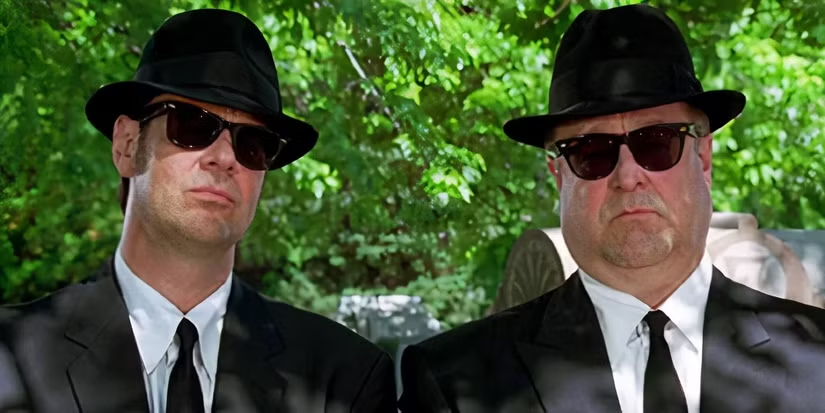
The original The Blues Brothers works because it treats absurdity with total confidence. The plot is ridiculous, sure, but it is written with such straight-faced commitment that every escalation feels like part of one giant deadpan cosmic joke. Jake Blues (John Belushi) and Elwood Blues (Dan Aykroyd) chaos magnets in sunglasses. They are moving through a world where rhythm, debt, devotion, performance, and divine absurdity all somehow belong to the same comic grammar. The movie is loose in a very controlled way. Blues Brothers 2000, however, does not understand any of that.
The writing mistake is not merely that John Belushi is gone. Of course that matters. But a great sequel script could have responded to that absence with reinvention, grief, or a genuine new angle on the mission energy of the original. Instead this one feels assembled from leftovers and impersonations of feeling. It keeps throwing in children, supergroups, cameos, chases, prison beats, and recycled iconography as if momentum can be generated through accumulation alone. It cannot. Elwood becomes less a character than a hollow ceremonial object being moved from set piece to set piece. The soul music is still there, sometimes gloriously so, though the story around it has no blood in its veins. The first movie was anarchic but purposeful. This one is merely cluttered.
9
‘Basic Instinct 2’ (2006)

Sharon Stone in black dress in ‘Basic Instinct 2’Image via Sony Pictures
The first Basic Instinct is trashy in the most alive way. It is vulgar, ridiculous, manipulative, overheated, and written with a real understanding that erotic thrillers depend on appetite destabilizing judgment. Nobody in that movie feels safe from wanting too much. That is the whole point. Desire makes people stupid, proud, paranoid, theatrical, exposed. Catherine Tramell (Sharon Stone) works because she is not simply sexy and dangerous in the abstract. She is written as a force who turns other people’s vanity and hunger into the mechanism of their undoing.
Basic Instinct 2 misses that on a molecular level. It brings Sharon Stone back but cannot generate the atmosphere of corruption and fixation required for her to matter again. The writing gives her scenarios, accusations, therapy games, and supposedly transgressive dialogue, though none of it has that old pulse of erotic danger. Dr. Michael Glass (David Morrissey) never becomes a convincing participant in the psychological combustion the film is trying to stage. He feels drafted into a charade rather than seduced into a downfall. That matters because thrillers of this type live on loss of control. The sequel keeps presenting provocation as if provocation alone is writing. It is not. Without genuine obsession, the sex turns inert, the manipulation turns schematic, and Catherine herself starts feeling like an icon being wheeled back into a room that no longer knows how to be corrupted by her.
8
‘American Psycho 2’ (2002)
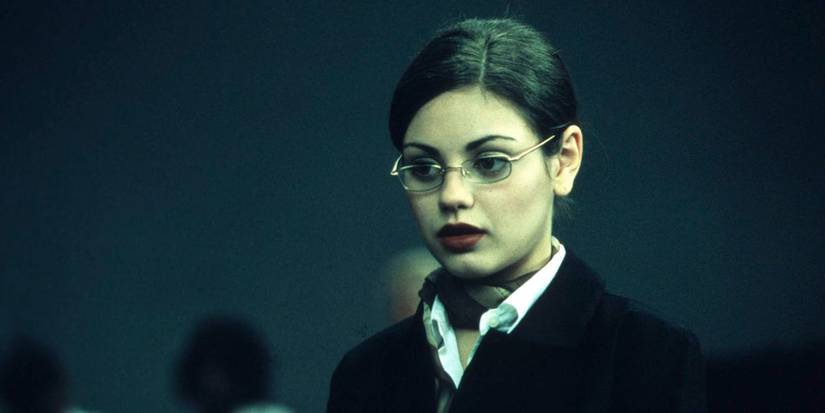
Mila Kunis in American Psycho 2 All American GirlImage Via Lionsgate
What makes American Psycho 2 such an embarrassing piece of writing is that it mistakes a title for a worldview. The original American Psycho is not good because Patrick Bateman (Christian Bale) kills people stylishly and says quotable things. It works because the writing traps you inside a consciousness shaped by status panic, masculine emptiness, consumer ritual, and a total inability to distinguish identity from performance. Whether Bateman literally did everything matters less than the fact that the film is written as a satire of a soul already hollowed out by the system it worships.
This sequel wanders in as if “American Psycho” means quirky serial-killer sass with a pop-culture edge. Rachael Newman (Mila Kunis) is stranded in a movie that treats murder as a bratty personality trait and satire as something that can be approximated by references and attitude. The academic setting, the competition with Professor Robert Starkman (William Shatner), the killer instincts being repositioned as this darkly cute ambition game, it is all fatal surface reading. The script has no real psychological target, no social anatomy, no inner rot it is trying to expose. It has gestures toward black comedy and violence, but no governing intelligence. That is why it feels so insulting. It is not merely bad on its own. It retroactively proves it has no clue what the original was even saying.
7
‘Speed 2: Cruise Control’ (1997)
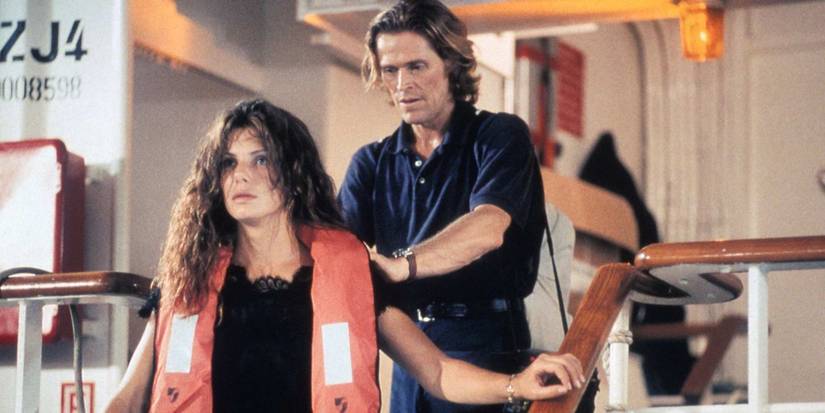
Annie Porter (Sandra Bullock) and John Geiger (Willem Dafoe) in ‘Speed 2: Cruise Control’Image via 20th Century Fox
The great writing lesson of Speed is that action structure is emotional structure. The bus cannot drop below fifty, which means every scene is immediately shaped by urgency, spatial pressure, and the constant awareness that one wrong move kills everyone. The premise disciplines the writing. Characters reveal themselves through crisis management. Heroism becomes improvisation under arithmetic terror. It is beautifully simple and nearly impossible to improve on. So what does Speed 2 do? It throws away the engine and acts shocked when the machine no longer moves.
A cruise ship is a conceptual disaster for this kind of sequel. It is huge, slow, and dramatically diffuse. The writing tries to compensate with computer sabotage, Willem Dafoe weirdness, relationship beats, more civilians in danger, bigger scale, but none of that fixes the core error. A thriller premise lives or dies on the exact shape of the danger, and this danger has no natural pulse. Annie Porter (Sandra Bullock) does what she can, though the story around her never finds a human center strong enough to survive the dead concept. Even the giant crash should feel thrilling in theory. Instead it drags on so long that it becomes the movie’s whole problem made visible: bigger movement mistaken for better writing. The original trapped characters inside momentum. The sequel drowns them in drag.
6
‘Exorcist II: The Heretic’ (1977)

Linda Blair as Regan MacNeil in Exorcist II: The HereticImage Via Warner Bros.
The first The Exorcist is so frightening because the writing grounds cosmic evil in intimate breakdown. Regan MacNeil (Linda Blair)’s body becomes the battlefield where faith, medicine, guilt, love, fear, and helplessness all collide and synergize. Every scene is anchored in escalating human distress. The theological horror works because the domestic horror is written so concretely. Exorcist II seems to have looked at that and decided the real draw was vaguely mystical imagery and portentous spiritual babble.
The result is one of the most bizarrely misconceived sequels ever written. It tries to expand the mythology with synchronizers, psychic linkage, locust symbolism, African journeys, and quasi-metaphysical explanations that only make the evil feel smaller and sillier. Regan, who should have been a profoundly fragile and complex figure after the first film, is instead pushed into an airy, incoherent fantasy of residual possession and cosmic destiny. Father Philip Lamont (Richard Burton)’s investigation has no accumulating dread because the script keeps mistaking confusion for mystery. That is the fatal sin here. Mystery should deepen terror. This movie’s mystery dissolves it. The original made you feel that evil could enter a bedroom and tear a family’s reality apart. The sequel turns evil into decorative nonsense wandering around in search of a movie.
5
‘Highlander II: The Quickening’ (1991)
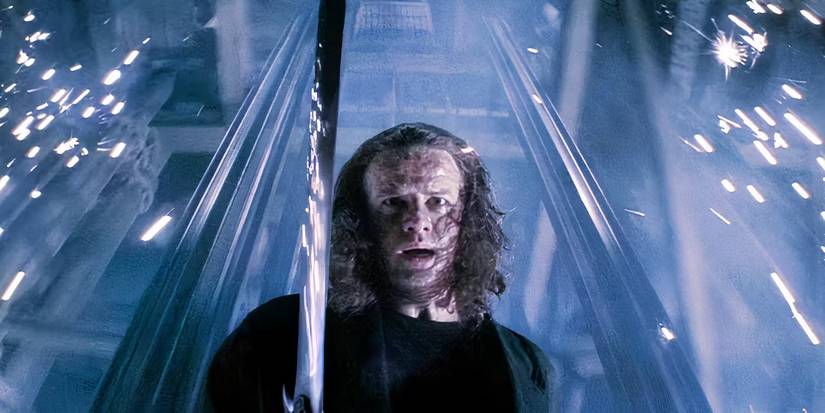
Image via InterStar
The original Highlander has plenty of flaws, but it understands the one thing that matters most: immortality is emotionally interesting because of time, loss, and isolation. Connor MacLeod (Christopher Lambert) is compelling when the writing lets the centuries pile up on him. Every friendship will vanish. Every love story carries the knowledge of eventual grief. Every duel is not merely action but the eruption of ancient continuity into modern life. That melancholy is what gives the movie its cult force. The mythology is pulpy and silly, yes, though it works because the emotional idea underneath it is clean.
The Quickening detonates that clean idea out of sheer mythological panic. Suddenly the immortals are aliens from the planet Zeist, which is one of those sequel decisions so catastrophically misguided it almost deserves academic study. The writing does not merely complicate the original but invalidates its whole spiritual atmosphere. Immortality stops feeling uncanny and tragic and becomes bureaucratic sci-fi nonsense. Then the movie piles on ecological dystopia, shield technology, awkward resurrections, and tonal whiplash so violent that poor Christopher Lambert looks as if he has been abandoned inside a tax dispute between genres. Juan Sánchez-Villalobos Ramírez (Sean Connery)’s return should be impossible in a fun way; instead it just exposes how little the script believes in consequence. This is not world-building gone wrong. It is myth broken at the spine.
4
‘Son of the Mask’ (2005)
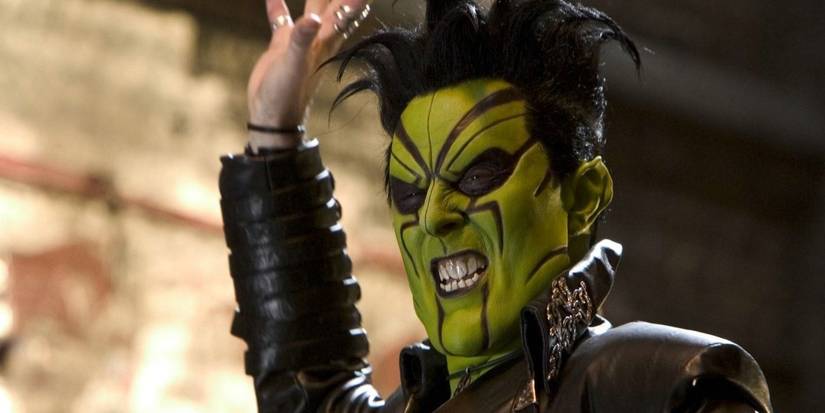
Loki attacking someone in Son of the MaskImage via Warner Bros. Pictures
The first The Mask became a hit because the writing understands that the cartoon chaos is not random. Stanley Ipkiss (Jim Carrey) is a meek, humiliated man whose suppressed impulses, lust, rage, vanity, showmanship, suddenly explode outward through the mask in a form that feels like Tex Avery is given permission to run loose in the real world. The comedy has character roots. The anarchy means something. It is fantasy functioning as personality revelation. Son of the Mask appears to believe the original succeeded because loud CG things happened.
That misunderstanding poisons every scene. Tim Avery (Jamie Kennedy) is handed a setup involving a baby affected by the mask’s powers, a jealous dog, Norse gods, and endless hyperactive visual noise, but the script never finds the human center that could make any of it land. Instead it becomes a punishment reel of screechy overproduction. The worst part is not that the gags are bad. It is that they are detached. They are not coming from recognizable insecurity or desire or inhibition erupting into madness. They are just synthetic event-clusters. Even the mythological angle with Loki (Alan Cumming) and Odin (Bob Hoskins) feels imported from a completely different, much weaker movie. The original had a live wire in it. This one treats manic energy as if it were self-justifying. It is not. Chaos without character is just noise with a budget.
3
‘Jaws: The Revenge’ (1987)
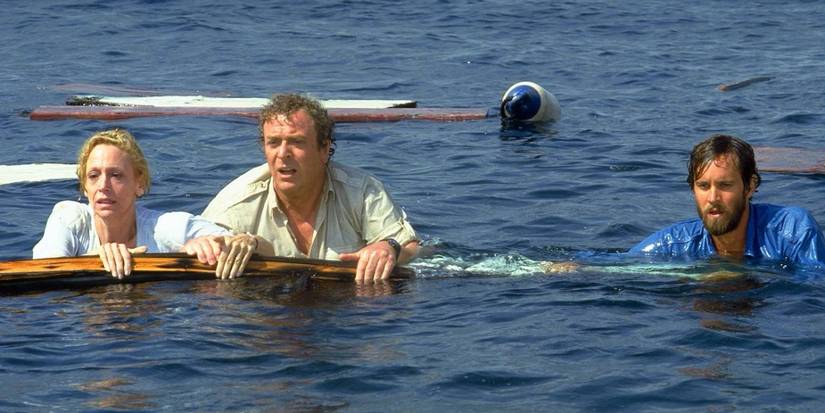
Lorraine Gary, Michael Caine and Lance Guest holding onto detritis in the water in Jaws: The RevengeImage via Universal Pictures
Bad writing in a horror sequel often reveals itself through desperation, and Jaws: The Revenge absolutely reeks of it. The original Jaws is written with such beautiful inevitability. The shark is terrifying, yes, but the real genius lies in how the story traps different human failures around that threat: denial, ego, municipal cowardice, masculine competition, fear of water, paternal responsibility. The shark becomes the point where all those anxieties meet. It is not just a fish attacking people. It is the engine of communal and personal breakdown.
By the time you get to Jaws: The Revenge, the writing has collapsed into pure superstition masquerading as plot. Ellen Brody (Lorraine Gary) believes the shark is somehow targeting her family personally, and the film never earns that insane premise in psychological or supernatural terms. It just expects you to accept vendetta-shark logic as though trauma itself can write the screenplay. Hoagie Newcombe (Michael Caine) drifts through the movie charmingly, which only highlights how little dramatic seriousness the film can sustain. And Hoagie offers the film its only real ease, and even that mostly underlines how detached everything else feels. The Bahamas setting, the telepathic-feeling shark appearances, the bizarre final confrontation, all of it reveals a sequel so stripped of narrative credibility that it starts feeling like grief rewritten by someone running a fever. Look, horror can survive irrationality. It cannot survive this kind of narrative delirium.
2
‘Caddyshack II’ (1988)
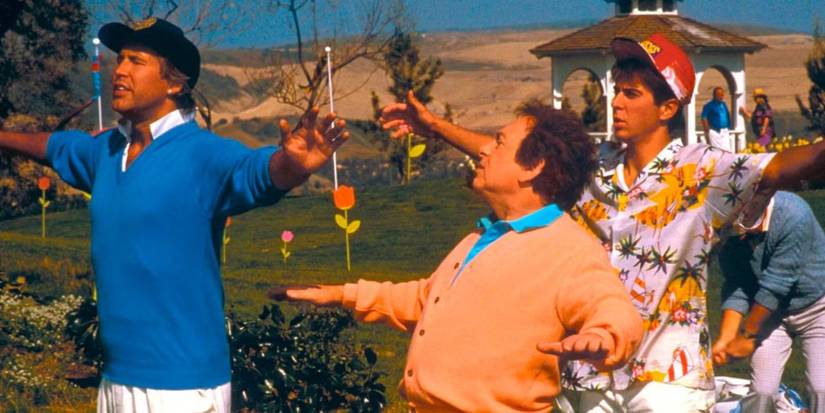
Image via Warner Bros.
The original Caddyshack is messy, but it is alive in that difficult-to-manufacture way comedies sometimes are when they stop trying to be well-made in the neat sense and instead just let comic anarchists collide inside a privileged social space begging to be mocked. It is built from attitude, timing, class hostility, vulgarity, and the feeling that the movie might fly off its hinges at any second. A sequel could never truly reproduce that. Fine. But it could at least understand that the original’s writing worked by letting chaos puncture snobbery with real comic aggression.
Caddyshack II seems terrified of aggression. It sanitizes everything. The class satire becomes broad mush. Jack Hartounian (Jackie Mason) should have brought a fresh, combustible energy to the country club setting, but the writing makes him feel like a concept being repeated at people rather than a comic force cutting into the world around him. So many of the jokes arrive pre-softened, as if the film is apologizing for existing before it has even made the attempt. Worst of all, it mistakes callbacks and recycled setting for continuity of spirit. The original was disreputable in a way that made it feel dangerous and free. This sequel is house-trained. You can feel the life draining out of it scene by scene.
1
‘S. Darko’ (2009)
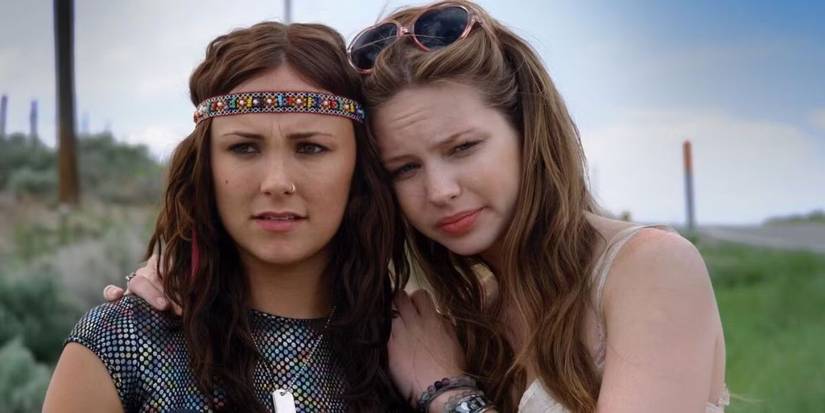
Image via 20th Century Fox Home Entertainment
S. Darko comes on top because it commits the most unforgivable sequel crime of all: it parasitically feeds on a film whose power came from mystery, emotional fracture, and unstable interior logic, then tries to imitate the mood without any of the thought that generated it. Donnie Darko works because it is written from inside adolescent dread. Time-travel speculation, suburban malaise, destiny, death, family intimacy, spiritual terror, romantic longing, all of it is fused through Donnie Darko (Jake Gyllenhaal)’s damaged and searching consciousness. Even the film’s ambiguity feels authored. You are not confused because the movie is empty. You are unsettled because it is dealing in experiences too fractured to be reduced to one clean explanation.
Samantha Darko (Daveigh Chase) leaves home, weird things happen, apocalyptic suggestion creeps in, eccentric side characters orbit, but the writing never finds a center of psychic or emotional necessity. Events do not feel fated. They feel arranged. Symbolism does not feel discovered. It feels borrowed. Even the premise of following Donnie’s younger sister is the sort of sequel move that sounds meaningful only to people who think continuity of bloodline equals continuity of soul. It does not. The result is not just a bad movie but a counterfeit haunting, a sequel written by people who noticed the original’s surface strangeness and missed the wound underneath it. That is why it belongs at the bottom. It is empty where it needed to bleed.

S. Darko
Release Date
April 28, 2009
Runtime
103 minutes
Director
Chris Fisher
Writers
Nate Atkins
-

Daveigh Chase
Samantha Darko
-
Elizabeth Berkley
Trudy Potter
-
-





COMMENTS