
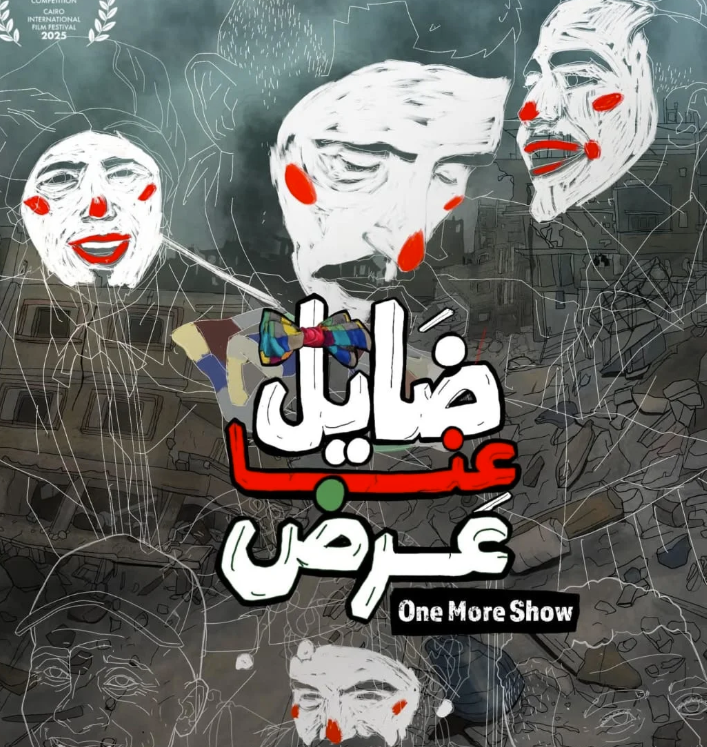
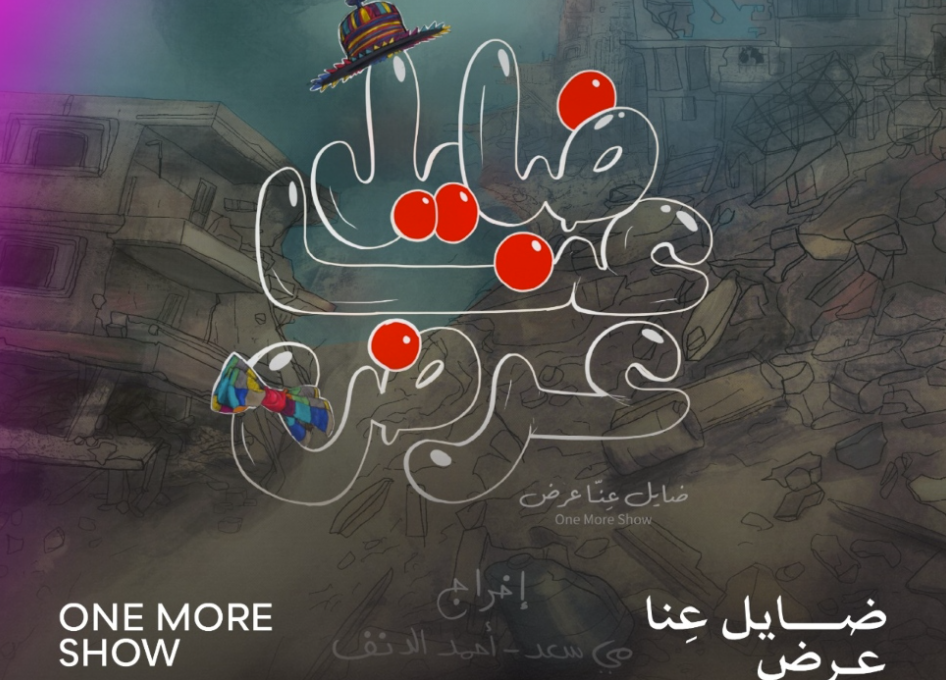
One More Show — directed by Mai Saad and Ahmed Eldanf — arrives at the 46th Cairo International Film Festival as one of the most emotionally shatterin
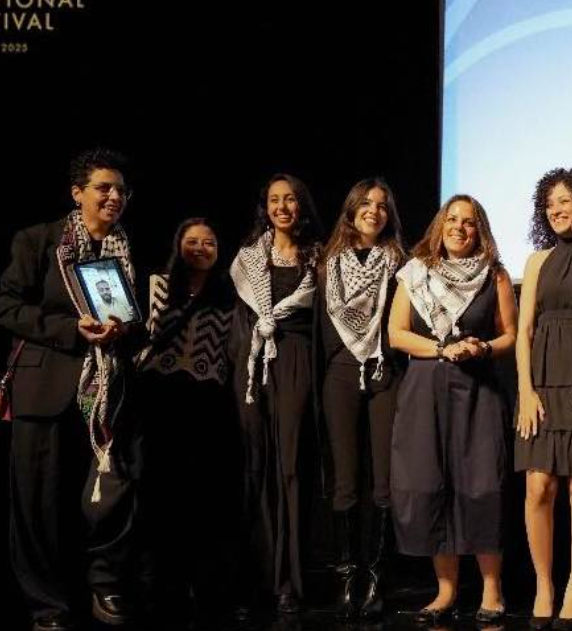
One More Show — directed by Mai Saad and Ahmed Eldanf — arrives at the 46th Cairo International Film Festival as one of the most emotionally shattering films in competition. Premiering in the Golden Pyramid section, it represents not only a major achievement for Arab documentary cinema, but also a rare cinematic testimony filmed from within one of the most inaccessible war zones in the world.
What Saad and Eldanf capture is not simply destruction.
They capture humanity refusing to surrender, one performance at a time.
A Story Only Witnesses Can Tell
Filmed in July 2024 during the heaviest bombardment in Gaza’s modern history, the documentary follows the Free Gaza Circus, a group of young performers who transform the most devastated landscapes into impromptu stages.
The troupe’s members —
Youssef Khedr, Mohamed Ayman, Mohamed Abed (Just), Ahmed Zeyara (Batout), Ismail Farahat, Mohamed El Akhras (El Tukri), Ashraf Khedr, Adam Anwar, Mohamed Hawleh, Mohamed El Sheikh (Ankabout), Ahmed El Agha, Mahmoud Al Zawaida, Malak Saad El Deen, Ahmed Shaaban —
offer a portrait of a generation that has known nothing but war, yet insists on creating joy for others.
Their performances are not a profession.
They are a survival instinct.
A Logistical and Human Triumph
What makes One More Show extraordinary is its very existence.
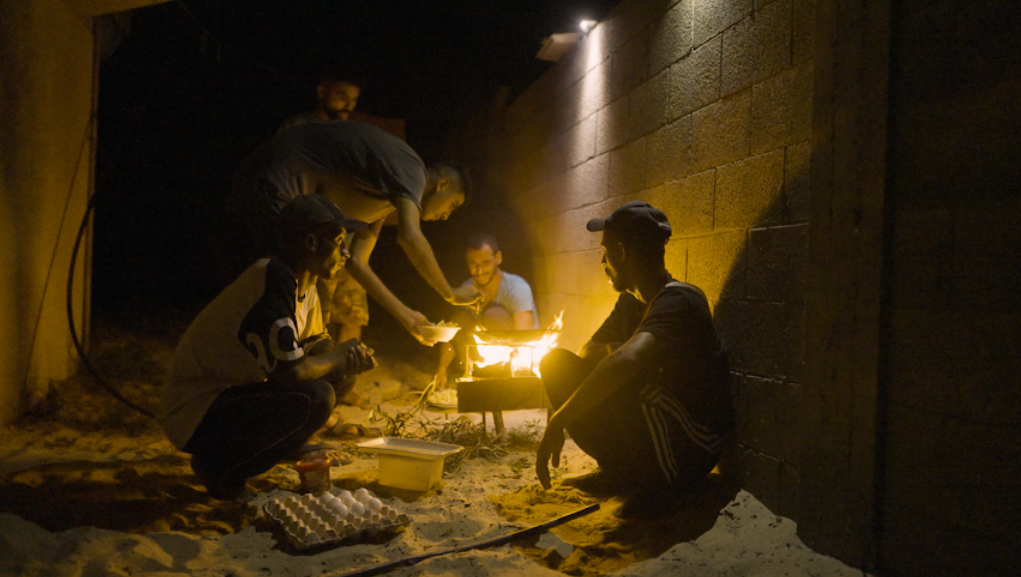
Co-director Ahmed Eldanf filmed inside Gaza, often with cameras powered by flashlights because of power outages, while co-director Mai Saad coordinated editing, storytelling, and the film’s structure from Cairo under near-constant communication disruptions.
The footage was sent in fragments through unstable internet connections — often only minutes at a time — making the filmmaking process itself a parallel narrative of resilience.
This is one of the rare documentaries shot by people who lived the events, not outsiders arriving later.
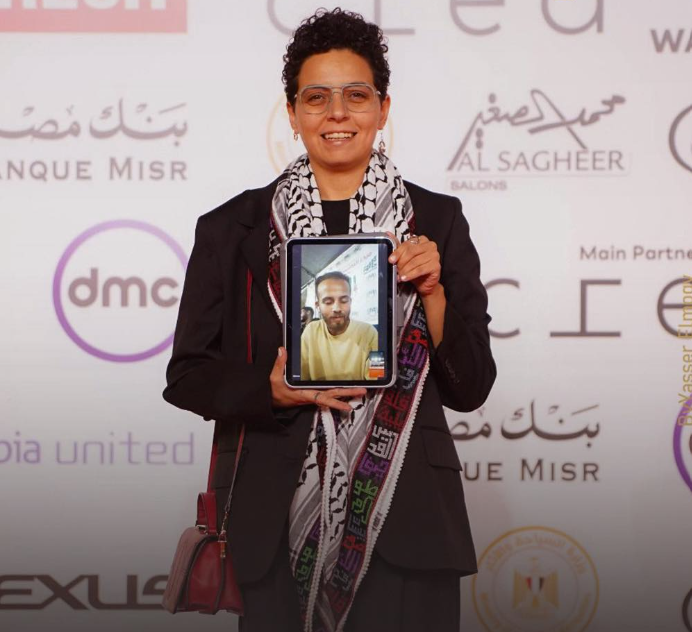
Directors: Mai Saad, Ahmed Eldanf
Behind the Clown Makeup: Stories the World Rarely Hears
Each performer embodies a different dimension of trauma and resilience:
Batout — the clown with a broken heart
After securing German residency, he returned home to marry his fiancée.
She was killed in an airstrike.
His residency is now at risk, and the war has trapped him in the only home he knows — and the only place he may not survive.
He continues performing anyway, laughing louder than the grief that threatens to consume him.
Youssef — the veteran of four wars
Having survived the conflicts of 2008, 2012, 2014, and later attacks, he instinctively counts the seconds between missile whistles and impact.
His body reacts before his mind does.
Trauma has become muscle memory.
The younger performers — inheriting fear, reinventing hope
They juggle through ruins, sleep in abandoned schools, and dream of simple things:
– uninterrupted sleep
– a phone call with a child
– a hot meal
– a future beyond survival
Their hopes are painfully small, yet impossibly large.
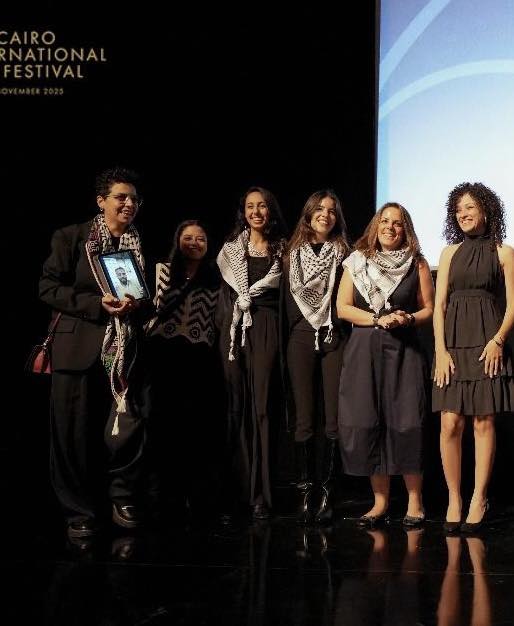
Cinematic Language Rooted in Reality
Saad and Eldanf choose not to beautify the war.
There is no stylized lighting, no polished frames, no manufactured pathos.
Everything we see —
the trembling camera,
the grain of low-light footage,
the sudden cuts caused by drone noise,
the moments when the screen goes dark —
is exactly how life unfolds in Gaza.
The filmmakers use the chaos as a cinematic texture, crafting a visual grammar that feels:
raw,
immediate,
urgent,
and painfully authentic.
One sequence, in which the circus prepares food by phone light while explosions shake the distance, is among the most haunting in contemporary documentary cinema.
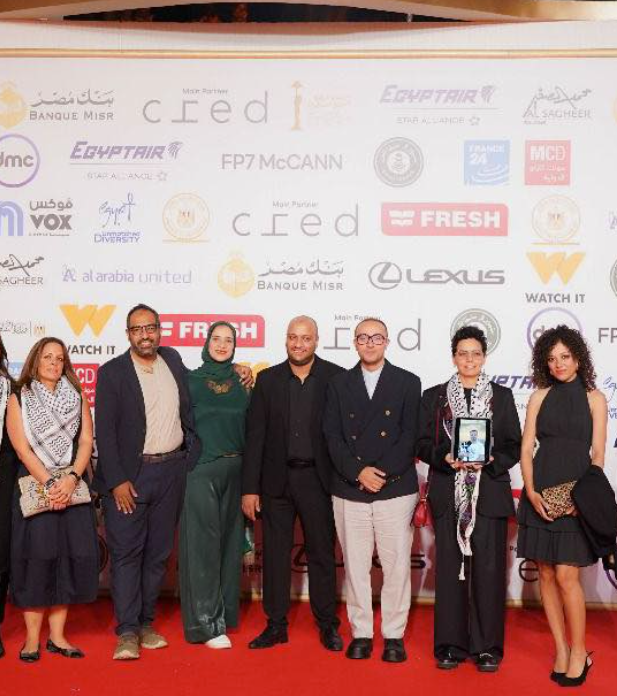
Comedy as Defiance, Childhood as Resistance
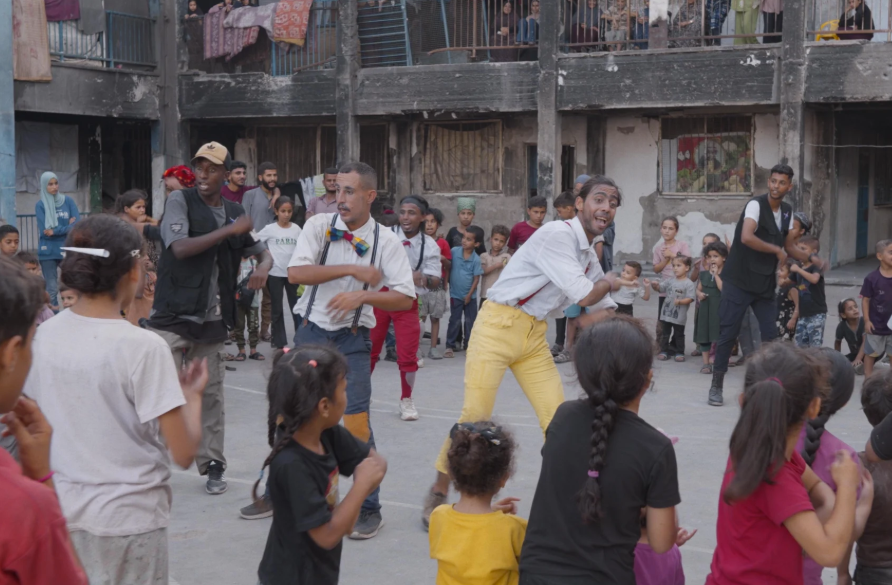
The film’s most powerful scenes occur when the troupe performs for children:
Kids clap with dusty hands.
Laughter rises between shattered concrete pillars.
A stilt walker towers above debris where homes once stood.
A clown falls theatrically as dust clouds lift behind him.
These are not staged moments.
They are rare fragments of childhood preserved by strangers who refuse to let Gaza’s children forget how to smile.
In the middle of destruction, these performers build a temporary world — a world where joy is still possible, even if only for seven minutes at a time.
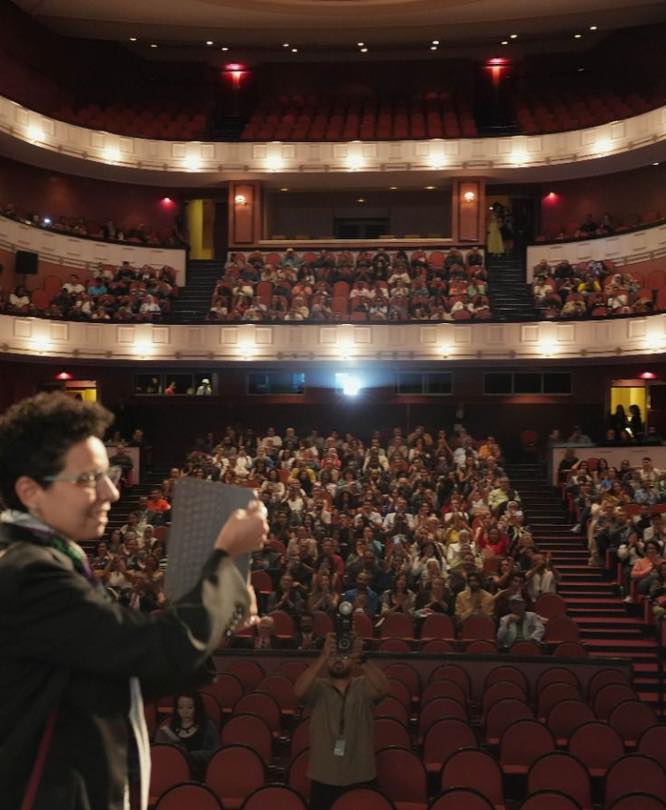
When Hope Collapses
Midway through the film, rumors of a ceasefire spread through Deir al-Balah.
The performers celebrate quietly:
“I’m taking you for falafel when we get home.”
“I just want to sleep one night without explosions.”
Moments later, an airstrike hits the street where their headquarters stands.
What follows is filmed without manipulation, without music, without commentary.
The team runs.
They help pull human remains from rubble.
One performer asks softly:
“Do you feel pain when you are blown apart?”
It is one of the most devastating lines in the film — not because it is dramatic, but because it is honest.
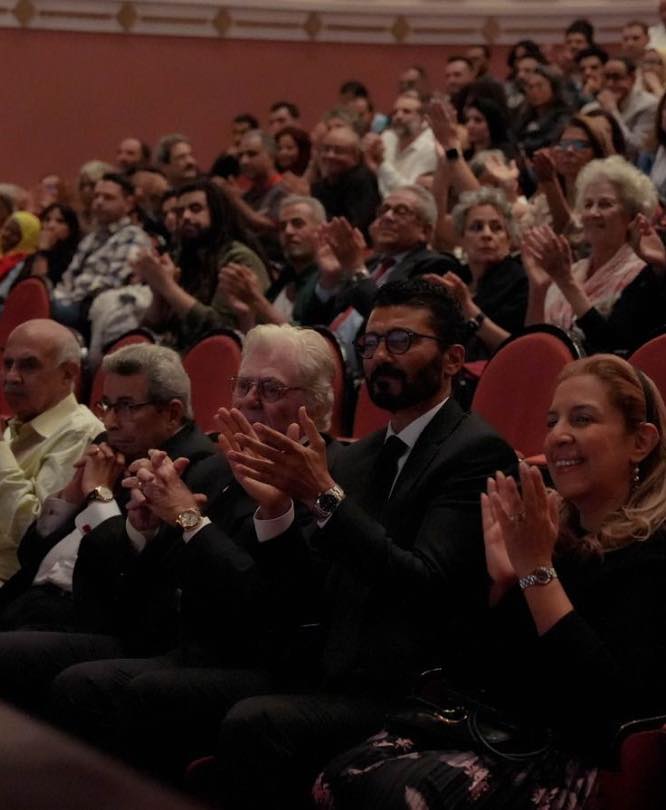
A Documentary That Holds the World Accountable
One More Show serves as a cinematic counterweight to decades of films centering Israeli soldiers’ trauma. Here, trauma is not reflective or philosophical; it is active, ongoing, unavoidable.
The performers do not have the privilege of healing.
They must continue performing — for children, for themselves, for a sense of normality.
In this sense, the film becomes an act of global witnessing.
A Testament to Human Dignity
Ultimately, One More Show is not a film about destruction.
It is a film about dignity in the face of annihilation.
It documents a reality that many will never see:
how people reclaim identity, joy, and humanity amid overwhelming cruelty.
Cinema often asks what it means to live.
This film asks a deeper question:
What does it mean to live when the world repeatedly tries to erase you?
One More Show is not just essential viewing — it is an urgent cinematic document for our time.
Credits
Directors: Mai Saad, Ahmed Eldanf
Screenplay: Mai Saad, Ahmed Eldanf
Cast: Full ensemble listed above
Cinematography: Ahmed Eldanf, Yousef Mashharawi, Mahmoud Mashharawi
Editing: Sara Abdallah
Sound Design: Moustafa Shaaban
Producers: Baho Bakhsh, Safei Eldin Mahmoud
Co-Producer: Mohamed Hefzy
Production Companies: Red Star, Film Clinic
Runtime: 75 minutes
Festival: Cairo International Film Festival — World Premiere
By Nabil Alani – CIFF46


COMMENTS