
By Sari Albeder | TheWorldScreen In just a few years, the Amman International Film Festival has become one of the Arab world's most respected platfor
By Sari Albeder | TheWorldScreen
In just a few years, the Amman International Film Festival has become one of the Arab world’s most respected platforms for cinema and industry professionals alike. More than a showcase for films, it has established itself as a meeting point where artistic ambition, professional development and international collaboration come together, helping shape the future of Arab cinema.

Princess Rym Ali, President and Co-Founder of the Amman International Film Festival, with Festival Director and Co-Founder Nada Doumani during the closing ceremony of the festival’s seventh edition.
A Festival with a Different Vision
Few film festivals establish a distinctive identity within only a handful of editions. Fewer still manage to do so while operating in a region shaped by political uncertainty and rapidly changing realities.
The Amman International Film Festival – Awal Film (AIFF) has quietly achieved exactly that.
Rather than competing through celebrity culture, commercial scale or headline-grabbing premieres, the festival has built its reputation by investing in filmmakers, professional development and meaningful industry exchange.
The festival has become one of the Arab world’s most respected platforms. Its success is measured less by the number of stars walking the red carpet than by the conversations it inspires, the careers it helps develop and the collaborations that continue long after the festival closes.
That identity has not been built around spectacle, but around purpose. Instead of positioning itself as another destination on the international festival calendar, AIFF has steadily evolved into a platform where emerging filmmakers gain visibility, established professionals exchange ideas, and new projects begin to take shape. In doing so, it has demonstrated that a festival’s influence is not defined solely by the films it screens, but by the opportunities it creates for the industry beyond them.

Festival Director and Co-Founder Nada Doumani addresses audiences during a public event at the Royal Film Commission’s open-air theatre, reflecting the festival’s commitment to dialogue beyond the screen.
A Shared Vision, Distinct Leadership
The Amman International Film Festival was founded on the vision of HRH Princess Rym Ali, whose ambition was to create a platform dedicated to strengthening Arab cinema and supporting emerging filmmakers. Since its inception, Festival Director and Co-Founder Nada Doumani has translated that vision into the festival’s artistic, strategic and operational identity, guiding its evolution into one of the region’s leading cinematic platforms.
From the outset, the festival distinguished itself through its focus on emerging filmmakers, creating a platform where new voices could gain visibility, connect with industry professionals and contribute to the continued development of Arab cinema.

Festival Director and Co-Founder Nada Doumani
While Princess Rym Ali continues to define the festival’s long-term vision and strategic direction, Nada Doumani has transformed that vision into the experience filmmakers, audiences and industry professionals encounter each year.
As Festival Director, Doumani oversees every aspect of the festival’s artistic and professional identity from programme curation and cultivating relationships across the international film community to the development of Industry Days, educational initiatives and strategic partnerships that continue to expand the festival’s regional and international profile.
Rather than pursuing rapid expansion, the festival has grown steadily while remaining faithful to its founding philosophy: creating a festival where filmmakers can learn, connect and develop their careers. That measured approach has enabled AIFF to strengthen its identity without losing the welcoming atmosphere that has become one of its defining characteristics.

Producer Dora Bouchoucha takes part in an open-air conversation at the Royal Film Commission, one of the festival’s public dialogue series designed to encourage the exchange of ideas between filmmakers, industry professionals and audiences.
Looking Beyond the Frame
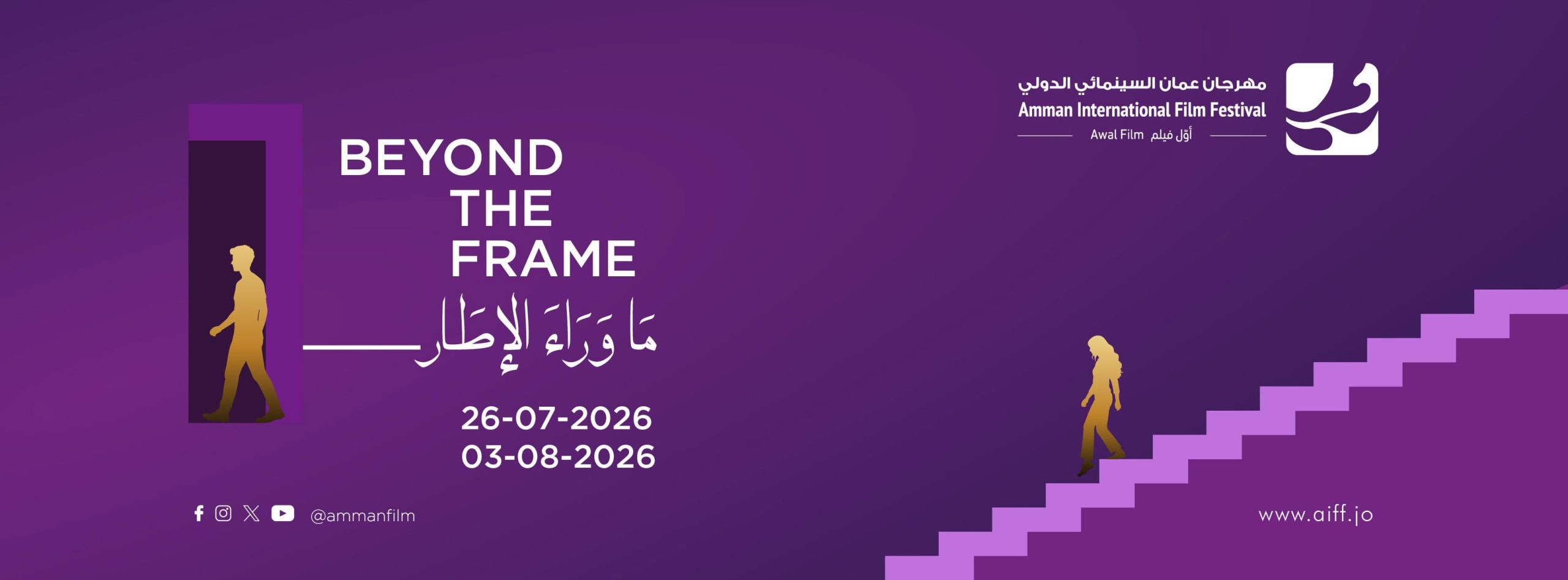
The philosophy behind this year’s edition was reflected in its theme, Beyond the Frame.
Rather than encouraging audiences to focus solely on what appears on screen, the theme invited filmmakers and viewers alike to look beyond the obvious—to explore the wider cultural, social and human realities that shape every story.
In many ways, the festival itself embodies that same philosophy.
Looking beyond the frame also means looking beyond premieres, awards and celebrity appearances to focus on the broader ecosystem that sustains cinema. Throughout the festival, equal attention is given to education, project development, mentorship and professional exchange, reinforcing the idea that cinema is shaped not only by what audiences see on screen, but also by the people, conversations and collaborations that make those films possible.
It is this wider perspective that distinguishes AIFF from many other festivals and gives its annual theme meaning beyond the programme itself.

Lebanese actor and filmmaker George Khabbaz speaks with audiences following a festival screening
Beyond the Screenings
Cinema remains at the heart of the festival, but the experience extends far beyond the screening rooms.
Masterclasses, public conversations, panel discussions and workshops explore every stage of filmmaking—from script development and directing to production, financing, distribution and international co-production.
Rather than functioning as promotional appearances, these sessions become genuine learning opportunities where internationally recognised directors, producers, actors, composers and critics openly discuss their creative processes, production challenges and the realities of building sustainable careers within the film industry.
For emerging filmmakers, this level of direct access to experienced professionals is often as valuable as the screenings themselves.
Equally important is the festival’s bilingual approach.
Many discussions and industry sessions are presented in both Arabic and English, enabling regional filmmakers to engage naturally with international professionals while making the programme accessible to a wider global audience.
The decision reflects the festival’s broader ambition: to strengthen Arab cinema while ensuring its conversations remain connected to the international film community.
The festival’s relationship with local audiences also contributes to its distinctive atmosphere. Strong public attendance demonstrates a growing appetite for Arab and international cinema in Jordan, creating an environment where industry professionals and film lovers experience the festival together rather than as separate communities.

Industry professionals exchange ideas during one of the Amman Film Industry Days sessions.
Building an Industry
Running alongside the public programme, the Amman Film Industry Days have become one of the festival’s defining pillars.
While audiences focus on completed films, Industry Days concentrate on the projects that will shape the region’s cinematic future.
Directors present films still in development, producers search for co-production partners, distributors discover emerging talent and industry professionals exchange expertise through pitching sessions, workshops, one-to-one meetings and project presentations.
Many of these projects are still seeking financing, international partners or festival exposure, making Industry Days one of the festival’s most practical contributions to Arab cinema.
For filmmakers, these encounters represent far more than networking opportunities.
They provide access to mentorship, financing, international partnerships and distribution channels that can determine whether a project reaches the screen at all.
In a region where access often presents a greater challenge than creativity itself, initiatives such as Industry Days contribute directly to strengthening the infrastructure of Arab filmmaking.
More importantly, they demonstrate that AIFF is not only celebrating cinema as it exists today, but actively investing in the films—and filmmakers—of tomorrow.

The festival’s presence across Amman’s public spaces reflects its ambition to make cinema part of the city’s cultural life, reaching audiences beyond the screening room.
Where Conversations Become Collaborations
Every film festival offers networking opportunities.
Very few make networking feel genuinely accessible.
One of the Amman International Film Festival’s most distinctive characteristics is something that, at first glance, appears remarkably simple.
At the end of each festival day, after hours of screenings, panel discussions, masterclasses and industry meetings, participants gather on the festival’s rooftop overlooking the city.
Officially, these evening gatherings are informal networking events.
In reality, they have become one of the festival’s defining strengths.
Unlike many international festivals, where networking often takes place behind invitation-only receptions, exclusive industry dinners or members-only events, AIFF creates an atmosphere where professional hierarchy almost disappears.
Established producers stand alongside first-time filmmakers.
Award-winning directors exchange ideas with film students.
Journalists speak directly with international sales agents.
Actors, distributors, festival programmers and critics share the same conversations without the visible barriers that often define larger international festivals.
For emerging filmmakers, this openness can be transformative.
The opportunity to approach a producer whose films have premiered at Cannes, discuss a project with an experienced sales agent or receive feedback from an internationally recognised director is rarely available in such an accessible setting.
What makes these encounters particularly valuable is their spontaneity.
Professional relationships begin not through scheduled meetings or formal introductions, but through conversations that develop naturally after a long day of screenings and discussions. A brief exchange over coffee can become the starting point for a future collaboration, while a simple introduction may evolve into a co-production, mentorship or festival opportunity months later.
These moments cannot be measured by attendance figures or festival awards.
Yet they may represent one of the festival’s most significant contributions to the industry.
In an era where access often determines opportunity, AIFF has quietly created something increasingly rare: an environment where meaningful professional relationships develop naturally, where emerging talent feels genuinely welcome, and where conversations have the potential to become future collaborations.
This culture of openness is not an accidental by-product of the festival—it reflects the same philosophy that runs throughout its programme: bringing people together, encouraging dialogue and ensuring that access to the film industry is based less on hierarchy and more on human connection.

An evening screening at the Royal Film Commission’s open-air theatre overlooking Amman, where cinema, public space and the city’s landscape become part of the festival experience.
Cinema in Uncertain Times
Since its inaugural edition, the festival has unfolded against an extraordinary regional backdrop.
From launching during the COVID-19 pandemic to navigating the humanitarian impact of the war in Gaza and wider geopolitical tensions across the Middle East, AIFF has repeatedly faced circumstances capable of disrupting international cultural events.
Yet despite these extraordinary challenges, the festival has continued to welcome filmmakers, industry professionals and audiences from around the world.
Not because those challenges disappeared, but because its organisers remained committed to preserving a space where filmmakers could continue to meet, exchange ideas and celebrate cinema.
Maintaining an international festival under such circumstances requires more than careful planning.
It reflects a belief that culture remains essential even during periods of uncertainty.
Rather than allowing external events to define its identity, the festival has demonstrated remarkable resilience while reaffirming cinema’s ability to connect people across borders, cultures and experiences.
In many respects, that resilience has become part of AIFF’s identity.
Each edition serves as a reminder that while conflict may disrupt travel, politics may shape the region and uncertainty may alter circumstances, artistic dialogue continues.
By continuing to bring filmmakers together year after year, the festival demonstrates that cinema remains not only a form of creative expression, but also an act of cultural continuity and international exchange.

The festival concluded with the Black Iris Awards, recognising emerging talent and reaffirming its long-term commitment to supporting the next generation of filmmakers.
Shaping the Future
The Amman International Film Festival is still young by international standards.
Yet within only a few years, it has established an identity that many festivals spend decades trying to achieve.
Not through celebrity culture or commercial scale, but through consistency of purpose.
By investing in emerging filmmakers, encouraging international collaboration and creating opportunities that extend well beyond the screen, the festival has become far more than an annual showcase for films.
It has become a place where projects evolve into productions, introductions become collaborations and emerging talent gains direct access to the international film community.
The shared vision of Princess Rym Ali and Nada Doumani has created a festival that looks beyond immediate success and invests in the long-term development of Arab cinema.
In a region where uncertainty has too often interrupted cultural life, AIFF offers something equally valuable and quietly powerful: a reminder that cinema is not only an art form, but a meeting place for ideas, cultures and people.
In doing so, the festival is not simply presenting Arab cinema to the world—it is helping shape its future.

