
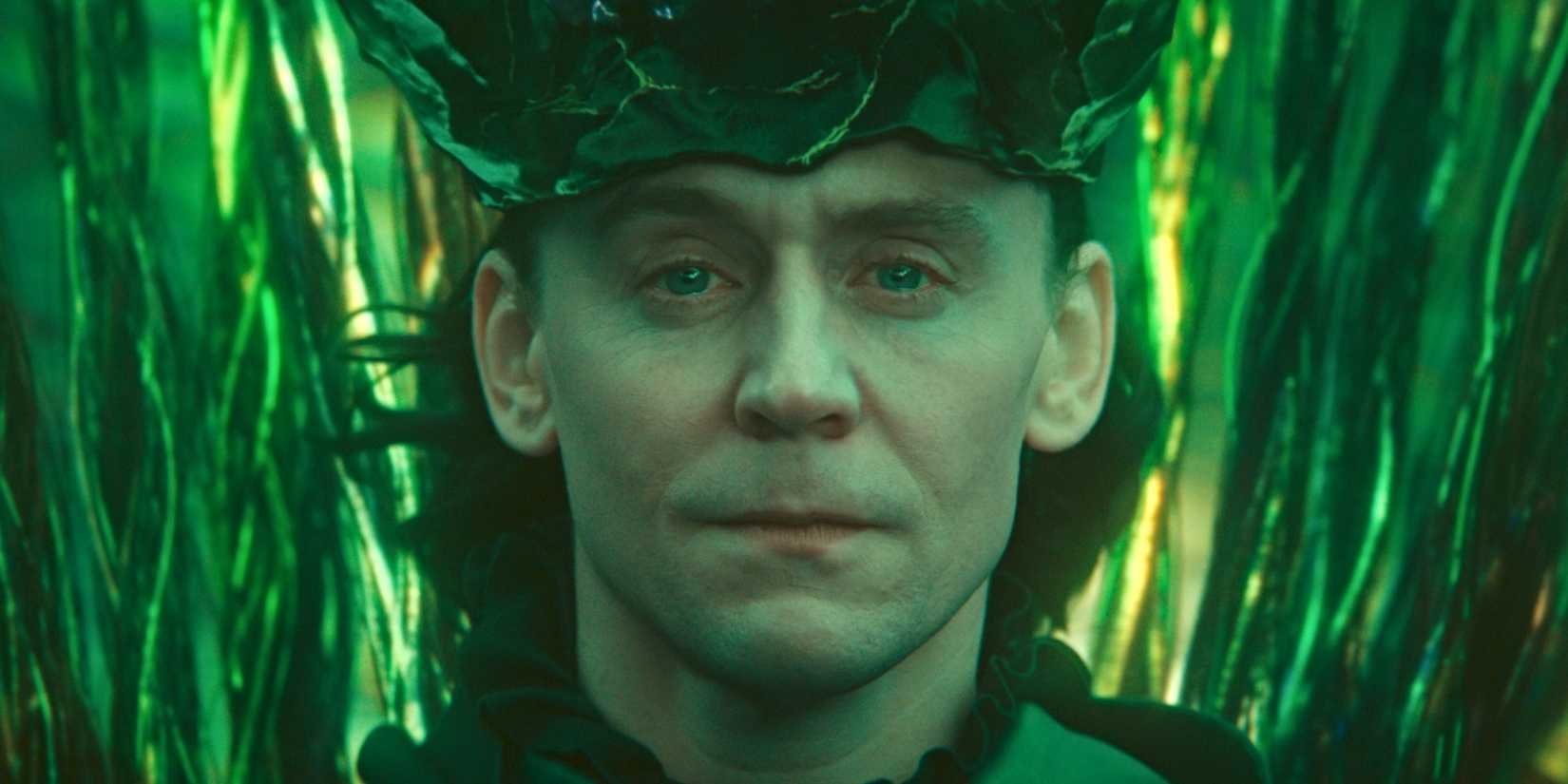
Not a lot of people were expecting to be touched by an MCU work after we learned about all the noise and confusion going on behind the scenes in their
Not a lot of people were expecting to be touched by an MCU work after we learned about all the noise and confusion going on behind the scenes in their television branches, but Loki managed to stick the landing and get us thinking not only about its timey-wimey shenanigans but also about some deeper issues. Now, Loki’s place in the multiverse feels particularly relevant again. Avengers: Doomsday is set to arrive in theaters on December 18, with the Avengers joining forces with The Fantastic Four, the Thunderbolts, and Earth’s other mightiest superheroes to save the multiverse from Doctor Doom. With the MCU once again putting the fate of the multiverse at the center of its story, one of Loki’s most meaningful moments is worth revisiting.
In “Glorious Purpose,” the series finale presents us with some beautifully acted and written scenes, including one where Loki (Tom Hiddleston) confronts He Who Remains (Jonathan Majors) about the inevitability of fate and how he could break the cycle of destruction brought upon the multiverse by the Kang (also Majors) variants. The god of mischief (now the god of stories) then recites two verses that symbolize his struggle: “We die with the dying. We are born with the dead.” Those are part of a poem by British writer T.S. Eliot, one that’s directly connected to the main subjects not only of the finale but also the whole series.
What Is T.S. Eliot’s “Little Gidding” About?
Marvel has used poetry in some of its series, as Raymond Carver‘s “Late Fragment” is quoted in Secret Invasion and T.S. Eliot in Loki. But while the former is more a commentary about Nick Fury’s (Samuel L. Jackson) relationship with his Skrull wife, Varra (Charlayne Woodard), the latter is directly related to the main premise of Loki and the title character’s journey through those two packed seasons. The poem itself is called “Little Gidding,” and it’s part of Eliot’s Four Quartets collection, which comprises four poems containing meditations on humanity’s relationship with time, the universe, and the divine.
Collider Exclusive · Marvel Personality Quiz
Which MCU Hero Are You?
Spider-Man · Daredevil · Iron Man · Punisher · Thor · Cap
Six heroes. One destiny. Answer 10 questions to discover which Marvel Cinematic Universe hero shares your personality, values, and fighting spirit. Will you swing, fly, or thunder your way to glory?
Spider-Man
Daredevil
Iron Man
Punisher
Thor
Cap
FIND YOUR HERO →
01
What drives you to do what’s right?
Choose the answer that feels most like you.
AWith great power comes great responsibility — I protect those who can’t protect themselves.
BMy faith and my conscience — I believe justice must be served, even in the gloomy.
CLegacy and ego, honestly — but I’ve learned that others depend on me now.
DThe system failed. Someone has to make sure the guilty actually pay.
EDuty to the innocent and honour to my name — I was born to protect realms.
FThe values I was raised with — freedom, decency, and never backing down from a bully.
NEXT QUESTION →
02
It’s 2 AM. Where are you?
Your answer says more about you than you’d think.
ASwinging between skyscrapers, keeping an eye on the neighbourhood.
BRunning rooftops in Hell’s Kitchen, listening for trouble.
CIn my lab, upgrading my suit with a frigid cup of coffee nearby.
DStaking out a target I’ve been tracking for three weeks.
ESomewhere between the stars, or at a feast that got out of hand.
FOn a morning run — I was up at 4, actually. Couldn’t sleep.
NEXT QUESTION →
03
How do you handle a villain who keeps escaping justice?
Every hero has a method. What’s yours?
AWeb them up and leave them for the police — again.
BBuild an airtight case and dismantle their entire operation from the inside.
CDeploy a containment system I designed specifically for them. Tech wins.
DMake sure they don’t escape a third time. Permanently.
EChallenge them to single combat. Honour demands a decisive end.
FRally allies, adapt the plan, and bring them in — by the book, even if it’s difficult.
NEXT QUESTION →
04
How do you feel about keeping a secret identity?
The mask — or the lack of one — says everything.
AEssential — my loved ones would be in danger if anyone found out who I am.
BCritical — the mask protects my mission as much as my face.
COverrated — I announced myself to the world and I’d do it again.
DI’m a ghost. The less people know about me, the better.
EMy name is known across the Nine Realms. There’s no hiding it.
FI don’t hide — but I understand why some need to. Transparency builds trust.
NEXT QUESTION →
05
You’ve lost someone critical because of your heroism. How do you carry that?
Every hero pays a price. The question is how they pay it.
AWith guilt that never fully goes away — it pushes me to do better, every single day.
BI channel it into purpose — their memory is the reason I keep fighting.
CI buried myself in work for years. I’m only recently learning to face it.
DIt transformed me completely. I’m not the same person I was before.
EWith warrior’s grief — I honour them by fighting with everything I have.
FI keep moving forward. Stopping means letting the loss win.
NEXT QUESTION →
06
What’s your role when working with a team?
Who you are under pressure is who you actually are.
AThe enthusiastic wildcard who somehow makes it work — and keeps the mood up.
BThe strategist who works best alone but shows up when it matters most.
CThe one who funds it, equips it, and occasionally takes over the whole operation.
DI don’t do teams. I’m more effective operating solo, on my terms.
EThe bulky hitter — I crash in, draw fire, and turn the tide of battle.
FThe leader — I earn trust, build the plan, and make sure no one gets left behind.
NEXT QUESTION →
07
Where do you draw the line between justice and revenge?
The answer defines what kind of hero you really are.
AClearly — I don’t kill, and I wrestle with that line constantly.
BI try to hold the line, but I’ve come terrifyingly close to crossing it.
CPractically — I do what’s necessary to protect people, including difficult calls.
DI crossed that line long ago. What I do is justice — the system just won’t admit it.
EIn battle, victory is justice. Mercy is earned — not automatic.
FFirmly. The moment we abandon our principles, we become what we fight against.
NEXT QUESTION →
08
When you’re not saving the world, what does life look like?
The person behind the mask is always the more captivating story.
ATrying to juggle school, a part-time job, and not failing my friends.
BWorking as a lawyer by day, fighting for justice in court and on the streets.
CRunning a global company, attending galas, and pretending I’m sleeping enough.
DQuiet. Isolated. Surviving with a clear mission and no distractions.
ENavigating a bizarre and fascinating mortal world — coffee is extraordinary.
FAdapting to a world decades ahead of everything I knew. Quietly, stubbornly.
NEXT QUESTION →
09
What keeps you up at night?
Fear is useful data — if you’re truthful about what you’re actually afraid of.
AThe people I couldn’t save — and the ones I might not reach in time tomorrow.
BWhether the monster I fight every night is starting to live inside me too.
CThe threats I can see coming and whether my tech is actually good enough.
DNothing. Silence is the only peace I get. I’ve made my choices.
EWhether I’m truly worthy — of the hammer, of the throne, of the people I protect.
FA world where no one stands up anymore. Where good people do nothing.
NEXT QUESTION →
10
The battle is lost. You’re outnumbered, outgunned, and exhausted. What do you do?
This is your tiebreaker — choose carefully.
ACrack a joke to buy a second, then find the one web shot that changes everything.
BBlock out everything except the sound of the next threat — and keep going.
CActivate the emergency protocol I built for exactly this scenario. Always have a plan.
DI don’t accept that it’s lost. I keep fighting until I physically cannot anymore.
ECall the lightning. All of it. The storm answers to me.
FPick up the shield. Stand up. Because as long as I can stand, it’s not over.
REVEAL MY HERO →
Your Hero Has Been Identified
Your MCU Hero Is…
Based on your answers, the Marvel hero who matches your spirit, values, and instincts has been revealed.
🕷️ Spider-Man
You carry the weight of the world on shoulders that are younger than they should have to be — humorous, steadfast, and endlessly self-sacrificing.
- You do the right thing not because it’s simple, but because no one else will.
- You understand that responsibility isn’t a burden you choose — it’s one that finds you.
- Whether it’s a neighbourhood mugging or a multiverse crisis, you show up.
- Peter Parker’s lesson — that great power demands great responsibility — isn’t a slogan to you. It’s the code you live by, even when it costs you everything.
😈 Daredevil
You fight in the shadows between law and chaos, guided by a fierce moral compass that refuses to let the guilty walk free.
- You operate every tool available — your mind, your body, your faith — to protect those the system overlooks.
- You’ve looked into the darkness and chosen not to become it, though the line has never been simple.
- Matt Murdock’s duality — champion in the courtroom, devil in the alley — mirrors your own.
- Relentless, conflicted, and unwilling to stop. That is exactly you.
🤖 Iron Man
Brilliant, driven, and occasionally insufferable — but always the person who solves the unsolvable problem.
- You lead with your mind and back it up with resources, innovation, and a stubbornness that borders on heroic.
- You started out looking out for yourself, but somewhere along the way the world became your responsibility.
- Tony Stark’s arc — from ego to sacrifice — is your arc too.
- You build, you plan, and when the moment comes, you’re willing to give everything. Because in the end, you’re Iron Man.
💀 The Punisher
You’ve been through fire that would break most people — and it did change you, completely. What’s left is unyielding, relentless, and operating by a code forged in grief.
- You don’t ask for forgiveness, and you don’t expect gratitude.
- You see a corrupt, broken world and you’ve decided to do something about it, consequences be damned.
- Frank Castle’s war is born from love twisted by loss — and so is yours.
- Uncompromising and unflinching — the world may not agree with your methods, but your conviction is absolute.
⚡ Thor
Powerful, proud, and on a lifelong journey to become worthy of the legend you carry.
- You lead with strength but have learned — sometimes painfully — that true greatness comes from humility and growth.
- You’re larger than life, yet more vulnerable than you let on.
- Thor’s story is one of transformation: from arrogant prince to worthy king, from isolated warrior to beloved protector.
- You bring the storm when it’s needed — and the warmth when it matters just as much.
🛡️ Captain America
You believe in something bigger than yourself — and you fight for it even when the world has moved on and nobody else will.
- You don’t bully the petite guy, and you never stop when it gets difficult.
- Steve Rogers didn’t become a hero when he got the serum — he was always one. So were you.
- Your strength isn’t in your fists; it’s in your refusal to compromise what’s right, no matter the cost.
- In a world full of people taking the simple road, you’re the one who picks up the shield and stands up — every single time.
↻ RETAKE THE QUIZ
World War II was the main driver of Eliot’s writing at the time, as Great Britain suffered from daily air raids conducted by the Nazis, and this influenced his reflections and view on humanity as a whole. The title of the poem is the name of a petite parish in Cambridgeshire, England, and is meant to symbolize the meeting between the divine (the parish itself) and human (the faithful) elements.
Although it makes many religious references — with the imagery of fire embodying this divine element — this isn’t something that’s directly related to Loki’s plot, even if we try to see He Who Remains as an avatar of God. Still, there is a lovely reflection on the cycles of nature related to humanity and how we deal with them, using death and grief as symbols (although it isn’t a poem about grief). Within the idea of repeating cycles is also the notion of renewal, as humanity turns its back on the divine to wage war inside itself and engages in a cycle of destruction and creation that is a consequence of this neglect of its spiritual side. Thus, history is bound to repeat itself constantly as humanity perpetuates these never-ending cycles of death and rebirth.
How Does T.S. Eliot’s Poem Relate to Loki’s Journey?
Tom Hiddleston in LokiImage via Marvel Studios/Disney+
When Loki recites it, He Who Remains has just finished explaining that there is no way to stop him from being killed by Sylvie (Sophia Di Martino) and, subsequently, the implosion of the Temporal Loom. It works as a fail-safe, so its destruction means that every branched timeline will be pruned to ensure that only the Sacred Timeline remains, thus avoiding another Multiversal War between the Kang variants and ensuring the time loop that ends up with He Who Remains back on his chair in the Citadel at the End of Time. It’s a tragic moment when we’re reminded that Loki is actually the person who has to always lose in order to make way for the heroic deeds of someone greater.
It’s also the moment when something shifts inside Loki, and he starts to realize that he’s the one who’s going to have to make a sacrifice to ensure the survival of his friends and the branched timelines. He makes this decision a few minutes later, but he’s starting to realize he doesn’t actually need to kill Sylvie to stop the spaghettification of everything outside the Sacred Timeline. “We die with the dying: See, they depart, and we go with them. We are born with the dead: See, they return, and bring us with them.” In this context, the idea behind the verses is that, whenever we lose someone, we lose a piece of ourselves, but they also leave a piece of themselves with us, too. It speaks about the inevitability of fate and death, and how we just can’t prevent some things — in Loki’s case, how he can’t prevent the deaths of his friends.
Those are just two lines in “Little Gidding,” though — there are 44 more, and they bear an eerily lovely parallel with Loki’s journey. The poem starts with a very suggestive line about Loki’s situation: “What we call the beginning is often the end, and to make an end is to make a beginning. The end is where we start from.” The death of He Who Remains is the trigger to all this madness, and Loki can only make sense of everything if he goes back to that moment — to the beginning. But it’s also the end, because, from that point, the branched timelines were all doomed. So, the beginning is the end, and that’s where Loki has to start.
Related
Marvel Officially Confirms Which Disney+ Show Matters Most Before ‘Avengers: Doomsday’
One Marvel character finally gets burdened with glorious purpose.
The last part of the poem starts with these lines: “We shall not cease from exploration, and the end of all our exploring will be to arrive where we started and know the place for the first time.” Shortly before he arrives at the Citadel at the End of Time, Loki does everything he can to stop the implosion of the Loom, including spending centuries studying everything in Physics to save precious seconds that could avoid the machine’s implosion. He explores every possibility and concludes that preventing Sylvie from killing He Who Remains is the only way. When He Who Remains tells Loki there’s no way to stop anything, even then Loki doesn’t cease his exploration.
However, he eventually understands he has to be what holds the multiverse and its infinite branches together, and goes back to the Citadel at the End of Time and takes He Who Remains’ place. “A condition of complete simplicity (costing not less than everything) and all shall be well, and all manner of thing shall be well,” writes T.S. Eliot at the conclusion of “Little Gidding,” which could very well be the conclusion of Loki itself.
That ending feels especially relevant with Avengers: Doomsday approaching. Once again, the survival of the multiverse will be at stake, this time as the Avengers, Fantastic Four, Thunderbolts, and other heroes come together against Doctor Doom. Loki’s sacrifice was ultimately about allowing those countless timelines and the people within them to continue existing, making the ideas of endings, beginnings, death, and renewal in “Little Gidding” particularly fitting as the MCU prepares to put the multiverse in danger once again.
T.S. Eliot’s Work Played a Role in the Production of ‘Loki’ Season 2
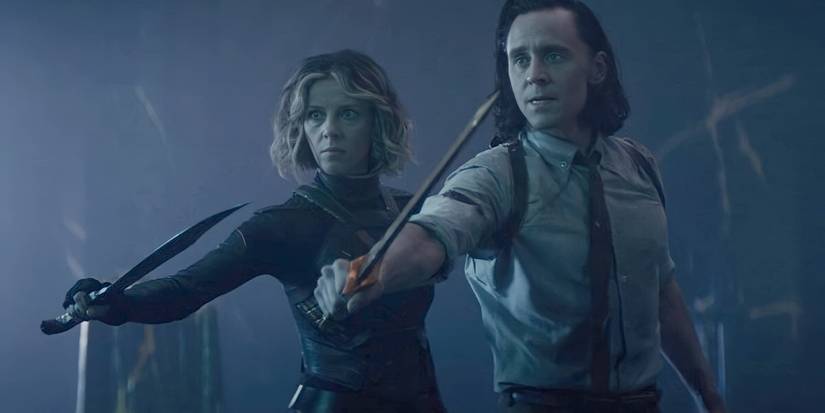
Tom Hiddleston as Loki and Sophia Di Martino as Sylvie confronting He Who RemainsImage via Disney+
One of the most captivating tidbits about the production of Loki Season 2 is that T.S. Eliot’s work played a much larger role than just having two lines recited in the finale. Four Quartets was an critical reference for Tom Hiddleston to work on his portrayal of Loki in Season 2. His reading of how Four Quartets parallels Loki’s journey is the sort of thing only a well-read artist could come up with, and we know him to be just that. But he’s also a producer on Loki and an overall thoughtful person, so he made sure everyone on the team understood the insight he had into his character.
The best example of this is the fact that Hiddleston gifted composer Natalie Holt with a copy of Four Quartets, something Holt revealed in an interview with Collider. Holt’s work on Season 2 is among the best soundtracks of the entire MCU, displaying an understanding of Loki’s journey that is crucial to conveying emotion through music.
Loki is available to stream in its entirety on Disney+ in the U.S.

