
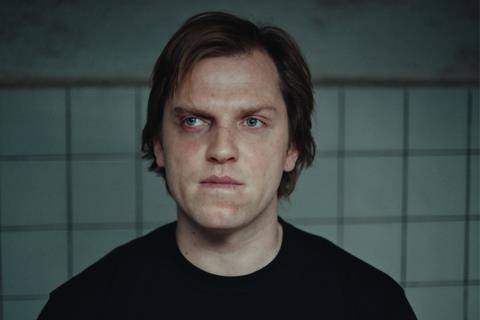
Dir/scr: Nicolas Ehret. Germany. 2026. 114mins Germany, the near future. The EU has collapsed, dwindling resources have led to war in Europe and
Dir/scr: Nicolas Ehret. Germany. 2026. 114mins
Germany, the near future. The EU has collapsed, dwindling resources have led to war in Europe and the country has elected a far-right government that has brought back compulsory military conscription and firmly closed its borders. In the midst of this upheaval, a youthful man must try to remain true to himself while watching the collapse of everything he’s known. In his accomplished debut, German writer/director Nicolas Ehret keeps the focus on one fractured family to explore wider, painfully pertinent ideas of intergenerational trauma on a national level.
Gritty, unshowy depiction of a recognisable world order being steadily eroded
Making its debut in Munich’s New German cinema strand, this is a sturdy calling card for Ehret, who makes the step up to features after shorts including Das Rote Rad (2019) and Nach der Warheit (2015). The film’s impressive craft and narrative timeliness could see it grab the attention of further events, but it could struggle to assert itself beyond the festival circuit.
Twenty-something Jonas (Enno Trebs) lives in a comfortable city apartment with his 12-year-old half-sister Leonie (Naila Schuberth), having become the girl’s full-time guardian following the death of their parents. He has, however, just been declared fit for military service, and is told he must report for duty in a week. This is the recent reality facing Germany’s youth, following (we learn via conversations and news reports) the collapse of the EU, the rise of nationalistic governments and the intensifying of war. Some, like Jonas’s friend Zelal (Soma Pysall), try and fight the turning tide by engaging in public hunger strike protests. For Jonas, a self-proclaimed ‘conscientious objector’, the only answer is to flee.
Jonas takes Leonie to the country home of his estranged father Stuber (Ulrich Matthes), who he has not seen since childhood. Filming in boxy aspect ratio and working in muted natural colours, cinematographer Fabian Gamper (Sound Of Falling) paints Stuber’s farm as more claustrophobic compound than rural retreat. His basic home is all looming shadows and dim wood; outside, he and his neighbours are erecting a towering, barbed wire fence along their river border, determined to keep out the refugees that are flooding in from European warzones.
Despite these heightened events, Ehret keeps the drama subdued, his screenplay constructed around the personal interactions between this petite community as they are buffeted by wider political machinations. The film’s power comes from its gritty, unshowy depiction of a recognisable world order being steadily eroded beyond the point of no return. A restrained, melancholy score from Birger Clausen is used in tandem with everyday sounds – in particular, the insidious rhythmic thud of Stuber’s concrete mixer – to slowly ratchet up the tension.
Trebs is excellent as bewildered moral compass-of-sorts Jonas, a man who has only known stability and peace thrown into a turmoil to which he cannot apply his usual logic. A brief conversation he has with his ill, ageing grandfather – a proud Second World War veteran kept hidden away in the Stuber’s attic bedroom – may be somewhat on the nose, but it highlights key ideological fault lines. “Compassion is the sole disgrace of these days,” snarls the aged man; a belief clearly shared by those now (and formerly) in power, and drip-fed to the confused and terrified masses.
We’ve been here before, of course; most obviously in Nazi Germany but many times, in many places. Indeed, the film’s title speaks to the pendulum swing of history, that if we fail to learn from the past we are doomed to repeat the same destructive patterns. The question of whether it is possible to break the cycle is at the heart of the film, and Jonas does his best to cling on to what’s right. Yet as events take a terrible turn and his basic survival instinct begins to kick in, his choices become questionable – and the values he holds so dear begin to slip through his fingers.
Production company: Epik Filmproduction
International sales: Arthood Entertainment
Producers: Huseyin Tabak, Mehmet Aktas, Kathrin Rodemeier
Cinematography: Fabian Gamper
Production design: Marcel Beranek
Editing: Tobias Dietz, Andrea Hanke
Music: Birger Clausen
Cast: Enno Trebs, Naila Schuberth, Ulrich Matthes


COMMENTS