
Dir/scr: Theo Rollason. UK. 2026. 97mins This entertaining and intimate documentary takes us to the set of queer British filmmaking pioneer Dere
Dir/scr: Theo Rollason. UK. 2026. 97mins
This entertaining and intimate documentary takes us to the set of queer British filmmaking pioneer Derek Jarman’s 1991 spin on the Elizabethan play Edward II. The behind-the-scenes material was shot by Seamus McGarvey, now an Oscar-nominated cinematographer (for Atonement and Anna Karenina), who was then in his early 20s and a member of Jarman’s close-knit inventive troupe. McGarvey, we’re told, was given ‘free rein’ to film while Jarman, then 49, directed his low-budget, iconoclastic adaptation at Bray Studios in Berkshire. Curiously, the miniature Thames-side complicated was also hosting Cliff Richard and Status Quo, who were working in neighbouring buildings – a coincidence not without repercussions.
A more focused, less biographical and less serious take on the director
Queer Edward II offers a privileged, fun view of the independent filmmaking process, complete with a pack of beagles running amok on set; Jarman musing mischievously about the BBC’s appetite for nudity; extras demanding more money; queer-rights activists running riot at the studios; and producers panicking about the budget and the risk of being sued. World premiering out of competition in Venice, the film could interest specialist distributors, given its lively collision of art, media and politics. This accessible and revealing documentary has clear appeal to those interested in the boundary-pushing edges of British cinema, but also to those curious about queer cultural, social and political history more generally.
In making Edward II – partly the story of a medieval king’s perilous affair with a male lover – Jarman took inspiration from contemporary protests against Section 28 (which banned councils from ‘promoting’ homosexuality) and from the campaign to lower the age of consent for gay men. The film revisits this pivotal moment for the UK’s LGBTQ+ community and Jarman himself, who was vocal on both issues and unusually candid for a public figure about both his sexuality and living with HIV. (He died in February 1994, at 52, from an AIDS-related illness.)
Debut feature writer-director Theo Rollason convincingly draws links between the images of queer activism that Jarman embedded in Edward II – inviting radical campaigner Peter Tatchell and a group of placard-waving OutRage! protesters to appear as Edward’s army – and Jarman’s own work as a campaigner beyond the screen. Art and life also merge when those same protesters get wind of Cliff Richard performing in the next-door studio and storm it, provoking media interest. Jarman’s amused reaction deepens the portrait of him: ‘My heart is with the OutRage! people. If I was 22, I’d have done it.
Queer Edward II is also good at reminding us what Britain was like in 1991. Archive clips of a Conservative MP arguing against lowering the age of consent or Jeremy Paxman on Newsnight reporting that there is just one openly gay MP remind us of the world beyond Jarman’s bubble – as do McGarvey’s cheeky shots of crew members up ladders reading The Sun, ignoring the ‘erotic’ filmmaking (as Jarman labels it) unfolding below.
Jarman’s life and career were covered more comprehensively by Isaac Julien’s 2008 doc Derek, but Queer Edward II is a more focused, less biographical and less serious take on the director. It moves deftly between behind-the-scenes reportage using McGarvey’s 16mm footage and a more conventional arts-documentary mode (drawing on material shot by the BBC’s The Media Show at the time). It also uses library footage to contextualise Jarman’s life: his entry into London’s alternative cultural scene in the 1960s; his early work as a production designer for Ken Russell; and the controversy around his first feature, 1976’s Sebastiane.
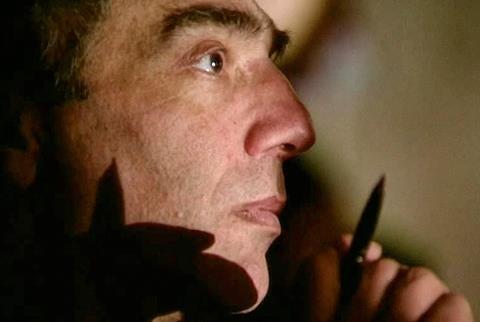
Yet Jarman’s personality emerges through considerable footage of him at work. He’s a heated, relaxed presence, comfortable with his vision and strikingly zen. He talks with ease to McGarvey, who we hear only occasionally, such as when he asks if he thinks Edward II will be a good film. (Jarman jokes that some fans will find it too mainstream for being shot on 35mm and that Merchant Ivory should like it.) His illness is present – we see him taking pills and he talks of the uncertainty of not knowing how long he has left – but not a massive focus.
There is also ample room for Jarman’s colleagues, capturing the spirit of collaboration that ran through his work. There to spot (although not explicitly introduced) are Tilda Swinton (then 30 and already a veteran of Jarman’s films), set designer Christopher Hobbs, costume designer Sandy Powell and composer Simon Fisher Turner, who has several scene-stealing moments, whether capturing sample sounds from echoing scaffolding poles or fooling around on a keyboard with Cliff Richard samples.
Production companies: John Gore Studios, March 13th, Matter Out of Place, Blue Moon Films, Lightborn Films
International sales: After Hours, sales@afterhoursfilms.com, Cinephil, info@cinephil.com
Producers: Ben Fowlie, Sebastien Rabas, Michael Sherman
Cinematography: Seamus McGarvey
Editing: Nicole Hálová, Theo Rollason
Music: Simon Fisher Turner
Main cast: Derek Jarman, Tilda Swinton, Nigel Terry, Steven Waddington, Sarah Swords, Peter Tatchell

