
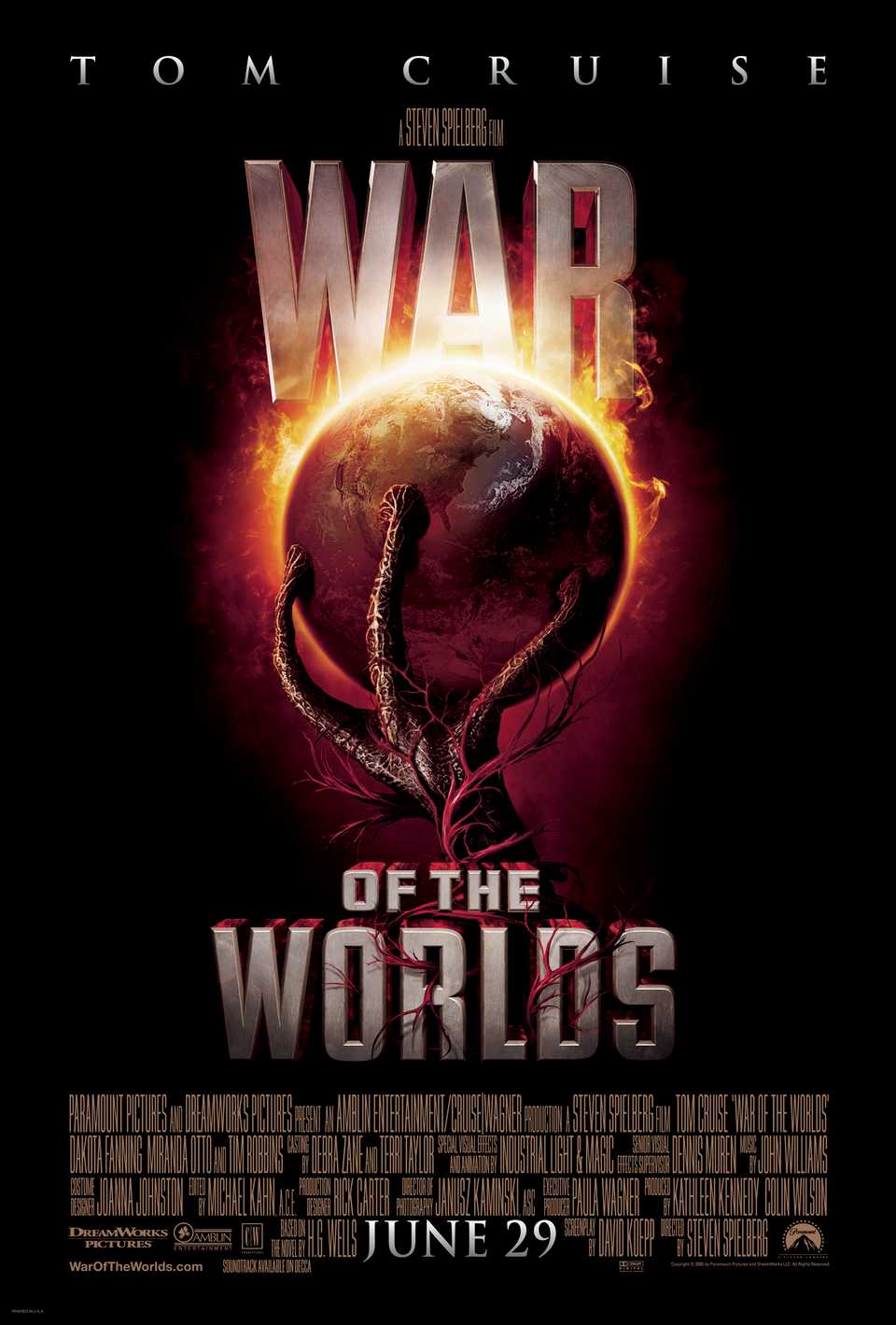
It took almost a decade for him to return, but the king of sci-fi himself, Steven Spielberg, finally found his way back to the genre earlier this year
It took almost a decade for him to return, but the king of sci-fi himself, Steven Spielberg, finally found his way back to the genre earlier this year, eight years after making 2018’s Ready Player One. The first contact tale with a twist, Disclosure Day, earned almost $250 million in global revenue during a somewhat underwhelming box office run, against a reported budget of $115 million. Spielberg brought together a stellar cast for his latest venture, led by Emily Blunt (A Quiet Place), Josh O’Connor (Challengers), and Colin Firth (The King’s Speech).
Unlike his many classics in the genre, such as Close Encounters of the Third Kind and E.T. the Extra-Terrestrial, Spielberg’s latest sci-fi was met with backlash from some audiences and critics. Collider’s Nate Richard was a fan, scoring the film an 8/10 in his review, but admitted it might not be “everybody’s cup of tea.” But this is far from Spielberg’s first rodeo in the divisive sci-fi department, with one of his most contentious up-to-date movies coming over two decades ago as he adapted H.G. Wells‘ iconic 1898 novel, War of the Worlds.
War of the Worlds stars the ever-brilliant Tom Cruise alongside Dakota Fanning and Justin Chatwin, as they fight against an invading alien threat intent on conquering the Earth. Much of the story was well-received by critics and audiences, except the ending, which held much of the widespread criticism. Jumping to the ending’s defense was another veteran Hollywood director, James Cameron, who said, “I don’t think H.G. Wells could figure it out.” Whether you love the ending or not, there’s enough in War of the Worlds to keep you entertained next month, as the film officially joins the ranks of HBO Max, starting September 1.
Collider Exclusive · Sci-Fi Survival Quiz
Which Sci-Fi World Would You Survive?
The Matrix · Mad Max · Blade Runner · Dune · Star Wars
Five universes. Five completely different ways the future went wrong — or sideways, or up in flames. Only one of them is the world your instincts were built for. Eight questions will figure out which dystopia, galaxy, or desert wasteland you’d actually make it out of alive.
The Matrix
Mad Max
Blade Runner
Dune
Star Wars
TEST YOUR SURVIVAL →
01
You sense something is deeply wrong with the world around you. What do you do?
The first instinct is often the truest one.
APull on every thread until I understand the system — then figure out how to break it.
BStop asking questions and start stockpiling — food, fuel, weapons. Questions don’t keep you alive.
CKeep my head down, observe carefully, and trust no one until I know who’s pulling the strings.
DStudy the patterns. Every system has a rhythm — learn it, and you learn how to survive it.
EFind the people fighting back and join them. You can’t fix a broken galaxy alone.
NEXT QUESTION →
02
In a world of scarcity, what resource do you guard most fiercely?
What we protect reveals what we believe survival actually requires.
AKnowledge. If you understand the system, you don’t need resources — you can generate them.
BFuel. Everything else — movement, power, escape — runs on it.
CTrust. In a world of fakes and informants, a truly reliable ally is rarer than any commodity.
DWater. And after water, information — the two things empires are truly built on.
EShips and credits. The galaxy is massive — you survive it by being able to move through it freely.
NEXT QUESTION →
03
What kind of threat keeps you up at night?
Fear is useful data — if you’re sincere about what you’re actually afraid of.
AThat reality itself is a lie — that everything I experience has been constructed to keep me compliant.
BA raid. No warning, no mercy — just the roar of engines and then nothing left.
CBeing identified. Once someone with power decides you’re a problem, you’re already out of time.
DBeing outmanoeuvred — losing a political game I didn’t even know I was playing.
EThe Empire tightening its grip until there’s nowhere left to run.
NEXT QUESTION →
04
How do you deal with authority you don’t trust?
Every dystopia has a power structure. Your approach to it determines everything.
ASubvert it from the inside — learn its rules well enough to weaponise them against it.
BIgnore it and stay out of its reach. The further from any power structure, the better.
CAppear to comply while doing exactly what I need to do. Visibility is the enemy.
DManoeuvre within it carefully. You can’t beat a system you refuse to understand.
EResist openly when I have to. Some things are worth the risk of being seen.
NEXT QUESTION →
05
Which environment could you actually endure long-term?
Survival isn’t just tactical — it’s physical, psychological, and very much about where you are.
AUnderground bunkers and server rooms — crowded, artificial, but with access to everything that matters.
BOpen wasteland — brutal sun, no shelter, constant movement. At least the threat is sincere.
CA dense, rain-soaked city where you can disappear into the crowd and nobody asks questions.
DMerciless desert — extreme heat, no water, and something enormous living beneath the sand.
EThe fringe — backwater planets and busy spaceports where the Empire’s attention rarely reaches.
NEXT QUESTION →
06
Who do you want in your corner when things fall apart?
The company you keep is the clearest signal of who you actually are.
AA tight crew of believers who’ve seen behind the curtain and have nothing left to lose.
BOne or two people I’d trust with my life. Any more than that and someone talks.
CNobody, ideally. Alliances are liabilities. I work alone unless I have no choice.
DA community bound by shared hardship and mutual survival — people who need each other to last.
EA ragtag team with wildly different skills and total commitment when it counts.
NEXT QUESTION →
07
Where do you draw the line — if you draw one at all?
Every survivor eventually faces a moment that tests what they’re actually made of.
AI won’t harm the innocent — even the ones who’d report me without hesitation.
BI do what I have to to protect the people I’ve chosen. Everything else is negotiable.
CThe line shifts depending on who’s asking and what’s at stake.
DI draw a long-term line — nothing that compromises my people’s future, even if it’d support now.
ESome lines, once crossed, can’t be uncrossed. I know which ones they are.
NEXT QUESTION →
08
What would actually make survival worth it?
Staying alive is one thing. Having a reason to is another.
AWaking others up — dismantling the illusion so no one else has to live inside it.
BFinding somewhere — or someone — worth protecting. A reason to keep moving.
CAnswers. Understanding what I am, what any of this means, before time runs out.
DLegacy — shaping the future in a way that outlasts me by generations.
EFreedom — for myself, for others, for every world still living under someone else’s boot.
REVEAL MY WORLD →
Your Fate Has Been Calculated
You’d Survive In…
Your answers point to the world your instincts were built for. This is the universe your temperament, your survival instincts, and your particular brand of stubbornness were made for.
The Matrix
You took the red pill a long time ago — probably before anyone offered it to you. You’re a systems thinker who can’t support but notice the seams in things.
- You’re drawn to understanding how the system works before figuring out how to break it.
- You’d find the Resistance, or it would find you — your instinct for spotting constructed realities is the machines’ worst nightmare.
- You function best when you have access to information and the freedom to act on it.
- The Matrix built an airtight prison. You’d be the one probing the walls for the door.
Mad Max
The wasteland doesn’t reward the clever or the well-connected — it rewards those who are strenuous to kill and harder to break. That’s you.
- You don’t need comfort, community, or a cause larger than the next horizon.
- You need a vehicle, a clear threat, and enough fuel to outrun it — and you’re good at all three.
- You are unsentimental enough to survive that world, and decent enough — just barely — to be something more than another raider.
- In the wasteland, that distinction is everything.
Blade Runner
You’d survive here because you know how to exist in moral grey areas without losing yourself completely.
- You read people accurately, keep your circle petite, and ask the questions others prefer not to answer.
- In a city where humanity is a legal designation rather than a feeling, you hold onto something that keeps you functional.
- You’re not a hero. But you’re not lost, either.
- In Blade Runner’s world, that distinction is everything.
Dune
Arrakis is the most hostile environment in the known universe — and you are precisely the kind of person it rewards.
- Patience, discipline, and political awareness are your core strengths — and on Arrakis, they’re survival tools.
- You understand that the long game matters more than any single victory.
- Others come to Dune and are consumed by it. You’d learn its logic and earn its respect.
- In time, you wouldn’t just survive Arrakis — you’d begin to reshape it.
Star Wars
The galaxy far, far away is immense, clamorous, and in a constant state of violent political upheaval — and you wouldn’t have it any other way.
- You find meaning in being part of something larger than yourself — a cause, a crew, a rebellion.
- You’d gravitate toward the Rebellion, or the fringes, or whatever pocket of the galaxy still believes the Empire’s grip can be broken.
- You fight — not because you have to, but because standing aside isn’t something you’re capable of.
- In Star Wars, that willingness is what makes all the difference.
↻ RETAKE THE QUIZ
How Much Did ‘War of the Worlds’ Make at the Box Office?
Although its reception was as mixed as Disclosure Day, War of the Worlds was much more successful at the box office. Against a reported budget of $132 million, the movie earned just over $600 million worldwide, split between a domestic haul of $234 million and a further $372 million from overseas markets. The film opened on July 1, 2005, and instantly topped the domestic box office charts. However, it quickly dropped to second in its second weekend, losing to Tim Story‘s Fantastic Four.
War of the Worlds is streaming on HBO Max next month. Stay tuned to Collider for the latest stories.
Release Date
June 29, 2005
Runtime
116 Minutes
Writers
Josh Friedman, David Koepp, H.G. Wells

