
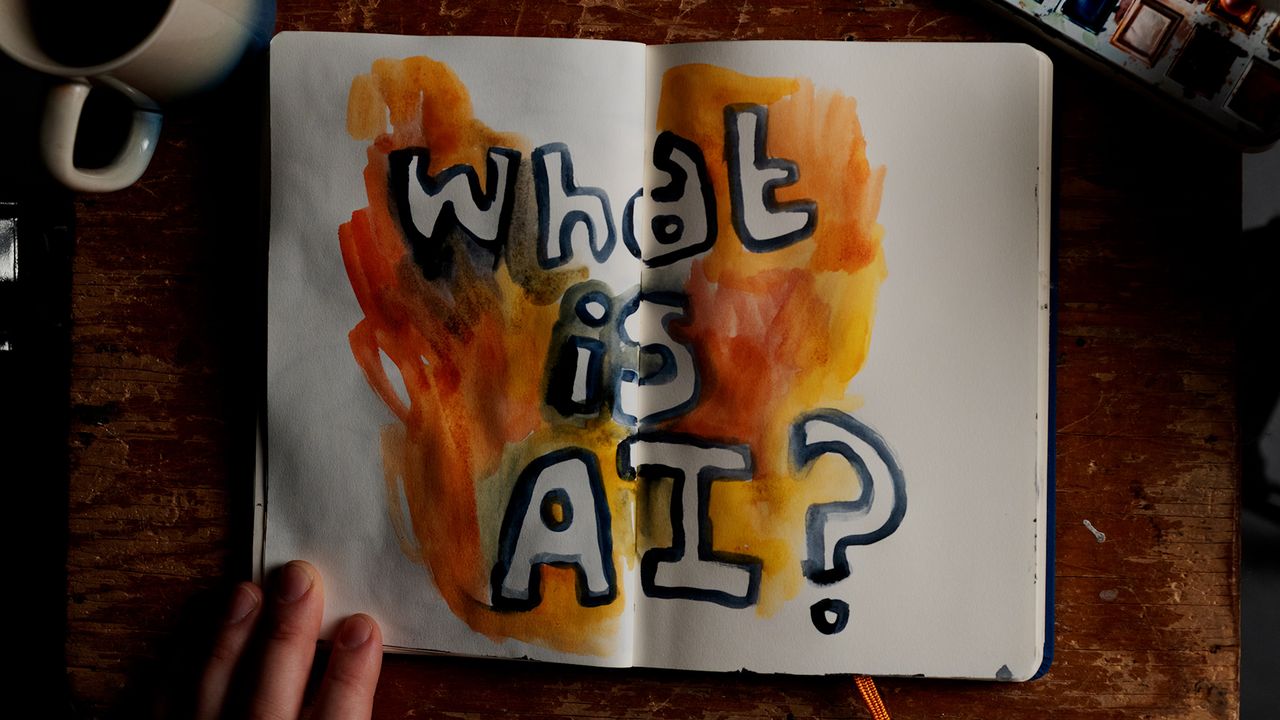
“Fuck them. Utah just became 35% culturally less relevant, and good riddance to them. They don’t deserve it. Moving on, over and next.” Those were am
“Fuck them. Utah just became 35% culturally less relevant, and good riddance to them. They don’t deserve it. Moving on, over and next.” Those were among the first words out of director Daniel Roher’s mouth as he sat down with his codirector, Charlie Tyrell, at this year’s Sundance Film Festival to discuss their film The AI Doc: Or How I Became an Apocaloptimist. Roher, who won an Oscar for best documentary feature for 2022’s Navalny, is opinionated—not just about the festival moving from Park City to Boulder, but on a whole host of topics. But he views himself as an “apocaloptimist”—that’s “apocalypse” plus “optimist”—when it comes to artificial intelligence, meaning he doesn’t think it will destroy the world. As optimists go, he could be pretty biting as we chatted in a private room at Old Town Cellars on Park City’s Main Street.
Focus Features is releasing The AI Doc in theaters on March 27. If you’re even slightly interested in what’s going on with AI, it’s required viewing: The film touches on all aspects of the technology, from how it’s currently being used to how it will be used in the near future, when we potentially reach the age of artificial general intelligence, or AGI. AGI is a theoretical form of AI that supposedly would be able to perform complicated tasks without each step being prompted by a human user—the point at which machines become autonomous, like Skynet in the Terminator franchise.
Heady as this all sounds, the film doesn’t feel like homework. It’s informative, it’s fast-paced, and it has a gripping central character in Roher. The AI Doc is framed around his growing concern that AI will create an uninhabitable future for his unborn son. He sets out to educate himself and assuage (at least some of) his fears.
Roher interviews nearly all the major players in the AI space: Sam Altman of OpenAI; the Amodei siblings of Anthropic; Demis Hassabis of DeepMind (Google’s AI arm); theorists and reporters covering the subject. Notably absent are Elon Musk and Mark Zuckerberg. “Have you seen that guy speak? He’s like a lizard man,” Roher says regarding Zuckerberg. “Musk said yes initially, but it was right when he was doing all the stuff with Trump, and we just got ghosted after a while,” adds Tyrell. The directors tried multiple avenues to get to Zuckerberg, but it was always a no. “He’s like an alien in a human being suit,” Roher says. “So of course they don’t want him to talk.”
Altman, arguably AI’s greatest mascot, is prominently featured in the documentary. At the end of his interview with Roher, he wishes the filmmaker mazel tov on the birth of his son, showing the audience that he can actually connect with others on a human level. But Roher wasn’t buying it. “That guy doesn’t know what genuine means,” he says. “Every single thing he says and does is calculated. He is a machine. He’s like AI, and it’s in the service of growth, growth, growth. You can be disingenuous and media savvy.”
Co-director Daniel Roher (along with Charlie Tyrell) during the production of The AI Doc: Or How I Became an Apocaloptimist.Courtesy of Focus Features.


COMMENTS