
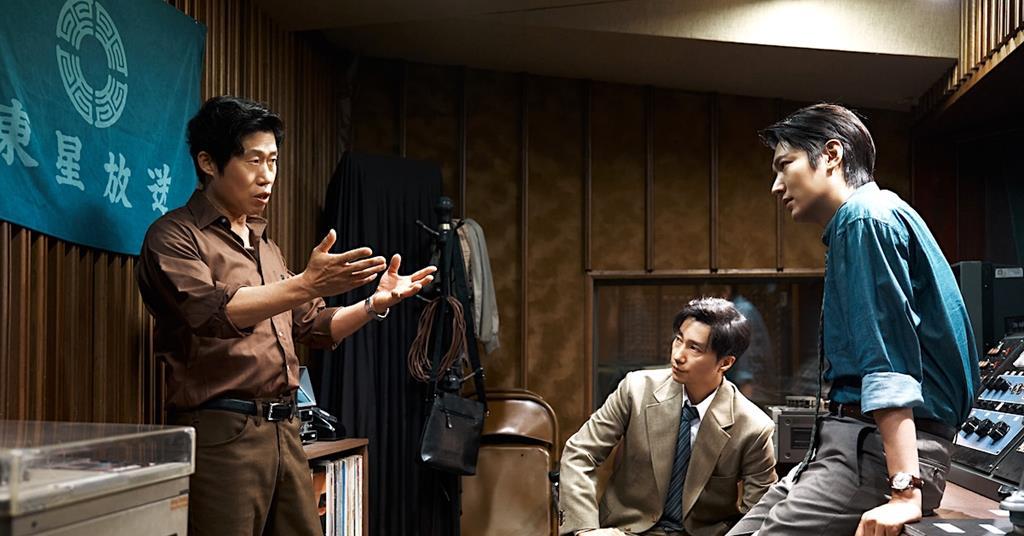
Dir: Hur Jin-ho. South Korea. 2026. 130mins South Korean filmmaker Hur Jin-ho dramatises the investigation that followed the 1974 assassination
Dir: Hur Jin-ho. South Korea. 2026. 130mins
South Korean filmmaker Hur Jin-ho dramatises the investigation that followed the 1974 assassination attempt of the country’s president in this entertaining procedural that grows angrier as it barrels forward. The Assassin(s) focuses on three characters — a detective, a veteran newspaper editor and his adolescent reporter — who work together to unravel the truth and the deeper the conspiracy goes, the more engaging the narrative becomes. In the process, the film reveals itself to be an impassioned salute to a free press and a condemnation of a corrupt government that knowingly deceived its citizens.
Entertaining procedural grows angrier as it barrels forward
The Assassin(s) premieres at Toronto before opening in South Korean theatres later this month, and follows Hur Jin-ho’s previous internationally-solid films like A Normal Family (2023), Forbidden Dream (2019) and April Snow (2005). Overseas audiences may be unfamiliar with this 1974 assassination plot, but Hur’s genre-friendly approach should hook viewers regardless. Despite the film not featuring a plethora of action sequences, editors Kim Hana and Kim Woo-hyun ensure that the story moves along at a steady clip. The Assassin(s) will also benefit from the star power of Yoo Hai-jin (Exhuma), Park Hae-il (Decision To Leave) and Lee Min-ho (TV’s Pachinko) in the lead roles.
At a time of a military dictatorship and hefty censoring of the press, South Korea is plunged into chaos on August 15, 1974 when President Park Chung Hee survives an attempt on his life by a lone gunman during a Liberation Day event at the National Theater of Korea. Sadly, the president’s wife is slain, as is a teenage choir member attending the event. But soon, reporter Young-il (Lee) and detective Cheol-goo (Yoo) — both of whom were present for the shooting — suspect that the accused assassin, Moon, had accomplices as the number of shots does not correspond with the number of bullets retrieved. Young-il’s editor Jae-hwan (Park) encourages him to do some digging, despite the government’s refusal to provide any answers.
Cinematographer Lee Mo-gae incorporates handsome widescreen imagery to give this thriller a suitably epic scope. But The Assassin(s) also succeeds as a tense reportage film, spotlighting Young-il’s dogged investigative work and Jae-hwan’s commitment to backing his reporter — even as the newspaper’s editor-in-chief blocks the stories’ publication to avoid angering the authorities.
Gwon Gi-jun and Lee Ji-min’s dense screenplay can sometimes be overwhelming. Beyond the three main characters, there is also substantial time spent introducing government agencies, supporting players, spouses and a crucial interlude involving Young-il travelling to Japan to look into a possible link between Moon and another potential collaborator. But even when it becomes arduous keeping track of all the various threads, The Assassin(s) keeps the viewer riveted by the clever uncovering of clues. Hur Jin-ho wisely centres the action around his driven protagonists, helping to guarantee that the picture is anchored by the human drama
His stars respond with emphatically heroic portrayals of characters who are devoted to unmasking the truth. Yoo’s harried cop must deal with a tumultuous family life, but Cheol-goo exudes a righteous fury due to the fact that he was part of the security detail protecting the president on that fateful day — and because his concerns about allowing Moon into the event were overruled by arrogant superiors. Park lends Jae-hwan a rousing decency, embodying the dignity and courage of any uncompromising journalist. (The character delivers a stirring speech about the importance of a free press.) And Lee plays Young-il with infectious gusto, the rookie reporter demonstrating his mettle while risking his life in the field.
For much of The Assassin(s), watching capable professionals do their jobs well is a consistent pleasure. But in the picture’s final reels, as the full sense of what transpired becomes apparent, it unveils its outrage, characters articulating a nation’s disgust at being misled. Whether re-creating the assassination attempt or staging adept chase sequences, the filmmaker gives his political thriller a moral heft, even if the story’s stabs at emotional depth and character nuance can feel heavy-handed. But when the film closes with footage from the actual shooting, it’s as gripping as Hur’s scripted set pieces, the echoes of that terrible morning still reverberating today.
Production company: Hive Media Corp
International sales: KT StudioGenie, intlsales@kt.com
Producer: Kim Won-kuk
Screenplay: Gwon Gi-jun, Lee Ji-min
Cinematography: Lee Mo-gae
Production design: Kim Byung-han
Editing: Kim Hana, Kim Woo-hyun
Music: Cho Young-wuk
Main cast: Yoo Hai-jin, Park Hae-il, Lee Min-ho

