

We all love a good thrill from time to time, but who says it needs to come from a screen? Some of the greatest thrillers began on the page as books. A
We all love a good thrill from time to time, but who says it needs to come from a screen? Some of the greatest thrillers began on the page as books. A beloved genre, they trigger an electrifying “fight or flight” rush from the safety of an armchair. Thrillers let us experience fear, danger, and intense suspense without any real-world risk, challenging our brains to piece together clues, test our instincts, and figure out the twist before the characters do.
Some incredible thrillers have come and gone over time, but the 2010s saw a resurgence of greats. We’re here to celebrate 10, one from each year of the decade. From murder mysteries to domestic dramas, these books gave us the sensation we seek from the genre. While some brilliant novels from the decade missed out, each year saw major battles for the top spot.
1
‘The Last Days of Ptolemy Grey’ by Walter Mosley (2010)
The book cover of ‘The Last Days of Ptolemy Grey’ by Walter Mosley.Image via Riverhead Books
A moving and suspenseful story, The Last Days of Ptolemy Grey tells the story of a 91-year-old man named Ptolemy Grey who suffers from severe dementia and uses a fleeting memory-restoring treatment to investigate his grand-nephew Reggie’s murder. A 17-year-old orphan named Robyn moves in to support care for him, pushing him to reengage with the world. Ptolemy agrees to take an unapproved, experimental treatment that trades a shortened lifespan for a brief window of lively mental clarity, using it to track down Reggie’s killer. Exploring the fragility of the human mind, the pain of fading memories, and the massive toll of untreated dementia, The Last Days of Ptolemy Grey highlights the intricate dynamics of family loyalty, grief, and an aged man’s desperate bid to right past wrongs.
Written by Walter Mosley, the novel redefines the genre by replacing mean streets with the labyrinth of a failing human mind. Instead of a detective racing through a city, it’s the 91-year-old doing the massive lifting. Rooted in reality, as Mosley served as a caretaker for his parents, the story’s authenticity regarding Alzheimer’s and dementia is quite raw. The book transforms a cacophony of disjointed memories into a symphony of remembrance. A truly tender tale, The Last Days of Ptolemy Grey became the perfect vessel for an Apple TV series. Consisting of six episodes, Mosley created an underrated miniseries starring Samuel L. Jackson as Ptolemy Grey and Dominique Fishback as Robyn.
2
‘Before I Go to Sleep’ by S.J. Watson (2011)
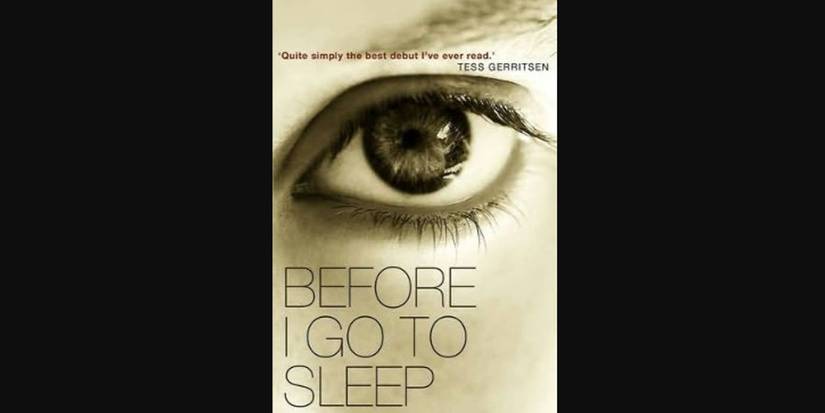
Image via HarperCollins
S.J. Watson‘s first novel, Before I Go to Sleep, is a psychological thriller about Christine Lucas, who wakes up every morning with severe anterograde amnesia, meaning her memory resets completely every time she falls asleep. Her life is mediated by a man who claims to be her husband, but secretly working with neuropsychologist Dr. Nash, Christine begins keeping a journal to record her daily discoveries and thoughts, bypassing her memory loss. Her written entries eventually reveal a terrifying note to herself: “DON’T TRUST BEN.” An enthralling thrill ride, Before I Go to Sleep uses a high-concept memory-loss premise to create intense paranoia, claustrophobia, and the ultimate test of trust.
Before I Go to Sleep forces the audience to trust Christine as she begins to question her surroundings and the individuals around her. Because Christine cannot trust her own memory, she cannot verify if the people around her — her husband and her doctor — are telling her the truth. It pushes the audience to experience her exact confusion and helplessness. The novel asks a haunting philosophical question: Are we defined by our memories? Before I Go to Sleep helped fuel the psychological thriller boom of the 2010s, so much so that it was adapted into a film starring Nicole Kidman, Colin Firth, and Mark Strong.
3
‘Gone Girl’ by Gillian Flynn (2012)
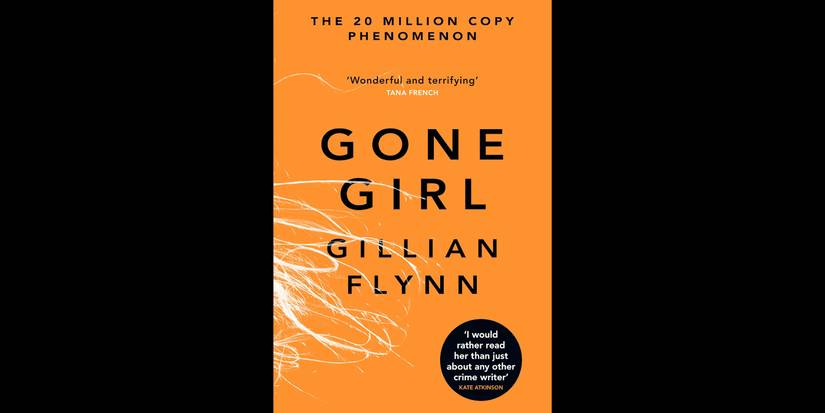
Book cover for Gillian Flynn’s Gone GirlImage via Phoenix
If there’s one thriller that defined the decade, look no further than Gone Girl by Gillian Flynn. Most certainly the book your mom read at the pool, beach, or lake, the domestic psychological thriller showcases a seemingly perfect marriage that turns toxic when Amy Dunne mysteriously disappears on their fifth wedding anniversary, framing her husband Nick for her murder. The story alternates between Nick’s present-day struggle to prove his innocence and Amy’s past diary entries detailing their relationship, only for a massive twist to shake up the narrative. Gone Girl explores the psychological need to present a version of oneself to please others while satirizing the 24-hour news cycle’s obsession with convicting people in the court of public opinion.
Gone Girl shattered customary genre tropes by reinventing the unreliable narrator through its invention of domestic noir. The story centers on calculated deception. Both main characters weaponize their flaws and manipulate the reader, making objective truth impossible to find. Flynn exposes the shadowy underbelly of state-of-the-art relationships and marriages. Love is out the window as Nick and Amy wage a psychological battle. Amy Dunne redefined anti-heroines by embodying unvarnished rage and chilling brilliance rather than playing a damsel archetype. The New York Times bestseller was given the movie treatment starring Ben Affleck and Rosamund Pike.
4
‘The Silent Wife’ by A.S.A. Harrison (2013)
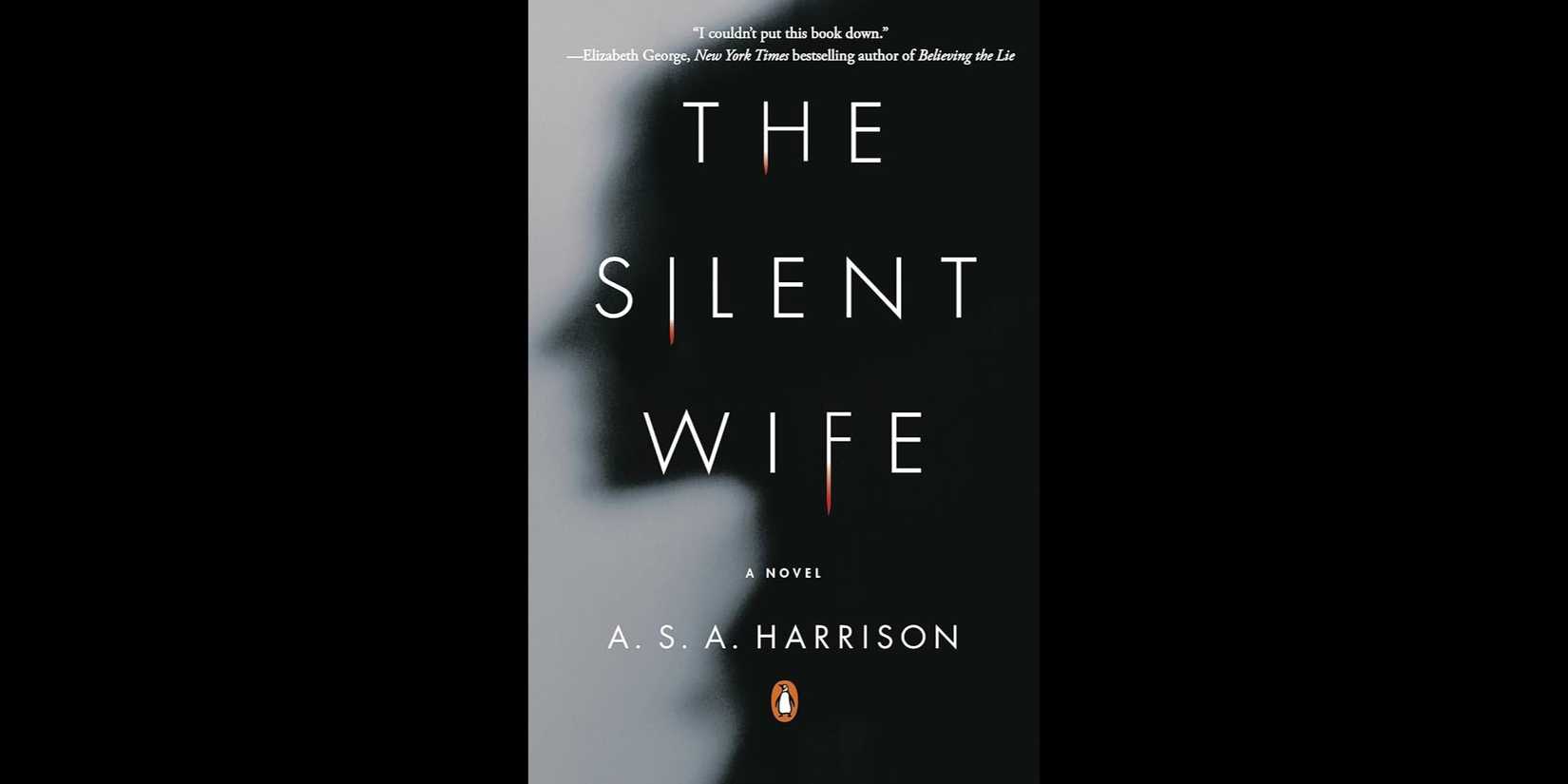
The book cover of ‘The Silent Wife’ by A.S.A. Harrison.Image via HarperCollins
Sometimes, all you need is one masterpiece to define your legacy. The only novel published before her death, The Silent Wife by A.S.A. Harrison, chronicles the sluggish, shadowy unraveling of a 20-year common-law marriage in Chicago. Jodi Brett, a 45-year-old psychotherapist who likes routine, avoids conflict, and lives largely in denial, and Todd Gilbert, a self-absorbed, wealthy property developer in his 40s who is a serial cheater, reach a breaking point when he gets his best friend’s youthful daughter, Natasha, pregnant. Feeling as though she has nothing left to lose, Jodi calmly and methodically plans Todd’s murder. The Silent Wife is a slow-burning psychological character study that examines the shadowy side of complacency and the tipping point of a toxic relationship.
Rather than litter the story with plot twists for the sake of shock, Harrison allows the dissolving of a relationship to devolve as it collapses into a brutal outcome. With an immediate hook that alerts you to where Jodi descends, The Silent Wife becomes a march toward murder rather than a question of what might happen next. Harrison uses alternating he-said/she-said chapters to expose the deep divide between the two parties. A more plausible story than its predecessor from the previous year, The Silent Wife continued the wave of domestic dramas. A film adaptation was optioned and was to star Nicole Kidman, but it sadly never came to fruition.
5
‘Big Little Lies’ by Liane Moriarty (2014)
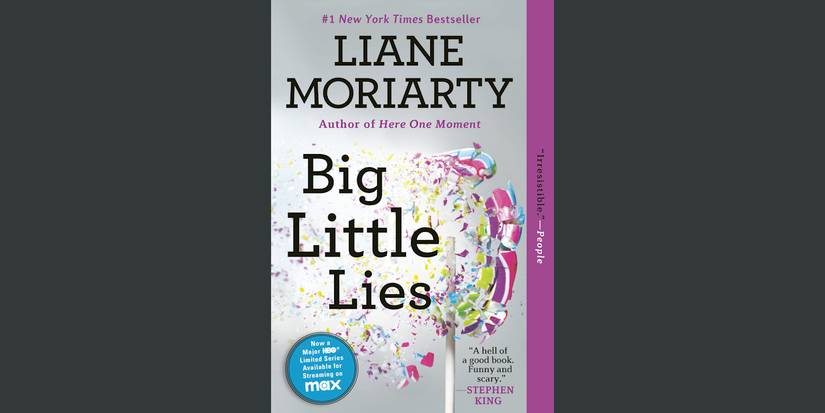
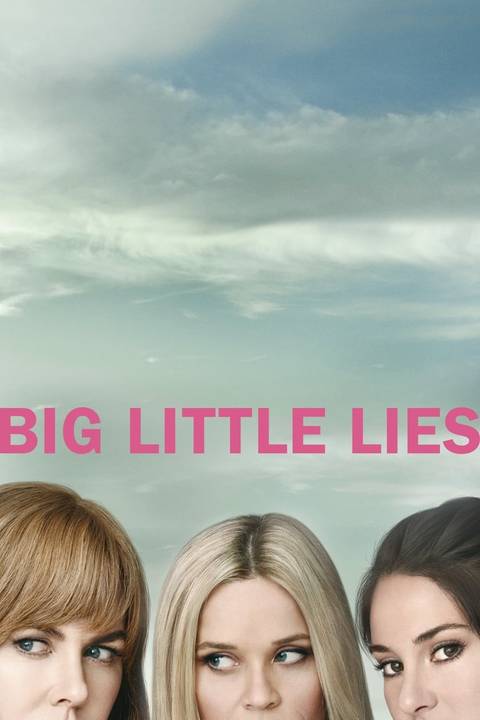
A standout thriller that places the action within a quaint coastal Australian neighborhood, Big Little Lies is a highly addictive mystery. Written by Liane Moriarty, the thriller follows three mothers whose lives unravel over six months, culminating in a school trivia night murder. When single mom and newcomer Jane Chapman’s son Ziggy is falsely accused of bullying a classmate, the three women are forced into a close alliance. Tensions rise as Jane realizes that wealthy wife Celeste Wright’s abusive husband, Perry, may have played a pivotal role in her past. A story about the hidden darkness behind perfect domestic facades and the lies people tell themselves to survive, Big Little Lies is a juicy thriller that blends pointed domestic shadowy comedy with a high-stakes murder mystery.
With an addictive hook that draws you in immediately, Big Little Lies keeps the victim and the killer a secret until the very end. It lets the reader deduce who it could be, since anyone could be the culprit. The suburban noir subverts the concept of the ecstatic suburban family by exposing the shadowy, violent truths hidden behind wealthy, perfect facades. Moriarty weaves massive topics into the narrative in an engaging way without ever being gratuitous. A female-led page-turner, Big Little Lies made the leap to the tiny screen for a two-season hit starring Reese Witherspoon, Nicole Kidman, and Shailene Woodley. The series moved beyond the novel and shifted the action to Monterey, California, yet kept Moriarty’s DNA present.
Collider Exclusive · Action Franchise Quiz
What Action Series Would You Thrive In?
Wick · Fast · Mission · Die Hard
Four franchises. Four completely different ideas of what a hero is: the assassin with a code, the family that never leaves anyone behind, the man who does his own stunts, and the guy who simply refuses to die. Only one of them runs on your particular brand of trouble. Eight questions will tell you which one you would survive.
Wick
Fast
Mission
Die Hard
FIND YOUR FRANCHISE →
01
How does a room know you’ve walked into it?
Every action hero arrives differently. Some of them arrive before they arrive.
ASomeone recognises me, and the temperature in the room drops without a single word being said.
BLoudly and warmly. I arrive with my people, and we’re already laughing about something.
CI’m the one who told everybody where to stand. I walked this room twice before anyone else arrived.
DBy accident. I wasn’t supposed to be here, and now I’m the only one who can do anything about it.
NEXT QUESTION →
02
It turns physical. What does your fighting actually look like?
Choreography is character. Yours says something about you.
AEconomical and devastating. Trained technique, no wasted motion, finished before most people notice it started.
BLoud, massive and weirdly cheerful. I’m not elegant, I hit like a truck, and I always have backup.
CTo plan, until the plan breaks. Then I improvise at full sprint and refuse to stop moving.
DBadly, honestly, and with a lot of swearing. I take more damage than I deal and I still don’t go down.
NEXT QUESTION →
03
Who is standing beside you when it starts?
Some franchises are built on a team. Others are built on one person walking in alone.
ANobody. I have contacts, favours and people who owe me, but when it begins I work alone.
BEveryone. My people are the entire point, and I’d trade the whole mission for any one of them.
CA tiny hand-picked team I trust completely, and I’d still take the worst part of the job myself.
DA voice on the other end of a radio and a building full of people who don’t know I exist.
NEXT QUESTION →
04
It has gone badly wrong. What keeps you upright?
Act two exists to find out what you’re actually made of.
AFocus, commitment and sheer will. Grief is fuel if you point it in the right direction.
BThe people counting on me. I don’t appear to have a limit when it’s family on the line.
CRefusing to accept the odds. Somebody has to do the impossible part, and it’s going to be me.
DSpite, mostly. And a growing sense that these people picked the wrong building.
NEXT QUESTION →
05
There’s a vehicle. What are you driving, and how?
No action franchise has ever survived without a car chase. This one is yours.
AA black muscle car I am unreasonably attached to, and I will dismantle an entire empire over it.
BSomething impossibly modified, at impossible speed, off an impossible ramp. Physics is a suggestion.
CA motorbike at full throttle through a city I memorised last night. And then off a cliff.
DA borrowed car, badly, while somebody in the passenger seat politely asks me to sluggish down.
NEXT QUESTION →
06
How do you feel about the people giving the orders?
There is always an institution. There is rarely a good one.
AThere are rules and I respect them absolutely, right up until somebody breaks one against me.
BI don’t take orders. I take care of people, and everything else tends to sort itself out.
CI serve the mission, not the memo. If my people are in danger, the orders come second.
DThey’re in a van outside telling me what I’m doing wrong while I’m the one bleeding on broken glass.
NEXT QUESTION →
07
Underneath all of it, what are you actually doing this for?
The stunts are the reason people come. This is the reason they stay.
ASomething was taken from me that can’t be replaced, and I’ve been settling that account ever since.
BBelonging. I built a family out of people who had nowhere else, and I’ll defend it with everything.
CThe conviction that if I stop, people die. I don’t know how to hand that to anyone else.
DI just wanted to get through the holidays with my family. Everything after that was self-defence.
NEXT QUESTION →
08
When the credits roll, what do people say about you?
Every franchise is really an argument about what makes someone worth watching.
AThat I was a myth people warned each other about in whispers, and that they were right to.
BThat I never left anyone behind, the door was always open, and there was always a place at the table.
CThat I did the impossible part myself, every single time, and never asked anyone to risk it for me.
DThat I was just a guy in the wrong place at the wrong time, who turned out to be very challenging to kill.
REVEAL MY FRANCHISE →
Casting Has Been Completed
Your Franchise Is…
Four action series. One of them is built around exactly the way you
handle pressure, people, and a room that has just gone very serene. Here is where you would survive
the trilogy, and probably headline it.
John Wick
You are precision with a grudge. You don’t posture, you don’t
escalate, and you don’t warn anybody twice. That is exactly why the people who know you are
so careful never to be the reason you start.
- The Wick films run on discipline: an underworld with actual etiquette, a hero who
honours every rule of it, and a world that unravels the instant someone breaks one
against him. - You share that quality. You are extraordinarily reasonable right up to the line, and
then completely immovable past it. - Focus, commitment and sheer will. You’d be the one carrying grief through three sequels
and turning it into technique rather than noise. - People wouldn’t call you risky. They’d say your name quietly and let that do the
work.
Fast & Furious
You understand the thing the whole franchise is secretly about:
the cars are spectacular, but the crew is the point. You collect people, you keep them, and
you’d drive through a building for any one of them.
- This series went from street racing to orbit without ever changing its actual subject,
because loyalty scales and plot doesn’t have to. - You have the same instinct. You build a family out of whoever turns up, and then you
defend it past the point of reason. - You’d thrive here because the franchise rewards exactly your strengths: warmth, nerve,
an absolute refusal to leave anyone behind, and a relaxed relationship with physics. - The mission can wait. The barbecue cannot.
Mission: Impossible
You over-prepare and then take the risky part yourself
anyway. It looks like control, but it’s really responsibility. You have never worked out how
to ask somebody else to carry the risk.
- This is the franchise of the plan that collapses on schedule: the team, the mask, the
rooftop, and the one person sprinting flat out because sprinting is all that’s left. - You share that refusal to accept an outcome. Told the odds, you treat them as an
administrative error. - You’d thrive here because these films reward competence and loyalty in equal measure.
The mission matters, but nobody on the team gets left on the wrong side of a door. - Some people delegate the cliff. You have never once been that person.
Die Hard
You are not the most trained person in the building, the best
equipped, or the one anybody would have picked. You are simply the one still standing at the
end, which turns out to be the only qualification that matters.
- Die Hard invented the state-of-the-art action hero by making him mortal: outgunned, out-planned,
bleeding, and extremely entertaining about it. - You share that stubbornness. Adversity doesn’t make you noble, it makes you sarcastic,
and then it makes you unstoppable. - You’d thrive here because these films reward improvisation and nerve over preparation,
and you’ve never had the luxury of preparing anyway. - You didn’t want any of this. You just declined to be the person who let it happen.
↻ RETAKE THE QUIZ
6
‘The Girl on the Train’ by Paula Hawkins (2015)
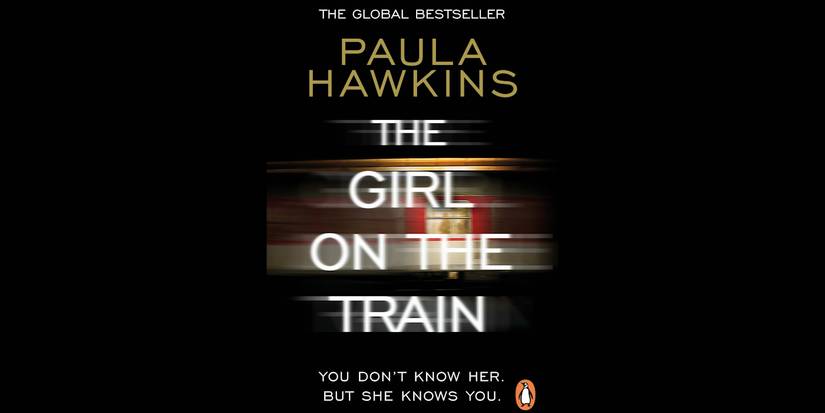
Image via courtesy of Penguin Books
What happens on the train does not stay on the train. In The Girl on the Train by Paula Hawkins, Rachel, a struggling alcoholic, rides the same train every day, watching a nearby couple she calls “Jess and Jason” and imagining their perfect life. When “Jess,” known as Megan Hipwell, goes missing, Rachel is pulled into the missing-person investigation, only to discover the truth might actually involve her. The Girl on the Train tackles deep themes of trauma, projecting false fantasies onto strangers’ lives, gaslighting, and domestic abuse. Hawkins’ thriller helped redefine the unreliable-narrator drama.
Rachel is not your average spokesperson. She’s an unemployed alcoholic who suffers from constant blackouts. This forces readers to question every memory, doubt every clue, and wonder if Rachel herself committed a crime during her blackouts. Through dizzying uncertainty, the narrative keeps readers on their toes as nothing is truly what it seems. To truly push the confusion, Hawkins shifts perspective between Rachel, Megan, and Anna, Rachel’s ex’s fresh wife. This allows crucial information to unfold slowly, building tension and layering deceit before the explosive final twist. The story of voyeurism is quite accessible, as we’ve all been Rachel. A mundane trip on public transport taps into the universal habit of wondering about the lives of total strangers. The novel was adapted into a stage play and a film starring Emily Blunt, Rebecca Ferguson, and Justin Theroux.
7
‘Dark Matter’ by Blake Crouch (2016)
The book cover for ‘Dark Matter’ by Blake Crouch.Image via Crown Publishing Group
When it comes to defining sci-fi thrillers of the decade, look no further than Dark Matter by Blake Crouch. The story follows college physics teacher Jason Dessen, who is abducted by an alternate version of himself and wakes up in a parallel world where he is not a uncomplicated professor but a celebrated scientific genius who never married his wife, Daniela, and whose son, Charlie, was never born. Jason must navigate a mind-bending multiverse to return to his true family. A robust exploit of the multiverse mechanic, Dark Matter explores the road not taken and how a single past decision branches out into entirely different lives.
Crouch’s thriller stands out as a state-of-the-art masterpiece through its tight mix of high-concept quantum mechanics and an intense emotional center about human regret and the power of choice. The novel is quick and punchy, with Crouch using brief chapters to move through the timelines without excessive narrative fat. Instead of bogging down the plot with dense jargon, the novel translates intricate ideas into a high-stakes tool. It’s not about the specificity of science, but rather its consequences. By tapping into the universal “what if” anxieties, the story is quite accessible. The novel served as the basis of the hit Apple TV series starring Joel Edgerton and Jennifer Connelly. Now in its second season, the series has officially surpassed the novel.
8
‘Magpie Murders’ by Anthony Horowitz (2017)
Magpie-Murders-book-coverImage via Harper
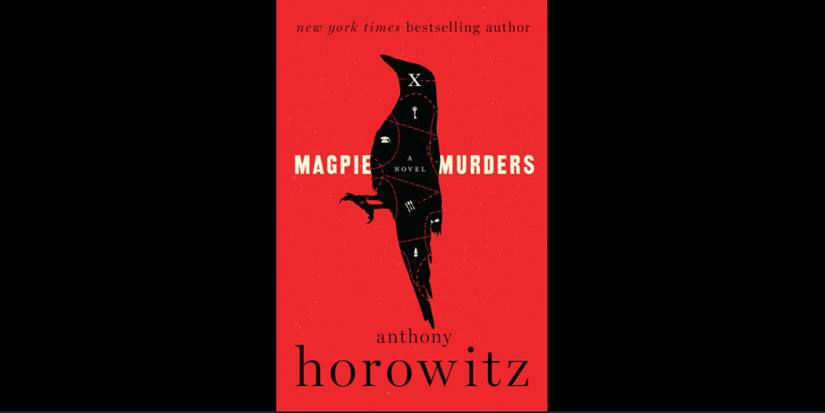
Reinventing the classic whodunnit of the Golden Age of British detective fiction, Anthony Horowitz’s Magpie Murders launched the Susan Ryeland series. Book editor Susan Ryeland is thrust into a murder mystery when challenging and arrogant author Alan Conway is found dead in an apparent suicide. She launches her own investigation to find Conway’s missing pages and discovers that Conway’s death might actually be murder. As Susan digs deeper into Conway, she discovers that the secrets and clues hidden in his manuscript mirror the real-life malice and hidden motives of the people around him.
Magpie Murders satirizes the intricate, often toxic relationships between authors, editors, and publishers and the ambition that comes with it through the lens of retro crime stories. A clever work of metafiction, Magpie Murders’ mystery within a mystery serves as an addictive page-turner. The parallel puzzle allows the reader to engage in the investigation alongside Susan. The inner 1955 story starring detective Atticus Pünd pays loving homage to classic tropes reminiscent of Agatha Christie. Horowitz’s ability to tap into the past style through a state-of-the-art lens proves the hunger for the genre has never waned. The framing device allows him the brilliant opportunity to explore the psychology of mystery writers. The drama was adapted into a six-part miniseries starring Lesley Manville as Susan.
9
‘The Perfect Nanny’ by Leïla Slimani (2018)
The Perfect Nanny by Leila Slimani book cover on black background.Image via Penguin Books
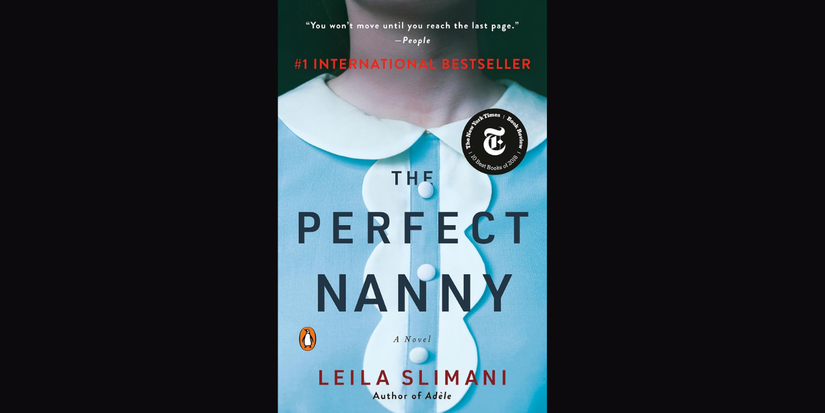
Leïla Slimani taps into every mother’s waking nightmare in her 2018 thriller The Perfect Nanny. Opening with a horrific tragedy, two youthful children are murdered in their Paris apartment by their seemingly devoted nanny, who then attempts suicide. The story then rewinds to show how Myriam, a lawyer, and her husband, Paul, hire their nanny, Louise, so Myriam can return to work. Initially appearing to be a dream caregiver, Louise and the family grow aggressively dependent on one another; hidden financial debts, severe isolation, mental instability, and mounting obsessive boundaries begin to fracture the household. The Perfect Nanny explores the unequal dynamics and tensions between affluent employers and struggling domestic workers, as well as the pressure and guilt placed on working mothers.
The Perfect Nanny subverts pulp conventions by turning a terrifying tragedy into a critique of class, power, and state-of-the-art motherhood. Slimani opens with the instant hook: “The baby is dead.” From there, you’re immediately aware that Louise has murdered the children — it’s a matter of discovering why. The narrative is truly exhausting and intense, keeping you glued to how the relationships devolve into chaos. Slimani brilliantly exposes the hypocrisies of affluent employers who invite a caretaker intimately into their lives while maintaining immovable, elitist social distances. Published in English in 2018, The Perfect Nanny previously won France’s Prix Goncourt. The novel has been adapted into an upcoming HBO series starring Nicole Kidman and Maya Erskine.
10
‘The Silent Patient’ by Alex Michaelides (2019)
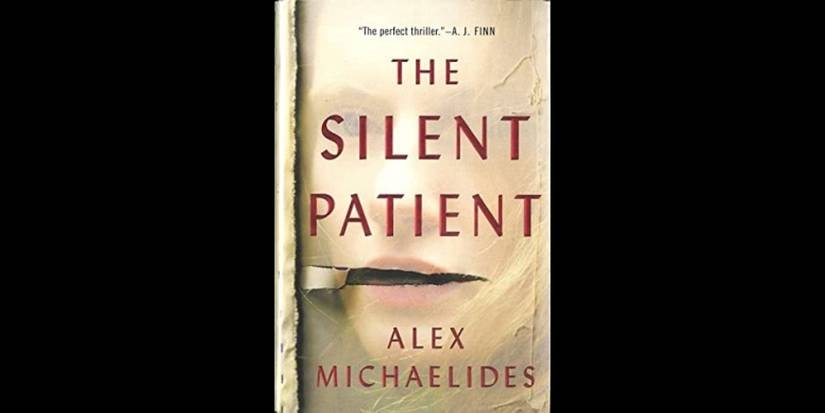
Book cover of ‘The Silent Patient’ by Alex MichaelidesImage via Celadon Books
In Alex Michaelides’ debut novel The Silent Patient, Alicia Berenson is a eminent London painter who shoots her fashion-photographer husband, Gabriel, five times in the face and then never speaks another word. Her absolute muteness turns the tragedy into a massive public obsession, and she is confined to a secure psychiatric facility called the Grove. Criminal psychotherapist Theo Faber becomes obsessed with unlocking Alicia’s silence, taking a job at the Grove to treat her, diving deep into her past, reading her hidden diary, and trying to get her to talk. Through massive imagery of Alcestis by Euripides to mirror Alicia’s psychological state and sacrifice, The Silent Patient relies on a masterful twist to turn the narrative into something much richer than a doctor helping a patient.
A high-concept thriller, The Silent Patient is filled with shadowy psychological depth and a jaw-dropping twist you’ll never see coming. The story alternates between Theo’s energetic investigation and Alicia’s past diary entries, forcing readers to question both doctor and patient. Rather than exploring the actions of the crime, setting much of the psychological tension inside a forensic mental health facility grounds the drama in true explorations of trauma, mental illness, and human fragility. Michaelides weaves classical elements into the narrative, bringing unique literary weight to the story. Sony Pictures purchased the rights to adapt the novel into a feature film.
Release Date
2017 – 2026-00-00
Network
HBO
Directors
Jean-Marc Vallee, Andrea Arnold
Writers
T. Rafael Cimino

