
The 36th edition of the Carthage Film Days (Journées Cinématographiques de Carthage, JCC) officially opened on Saturday evening at the Opera Theatre o
The 36th edition of the Carthage Film Days (Journées Cinématographiques de Carthage, JCC) officially opened on Saturday evening at the Opera Theatre of the Cité de la Culture in Tunis, reaffirming the festival’s historic role as one of the most politically and artistically engaged cinema platforms in the Arab world and Africa.
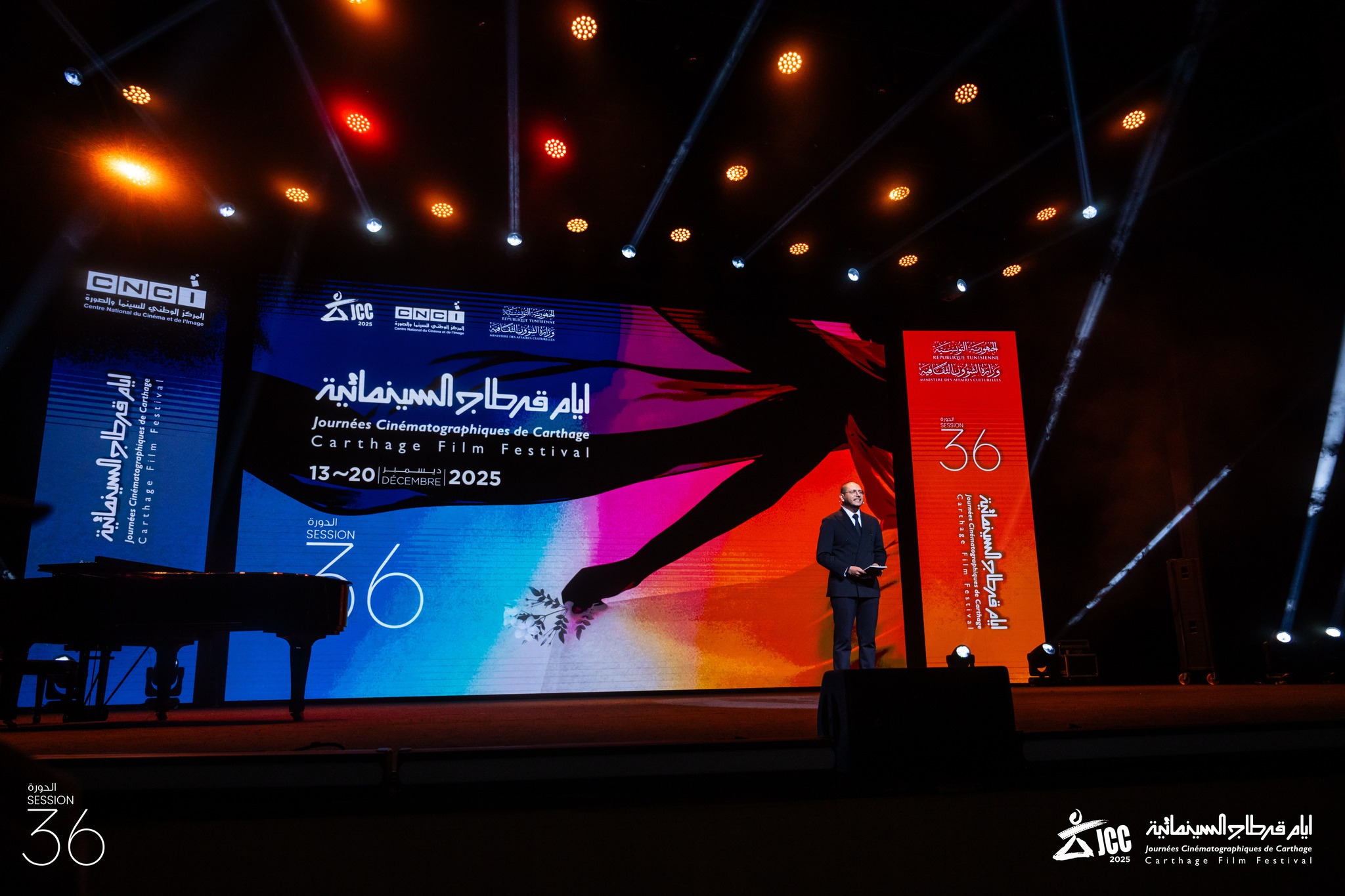
The opening ceremony was marked by the premiere of Palestine 36, the latest film by acclaimed Palestinian filmmaker Annemarie Jacir, chosen to inaugurate the festival in a powerful symbolic gesture. Addressing the audience, Jacir described the selection as “a profound honor,” noting that the film was completed under extraordinarily harsh conditions. She revealed that production was halted four times due to the war on Gaza, underscoring the resilience behind a work created during “one of the darkest chapters in Palestinian history.”
A Festival Rooted in Renewal and Resistance
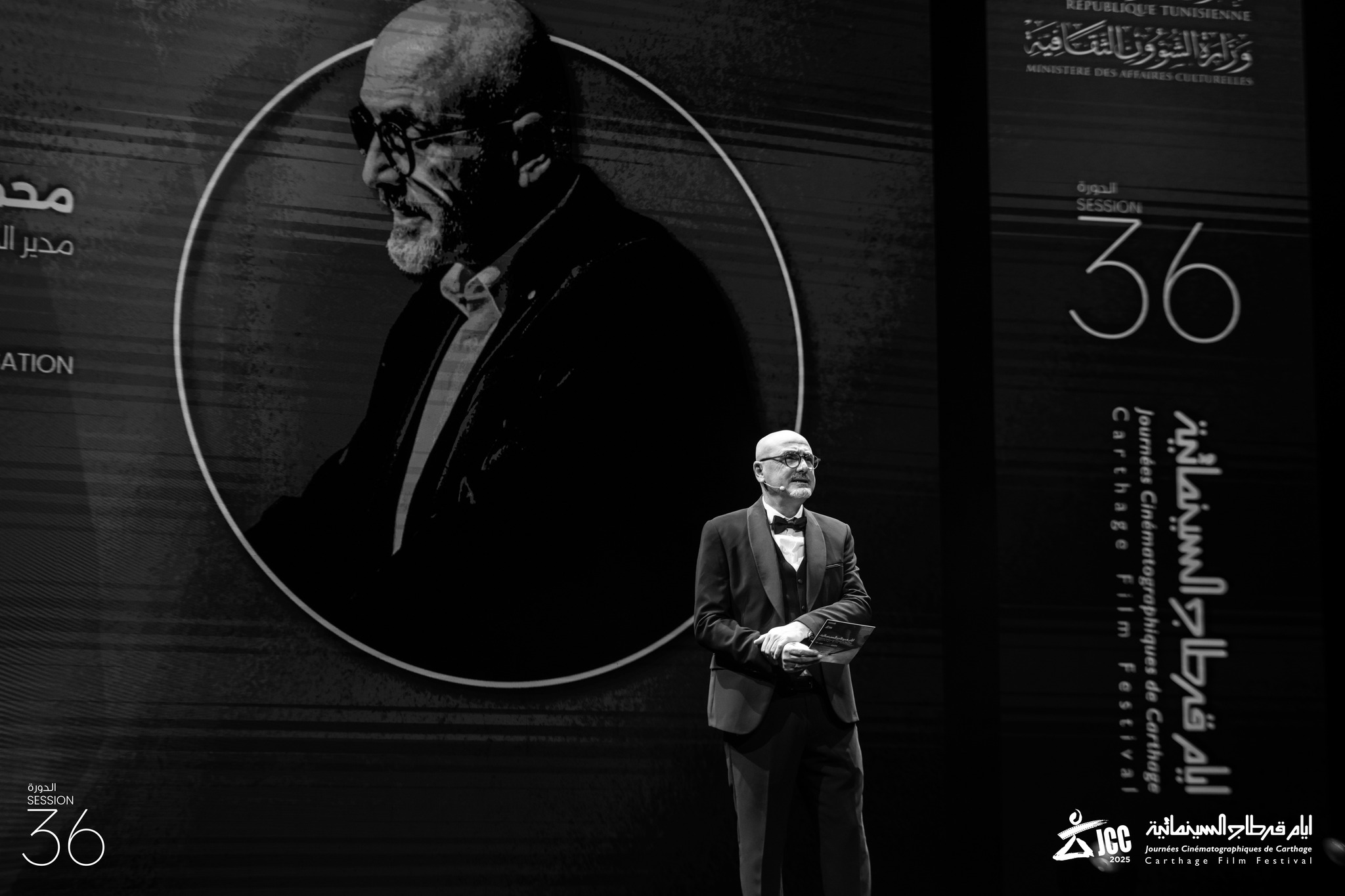
In his opening speech, Mohamed Tarek Ben Chaabane, director of Carthage Film Days, welcomed filmmakers and guests from across the globe, emphasizing that the festival’s strength lies in its ability to continuously reinvent itself while remaining faithful to its intellectual and artistic foundations. “Carthage has always been a space for meaningful images,” he said, “and for cinema that speaks to reality, conscience, and collective memory.”
Ben Chaabane reaffirmed the festival’s commitment to auteur cinema and its resistance to the dominance of purely commercial models, invoking Martin Scorsese’s often-quoted warning: “We cannot let the industry kill cinema.” For Carthage, cinema remains an act of culture, dialogue, and responsibility.

Tributes, Music, and Collective Memory
The opening night unfolded as a carefully composed cinematic and musical journey. A poignant tribute was paid to the late Lebanese composer and playwright Ziad Rahbani, whose influence on Arab cultural memory resonated through live piano performances by Omar Al-Waer and Mariam Al-Abidi, evoking nostalgia and emotional depth.
The ceremony also honored several towering figures of world and Arab cinema who passed away, including Algerian director Mohamed Lakhdar-Hamina, Malian filmmaker Souleymane Cissé, Beninese director Paulin Soumanou Vieyra, Lebanese critic Walid Chmit, and international icon Claudia Cardinale, born in Tunisia and eternally connected to its cultural landscape.
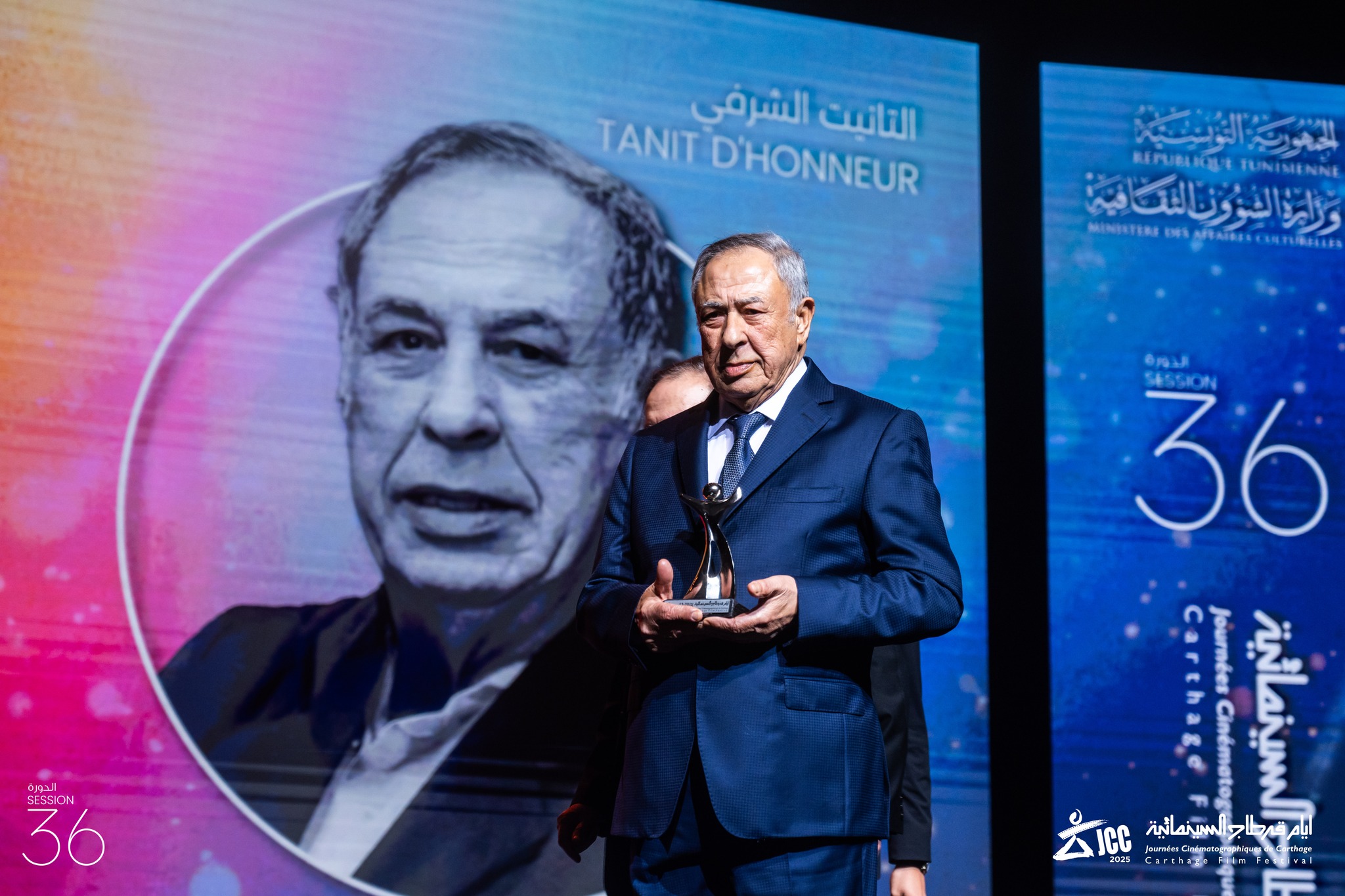
A highlight of the evening was the awarding of the Honorary Tanit to Tunisian producer Abdelaziz Ben Mlouka, in recognition of his longstanding contributions to Tunisian and international cinema.

Armenia in Focus, Cinema Without Borders
This year’s edition places Armenian cinema under the spotlight within the “Cinema Under the Microscope” section, alongside curated focuses on film experiences from Spain, Latin America, and beyond—further reinforcing Carthage’s role as a crossroads for global cinematic voices.
Running until December 20, the 36th Carthage Film Days presents 165 films from 23 countries, spanning official competitions, parallel sections, and celebratory programs. Tunisian cinema holds a strong presence with 46 films, equally divided between feature-length and short works.
As the lights dimmed and Palestine 36 illuminated the screen, the message was unmistakable: at Carthage, cinema is not merely screened—it is lived, remembered, and defended.
A Living Legacy of Arab and African Cinema
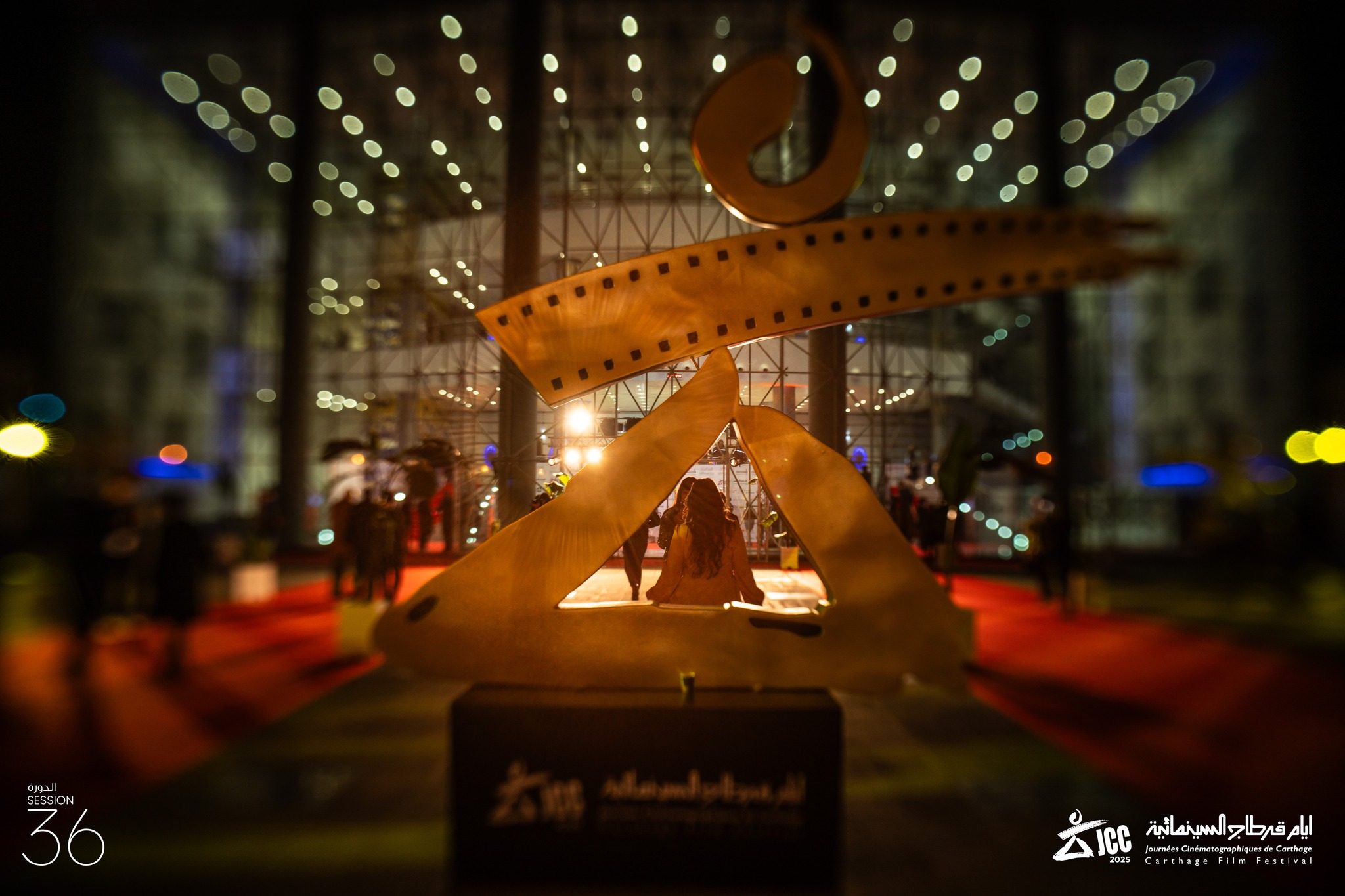
Founded in 1966, the Carthage Film Days (JCC) stands as the oldest film festival in the Arab world and Africa, and one of the few global festivals born from a clear cultural and political vision. From its earliest editions, JCC positioned itself as a platform for Arab, African, and Global South cinemas, championing voices often marginalized by dominant cinematic markets. Over nearly six decades, the festival has evolved without abandoning its core mission: to defend auteur cinema, encourage cinematic dialogue across borders, and affirm film as a tool of memory, resistance, and cultural sovereignty. Each edition does not merely add to its history—it revisits and redefines it, making Carthage a festival where the past and present of cinema constantly converse.
Coverage by The World Screen – Sari Albder – JCC36


COMMENTS