
When it comes to the crime genre, it doesn't get much more popular than gangster movies. There's something that audiences find endlessly compelling ab
When it comes to the crime genre, it doesn’t get much more popular than gangster movies. There’s something that audiences find endlessly compelling about these kinds of criminals and the codes they live by. Their stories are violent, thrilling, sometimes humorous and other times downright bizarre. Whether it’s films that are based on real-life gangsters or completely fictional ones, audiences can’t seem to get enough.
Organized crime, the mob, the mafia, the Outfit, the Five Families, and a whole slew of other criminal enterprises have been inspiring compelling entertainment for decades upon decades. Some of the greatest directors of all time have taken a shot at making a gangster movie, and some have taken so many shots that their careers look like Sonny’s car in The Godfather. Many gangster movies are good, some are great, and some are perfect from the first scene to the last.
‘Scarface’ (1932)
Image via United Artists
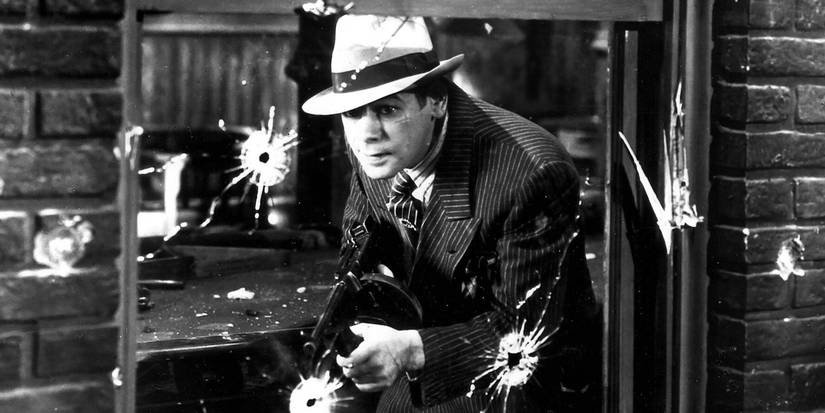
While its title has become synonymous with the Brian De Palma-directed remake starring Al Pacino, the original Scarface is the most perfect pre-Code gangster movie ever made, a seminal tale that inspired and influenced dozens of movies. Directed by Howard Hawks, it was based on the novel by Armitage Trail, which itself was inspired by the most renowned gangster of all time, Al Capone. The film was considered shockingly violent for the time and still packs a punch today.
Paul Muni plays Tony Camonte, an immigrant and enforcer in the Chicago mob. The film follows a standard rise and fall narrative, as Tony kills off his rivals and becomes the city’s most powerful crime boss before going down in a hail of bullets. Many of the standard tropes of the gangster subgenre were established in Scarface, while Hawks’ moody direction and utilize of black humor would influence filmmakers like De Palma and Martin Scorsese. There were classic gangster movies made before Scarface and many made after it, but its perfection has never been questioned.
‘White Heat’ (1949)
James Cagney in the Final Scene in ‘White Heat’Image via Warner Bros. Pictures
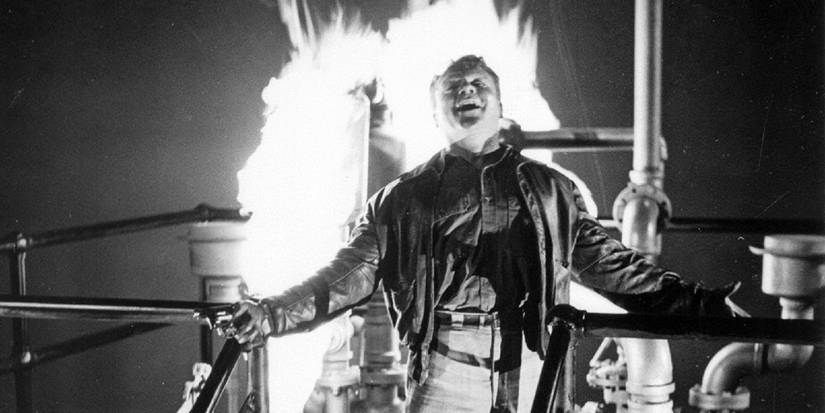
Few gangster protagonists from the Hays Code era are more ruthless than Cody Jarrett, the bank-robbing psychopath played by James Cagney in White Heat. Cagney had already appeared in a number of gangster movies by the time he took the role of Jarrett, but White Heat would eclipse all of them, and every other film, in his long and storied career.
Jarrett is a violent gang leader with some earnest mommy issues. After he and his gang pull off a train heist, he pleads guilty to a different crime to avoid getting pinched for the robbery. When his Ma is murdered by his former associates, Jarrett breaks out of prison with the lend a hand of an undercover agent. With the police in warm pursuit, the film ends with an iconic fiery climax featuring Cagney’s renowned “Top of the world!” line. Directed by the prolific Raoul Walsh, White Heat is a perfect gangster noir with a perfect gangster performance.
‘The Godfather’ (1972) & ‘The Godfather Part II’ (1974)
A man whispering into Vito Corleone’s ear in The GodfatherImage via Paramount Pictures
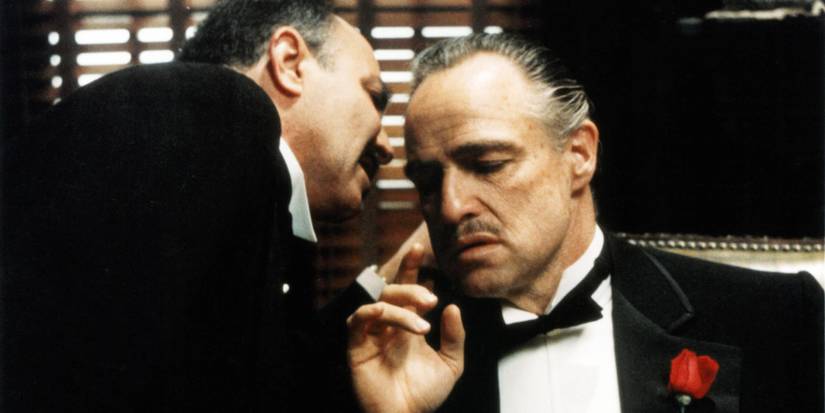
After the Production Code withered and died in the ’60s, crime films began to depict the kind of bloody violence that had only been hinted at before. Bonnie and Clyde was a landmark crime film that broke many cinematic taboos with its violence and precipitated the New Hollywood era, which led to Francis Ford Coppola‘s indispensable gangster saga The Godfather. The original classic and its sequel are considered among the greatest American films ever made, and the two films are so entangled together that they’ve often been edited together and released as one epic feature.
Charting the rise of the Corleone family in America, from newborn Vito’s childhood as an immigrant to his son Michael’s succession of him as the head of their criminal empire, together the films tell a complete tragedy. So much of the language, style and character elements that would define the state-of-the-art gangster film were established here by Coppola and his perfect cast. Marlon Brando and Robert De Niro give dual Oscar-winning performances as Vito at different stages of his life, while Al Pacino plays Michael’s entire rise to power, alongside James Caan as his brother Sonny, Robert Duvall as consigliere Tom Hagen, Diane Keaton as his suffering wife Kay, and John Cazale as impoverished Fredo.
Collider Exclusive · Oscar Best Picture Quiz
Which Oscar Best Picture
Is Your Perfect Movie?
Parasite · Everything Everywhere · Oppenheimer · Birdman · No Country
Five Oscar Best Picture winners. Five completely different visions of what cinema can be — and what it can do to you. One of them is the film that was made for the way your mind works. Ten questions will figure out which one.
Parasite
Everything Everywhere
Oppenheimer
Birdman
No Country for Old Men
FIND YOUR FILM →
01
What kind of film experience do you actually want?
The best movies don’t just entertain — they leave something behind.
ASomething that pulls the rug out — that makes me think I’m watching one kind of film and then reveals I’m watching another entirely.
BSomething overwhelming — humorous, sorrowful, absurd, and genuinely moving, all at once.
CSomething grand and weighty — a film that makes me feel the full scale of what I’m watching.
DSomething formally daring — a film that pushes what cinema can even do.
ESomething lean and relentless — pure tension with no wasted frame.
NEXT QUESTION →
02
Which idea grabs you most in a film?
Great films are driven by a central obsession. What’s yours?
AClass, inequality, and what people are willing to do when desperation meets opportunity.
BIdentity, family, and the chaos of trying to hold your life together when everything is falling apart.
CGenius, moral responsibility, and the catastrophic weight of a decision you can never take back.
DEgo, legacy, and the terror of becoming irrelevant while you’re still alive to watch it happen.
EEvil, chance, and whether moral order actually exists or if we just tell ourselves it does.
NEXT QUESTION →
03
How do you like your story told?
Form is content. The way a story is shaped changes what it means.
AGenre-twisting — I want it to start in one lane and migrate into something completely different.
BMaximalist and genre-blending — comedy, action, drama, sci-fi, all in one ride.
CEpic and non-linear — cutting between timelines, building a mosaic of cause and consequence.
DA single unbroken flow — I want to feel like I’m living it in real time, no cuts to safety.
ESpare and precise — every scene doing exactly what it needs to do and nothing more.
NEXT QUESTION →
04
What makes a truly great antagonist?
The opposition defines the protagonist. What kind of opposition fascinates you?
AA system — concealed, structural, and almost impossible to fight because it has no single face.
BThe self — the ways we sabotage, abandon, and fail the people we love most.
CHistory — the unstoppable momentum of events that no single person can stop or redirect.
DThe industry — the machinery of culture that chews up talent and spits out irrelevance.
EPure, implacable evil — a force so certain of itself it becomes almost philosophical.
NEXT QUESTION →
05
What do you want from a film’s ending?
The final note is the one that lingers. What do you want it to sound like?
AShock and inevitability — a conclusion that recontextualises everything that came before it.
BEarned emotion — I want to cry, laugh, and feel genuinely hopeful, even if the world is a mess.
CDevastation and grandeur — an ending that makes me sit in silence for a few minutes after.
DAmbiguity — something that leaves enough open that I’m still thinking about it days later.
EBleakness — an candid refusal to pretend the world is tidier than it actually is.
NEXT QUESTION →
06
Which setting pulls you in most?
Where a film takes place shapes everything — mood, stakes, what’s even possible.
AA gleaming state-of-the-art city with a hidden underside — beauty masking rot, wealth masking desperation.
BA collapsing suburban life that opens onto something infinite — the multiverse of a single ordinary person.
CThe corridors of power and science at a world-historical turning point — where decisions echo for decades.
DThe grimy, alive chaos of New York and Hollywood — fame as both destination and trap.
EVast, indifferent landscape — desert and highway where violence arrives without warning or reason.
NEXT QUESTION →
07
What cinematic craft impresses you most?
Every great film has a signature — a technical or artistic element that makes it unmistakable.
AProduction design and mise-en-scène — every frame composed to carry meaning beneath the surface.
BEditing and tonal control — the ability to move between registers without losing the audience.
CScore and sound design — music that becomes inseparable from the dread and awe of what you’re watching.
DCinematography as performance — the camera not recording events but participating in them.
ESilence and restraint — what’s left unsaid and unshown doing more work than any dialogue could.
NEXT QUESTION →
08
What kind of main character do you root for?
The protagonist is the lens. Who you choose to follow says something about you.
ASomeone shrewd and resourceful who makes increasingly perilous decisions under pressure.
BSomeone overwhelmed and ordinary who turns out to be capable of something extraordinary.
CA brilliant, tortured figure whose gifts and flaws are inseparable from each other.
DA self-destructive artist whose ego is both their superpower and their undoing.
EA tranquil, principled person trying to make sense of a world that has stopped making sense.
NEXT QUESTION →
09
How do you feel about a film that takes its time?
Pace is a choice. Some films sprint; others let tension accumulate slowly, deliberately.
AI love a ponderous build when I know the payoff is going to be seismic — patience for a devastating reveal.
BGive me relentless momentum — I want to feel breathless and emotionally spent by the end.
CEpic runtime doesn’t scare me — if the material demands three hours, give me three hours.
DI want it to feel propulsive even when nothing is technically happening — restless energy throughout.
EDeliberate and unhurried — I want dread to accumulate in the spaces between the action.
NEXT QUESTION →
10
What do you want to feel walking out of the cinema?
The best films leave a mark. What kind of mark do you want?
AUnsettled — like I’ve just seen something I can’t fully explain but can’t stop thinking about.
BMoved and energised — like the film reminded me what actually matters and gave me something to hold onto.
CHumbled — like I’ve been in the presence of something genuinely essential and overwhelming.
DExhilarated — like I’ve just seen cinema doing something it’s never quite done before.
EHaunted — like a chilly, tranquil dread that stays with me for days.
REVEAL MY FILM →
The Academy Has Decided
Your Perfect Film Is…
Your answers have pointed to one Oscar Best Picture winner above all others. This is the film that was made for the way your mind works.
Parasite
You are drawn to films that operate on multiple levels simultaneously — that begin in one genre and quietly, brilliantly migrate into another. Bong Joon-ho’s Parasite is a film about class, desire, and the architecture of inequality that manages to be darkly humorous, deeply suspenseful, and genuinely shocking across a single extraordinary running time. Your instinct is for cinema that hides its true intentions until the moment it’s ready to reveal them. Parasite is exactly that — a film that rewards close attention and punishes assumptions, right up to its devastating final image.
Everything Everywhere All at Once
You want it all — and this film gives you all of it. The Daniels’ Everything Everywhere All at Once is one of the most maximalist films ever made: action comedy, multiverse sci-fi, family drama, existential crisis, and a genuinely earned emotional core that sneaks up on you amid the chaos. You are someone who responds to ambition, who doesn’t want cinema to choose between being entertaining and being meaningful. This film refuses that choice entirely. It is overwhelming by design, and its overwhelming nature is precisely the point — because the feeling of being crushed by infinite possibility is exactly what it’s about.
Oppenheimer
You are drawn to cinema on a grand scale — films that understand history not as a backdrop but as a force, and that place their characters inside that force and watch what happens. Christopher Nolan’s Oppenheimer is a film about the terrifying gap between what we can do and what we should do, told with the full weight of one of the most consequential moments in human history behind it. You want your films to feel essential without feeling self-important — to earn their ambition through sheer craft and the gravity of their subject. Oppenheimer does exactly that. It is enormous, complicated, and refuses simple comfort.
Birdman
You are drawn to films that foreground their own construction — that make the how of the filmmaking part of the what it’s about. Alejandro González Iñárritu’s Birdman, shot to appear as a single continuous take, is cinema examining itself through the cracked mirror of a fading actor’s ego. You respond to formal daring, to the feeling that a film is doing something that probably shouldn’t be possible. Michael Keaton’s performance and Emmanuel Lubezki’s restless camera create something genuinely unlike anything else — a film that is simultaneously about creativity, relevance, self-destruction, and the impossibility of ever truly knowing if your work means anything at all.
No Country for Old Men
You are drawn to cinema that trusts silence, that refuses to explain itself, and that treats dread as a form of meaning. The Coen Brothers’ No Country for Old Men is a film about the arrival of a up-to-date kind of evil — implacable, arbitrary, and utterly indifferent to the moral frameworks we utilize to make sense of the world. It is one of the most formally controlled films ever made, and its controlled restraint is what makes it so terrifying. You want your films to haunt you, not comfort you. You are not interested in resolution if resolution would be dishonest. No Country for Old Men is candid in a way that most cinema never dares to be.
↻ RETAKE THE QUIZ
‘Battles Without Honor and Humanity’ (1973)
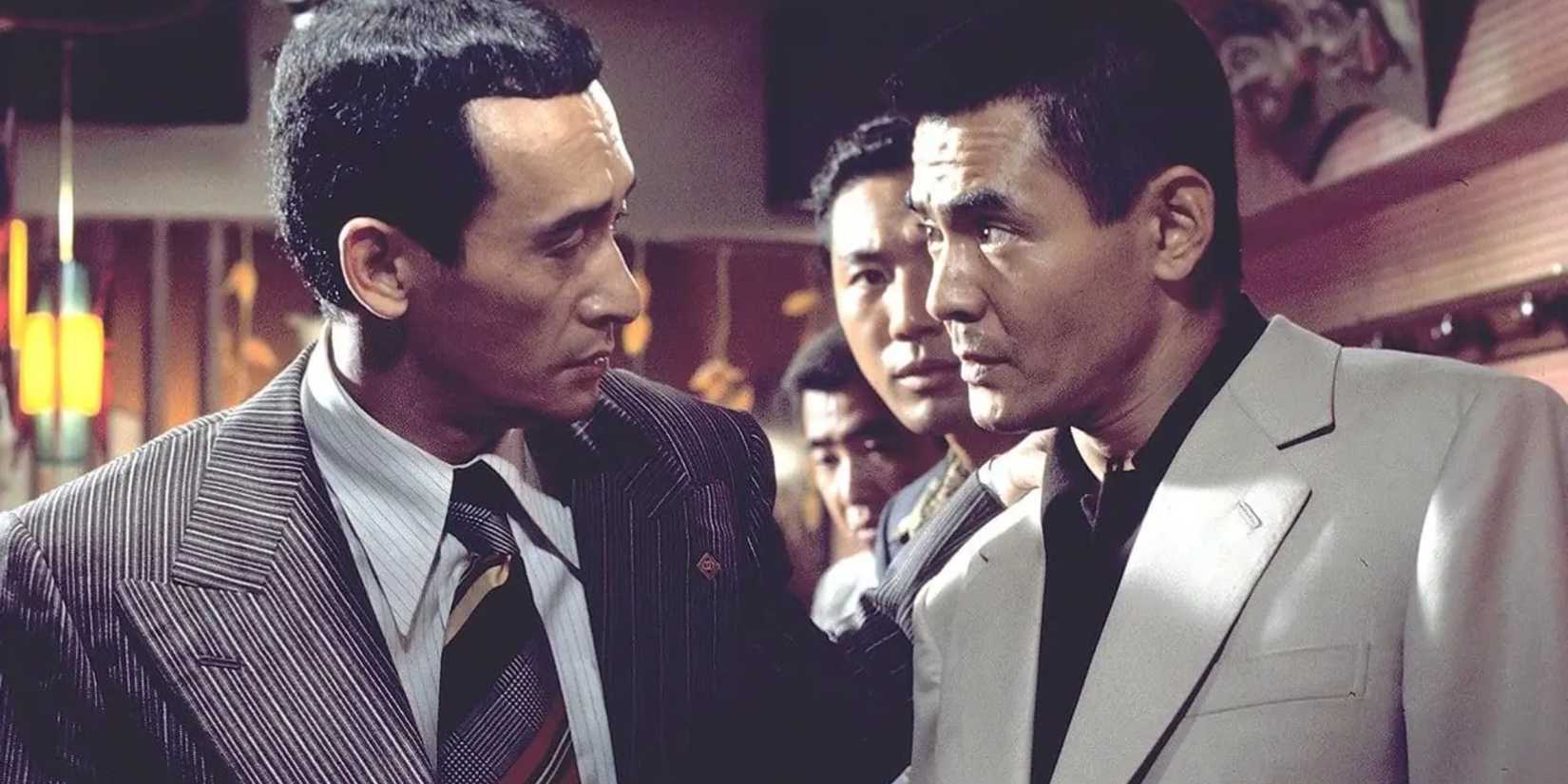
Image via Toei
While Coppola was in the midst of creating his American crime saga, in Japan, director Kinji Fukasaku was creating his own with the five-film yakuza series Battles Without Honor and Humanity. The first film in that saga is often considered the greatest yakuza film ever made. The film is dense with the details and traditions of the Japanese underworld and, like The Godfather, it ushered in the state-of-the-art era of yakuza films.
Bunta Sugawara plays Shozo Hirono, a war veteran sent to prison for killing a yakuza member. Inside, he befriends another yakuza member and, upon his release, joins a crime family. From there, the film is an escalating series of violent betrayals and criminal machinations, and it’s only the tip of the iceberg in terms of the larger saga. Battles Without Honor and Humanity is an epic crime film in every sense of the word, and for any crime film fans who are only acquainted with stateside gangster movies, it’s the perfect entry into yakuza cinema.
‘The Long Good Friday’ (1980)
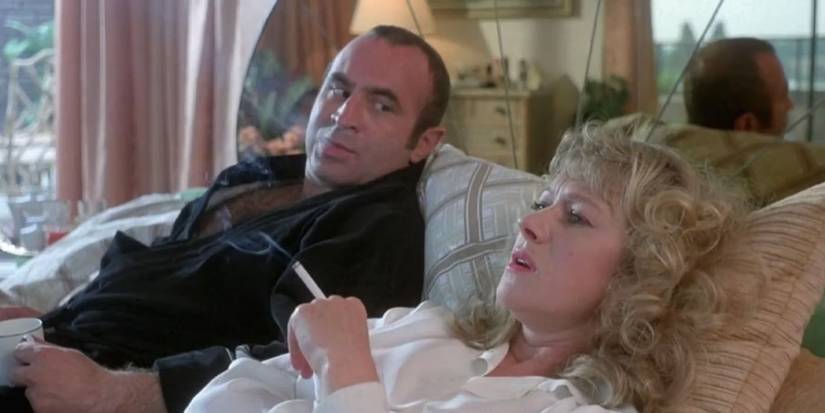
Bob Hoskins as Harold looking at Helen Mirren as Victoria while lying in bed together in The Long Good FridayImage via HandMade Films
Japan isn’t the only other country to have a wealthy history of gangster cinema. Britain has contributed a number of its own brand of underworld associates. There are ’70s classics like Get Carter and more state-of-the-art films like Sexy Beast, but the most perfect British gangster film is The Long Good Friday. Starring Bob Hoskins in an iconic performance as a crime boss who gets more trouble than he bargained for when he tries to go legitimate, it’s a crime thriller that proves that things are just as vile and violent on the other side of the pond.
Hoskins plays Harold Shand, a gangster with delusions of grandeur and plans to develop the London Docklands with money from an American investor he’s courting. His plans get cocked up when his associates start to get violently killed off by unknown assailants, sending Harold on a day-long odyssey of violence while trying to maintain professional appearances. Hoskins is of perfectly coiled intensity in the role, with Helen Mirren just as wicked by his side. The Long Good Friday is best remembered for its iconic cynical ending, but the entire journey to get there is just as perfect.
‘Once Upon a Time in America’ (1984)
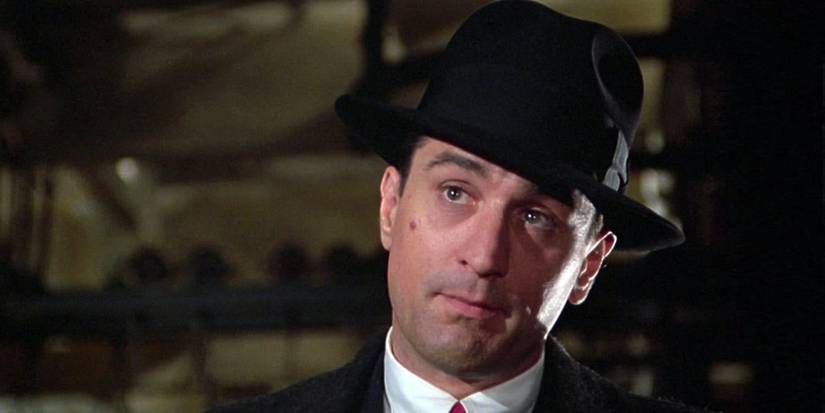
Image via Warner Bros.
Robert De Niro broke out in his criminal role in Martin Scorsese’s Mean Streets, which convinced Francis Ford Coppola to cast him in The Godfather Part II in the role that won him an Oscar, but his first leading role in a gangster movie came with Sergio Leone‘s Once Upon a Time in America. As the final epic film from the influential director, its legacy was complicated by the American distributors who re-edited the film against Leone’s wishes and removed over an hour of footage from it. It has since been restored, and the uncut version represents the most perfect epic gangster film ever made.
De Niro plays Noodles, a Jewish youth who comes of age in New York City in the early 20th century and, along with his friend Max (James Woods), rises to power as a prominent gangster. More than just a rise and fall arc, the film is a tapestry of American crime, chronicling the major historical events that shaped both the city of New York and its underworld. Shot on locations around the world, and with massive sets built in Rome, Once Upon a Time in America has a scale almost unmatched in any other gangster film, and it’s a perfect swan song for Leone.
‘The Untouchables’ (1987)
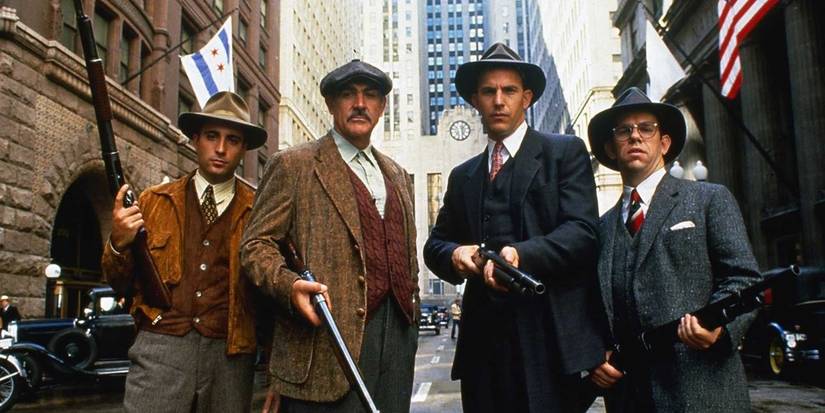
A group of armed men looking at the camera holding weapons in The UntouchablesImage via Paramount Pictures
De Niro plays Capone in Brian De Palma’s The Untouchables, but the focus of the film is all on the cops in this perfect popcorn movie. Inspired by the true story of the men who brought down the most notorious gangster, the film invents a wildly entertaining plot filled with action, sharply written dialogue by David Mamet, a sweeping score by Ennio Morricone, and a terrific cast. Its status has since risen much higher since its initial release, representing the kind of handsomely produced adult-oriented blockbuster that Hollywood barely makes anymore.
Kevin Costner plays Elliot Ness, the federal agent tasked with taking down Capone in Chicago, a task easier said than done in a city filled with corruption. To combat the criminals, Ness enlists the lend a hand of veteran cop Malone (Connery), as well as an accountant and a hotheaded rookie. The cast is immaculate from top to bottom, and De Palma gives the film a sweeping style, with great utilize of real Chicago locations. The standout sequence is the train station shootout, which is a perfect sequence of suspense.
‘Miller’s Crossing’ (1990)
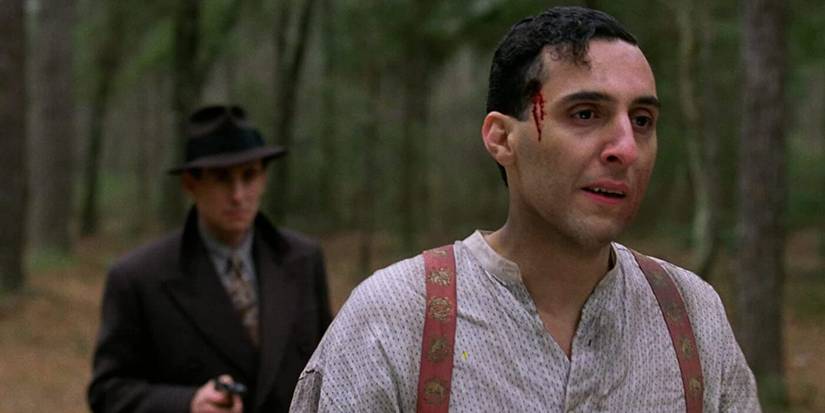
John Turturro with blood on his forehead and a man holding a weapon behind him in Miller’s Crossing.Image via 20th Century Studios
The Coen Brothers are well associated with the crime genre, having directed a number of neo-noir masterpieces. Included in that list is their one and only gangster film, Miller’s Crossing. A feature-length homage to the work of hard-boiled novelist Dashiell Hammett, it’s an impossibly stylish crime film filled with some of the Coens’ most crackling dialogue and their most devilish characters.
Gabriel Byrne is the film’s antihero, Tom Reagan, the most trusted confidant of Irish crime boss Leo O’Bannon (Albert Finney). When a mob war threatens to erupt, Tom plays every angle and pits his enemies against each other to come out on top. Bodies pile up, doubles are crossed, and backs are stabbed as the Coens unleash their full visual flair. Miller’s Crossing came out the same year as several prominent gangster films and was unfortunately overshadowed by them, but it’s as perfect a film as the Coen Brothers ever made, which is certainly nothing to sneeze at.
‘Goodfellas’ (1990)
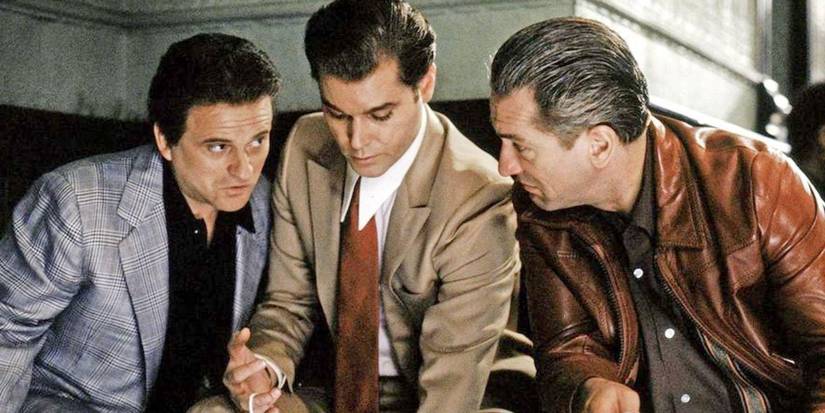
Joe Pesci, Ray Liotta and Robert De Niro huddled together in GoodfellasImage via Warner Bros.
As perfect as Miller’s Crossing is, it’s still not as good as the best gangster movie released in 1990, and, for this writer’s money, the greatest gangster movie ever made, Goodfellas. Martin Scorsese is the filmmaker most synonymous with the genre. He directs from experience, having grown up in Little Italy in New York City and witnessing much of the organized crime and the violence it wrought right outside his window. Any of his movies could fill a spot here, but Goodfellas is his greatest cinematic achievement.
Based on the non-fiction book Wiseguy by Nicholas Pileggi, which chronicles the life of gangster Henry Hill, the film is a criminal portrait of the work-a-day gangster. The wiseguys in this movie aren’t the powerful bosses sitting in opulent offices but streetwise hustlers and thieves who run schemes and shakedown businesses. Ray Liotta plays Hill with a livewire energy, while Robert De Niro returns to the genre as the ancient pro, but it’s Joe Pesci who runs away with the film (and an Oscar) as Henry’s friend with a hair-trigger temper. The energy of the actors is matched in every frame by Scorsese’s bravura filmmaking, Thelma Schoonmaker‘s rapid-fire editing and a classic soundtrack.
‘City of God’ (2002)
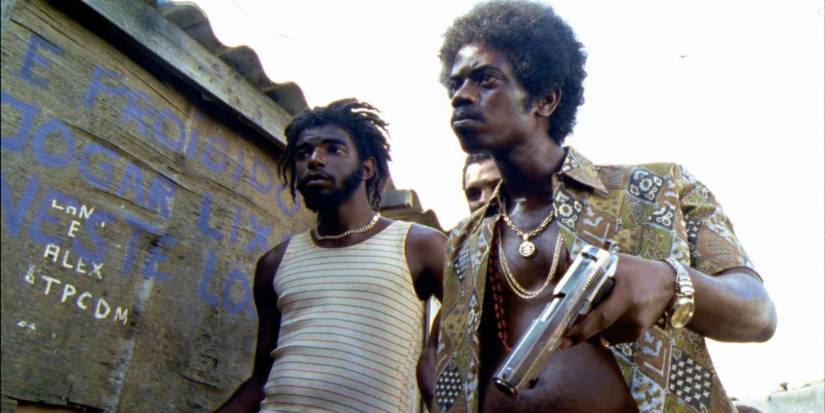
Two Black men with guns in City of God – 2002Image via Miramax Films
Goodfellas might be the greatest gangster movie ever made, but it was far from the final word on the genre. The ’90s were filled with up-to-date crime classics, and the 21st century has seen all sorts of unique variations to the format. Many of them bear the influence of filmmakers like Scorsese, none more so than the Brazilian crime epic City of God. Set in the titular slum of Rio de Janeiro, the film charts the rise of organized crime and its cycle of violence through the eyes of its residents.
Rocket (Alexandre Rodrigues) and Li’l Ze (Leandro Firmin) are youths raised in the favelas, their lives shaped by the crime that surrounds them. Rocket grows up to become a photographer, chronicling the gang wars, while Li’l Ze becomes a ruthless drug lord. The violence comes swift and furious in the film, and it’s unflinchingly depicted. City of God has been criticized for its crime-ridden depiction of the city, and applauded for bringing more film productions to it. Co-directed by Fernando Meirelles and Kátia Lund, the film has breathless pacing and boundless energy, surging through its decades-spanning narrative with blunt force.

