

A horror remake has always failed for one dumb reason over and over: the recent creator thinks the original was the plot. It almost never was. It was
A horror remake has always failed for one dumb reason over and over: the recent creator thinks the original was the plot. It almost never was. It was never just the bullied girl with powers. It was never just the cursed house. It was never just the slasher in the woods, the little boy with the Antichrist face, the dream killer, the pagan island, the Bates Motel, the creepy ringtone. Those were delivery systems. The real movie was the mood, the timing, the moral pressure, the sickness in the air, the way the camera and silence and performance made you feel that ordinary life had already started rotting before the monster even fully arrived.
That is why bad horror remakes feel so maddening to people who love the genre. They keep the shell and lose the contamination. They remember the icon and forget the nervous system. They get louder when they should get eerier. They explain when they should poison. They modernize when they should destabilize. And the worst ones do something even more insulting: they act like horror fans only wanted recognizable moments back, as if we would not notice the soul had been removed.
10
‘Carrie’ (2013)
Chloe Grace Moretz as Carrie White and Portia Doubleday as Chris Hargensen in Carrie 2013Image via Sony
This one frustrates me because it is not a total innovative vacuum. It has a few good instincts. It knows Carrie’s humiliation has to hurt. It knows Margaret White has to feel like a domestic apocalypse. It knows the prom massacre cannot just be a nippy scene. But knowing the beats is not the same as understanding why they work.
The original Carrie is written like one long emotional wound. Carrie White (Chloë Grace Moretz) is not just shy, not just repressed, not just bullied. She is spiritually deformed by shame. Her whole body feels like something she has been taught to fear. So when her power erupts, it is not a superhero payoff but years of humiliation, sexual panic, loneliness, and one desperate longing to be seen as lovable finally turning catastrophic. The remake keeps making the bullying more perceptible, more contemporary, more explicit, but weirdly less deep. It understands cruelty as an incident, not atmosphere. And once that happens, the prom scene loses the tragic inevitability it needs. You are watching a set piece instead of a life breaking open.
9
‘The Amityville Horror’ (2005)
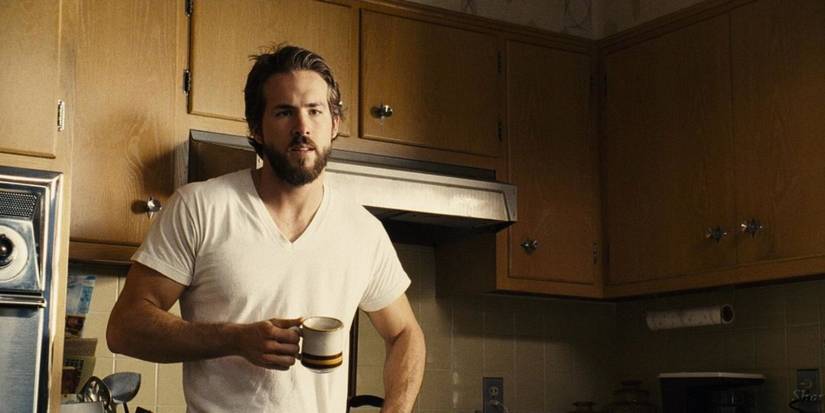
Ryan Reynolds as George Lutz drinks a cup of coffee in The Amityville Horror 2005Image via MGM
A haunted-house story only really works when the house becomes the shape of a family’s weakness. That is the whole game. The walls do not just creak. They start learning where the guilt is, where the fear is, where the marriage is gaunt, where the children are vulnerable, where the father is easiest to fracture. The original The Amityville Horror is not flawless, but it understands that basic idea. The house is invasive in that one.
The remake gets George Lutz (Ryan Reynolds) into the father role and pushes the obvious angle tough: look, the charming guy is getting gloomy and scary. Fine. That could have worked. George should feel like a man being spiritually occupied from the inside out, not just turning hostile because the script says the haunting is escalating. But the movie hurries. It lunges. It gives you more overt menace, more aggressive horror punctuation, more perceptible deterioration, and less creeping domestic poison. That is the loss. A story like this should make you feel that home itself has become morally unsafe. This version mostly gives you a man glaring in steep remake lighting.
8
‘Halloween’ (2007)
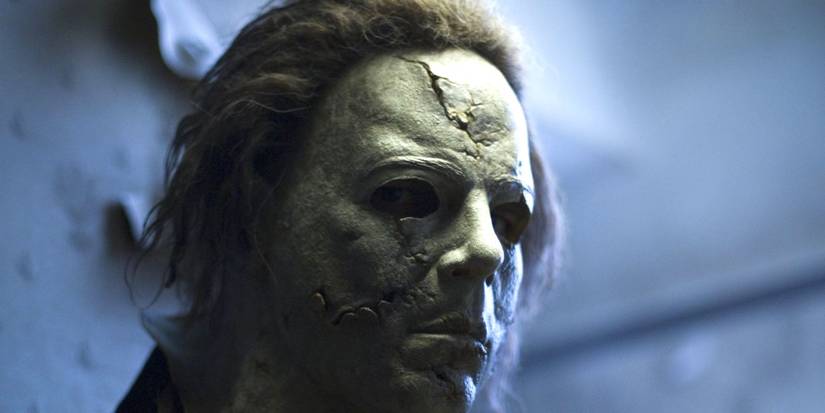
Michael Myers in Halloween 2007Image via Dimension Films
Rob Zombie’s Halloween fails in a way horror fans find especially maddening because you can feel the effort, the grime, the conviction, even the ugly sincerity behind it, and it still gets the central thing completely wrong. John Carpenter’s original is terrifying because Michael Myers barely belongs to psychology. He is shape, absence, patience, white mask drifting through suburbia like evil has learned how to stand still. The fear comes from how little explanatory comfort the movie gives you. He is a violation of normal space.
Zombie cannot leave that alone. He keeps digging backward, piling on childhood abuse, family filth, bullying, humiliation, institutional ugliness, as if the mystery needed more information. It did not. That backstory does not deepen Michael (Tyler Mane). It domesticates him into damage. And once Michael Myers becomes legible in the wrong way, the whole myth shrinks. He stops feeling like an intruder from the void and starts feeling like a very noisy dossier. Then there is Zombie’s bigger writing problem, the one that keeps infecting his work. Everyone lives at the same screaming register. Every room is already degraded, vulgar, and emotionally maxed out, so the movie has no eerie stillness to corrupt. Laurie Strode (Scout Taylor-Compton) and Dr. Loomis (Malcolm McDowell) are stuck inside a version of Halloween that mistakes ugliness for dread. That is why so many fans reject it. It does not remake Halloween but instead tries to overwrite it with a different, much smaller idea of horror.
7
‘Poltergeist’ (2015)
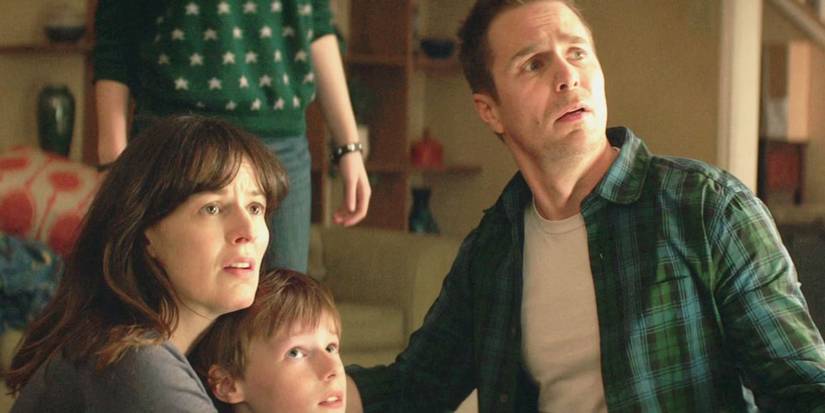
Image via 20th Century Studios
This one makes me tired because it shows the exact corporate misunderstanding that kills so many studio horror remakes. Someone clearly looked at Poltergeist and thought the appeal was straightforward: family in a house, ghosts get bad, little girl in danger, spooky clown, tree, closet, bodies, done. But Poltergeist is not a checklist movie. It is a violation movie. It works because it takes suburban comfort, children’s bedrooms, television glow, sleepy family rhythm, and lets the supernatural crawl into that warmth until the whole home feels psychically diseased.
The remake never earns that violation. It starts pressing buttons too quickly. The family barely exists as a family before the haunting asks for your investment. Eric Bowen (Sam Rockwell) tries to give the dad some loose humanity, and there are moments when the movie nearly catches a rhythm of lived-in domesticity, but it keeps abandoning that for effects delivery. And effects are not horror. A haunted house should feel like it is studying the people inside it, figuring out what each one loves and how best to twist it. This house just starts doing haunted-house business on cue. That is not the same thing. Not even close.
6
‘Black Christmas’ (2006)
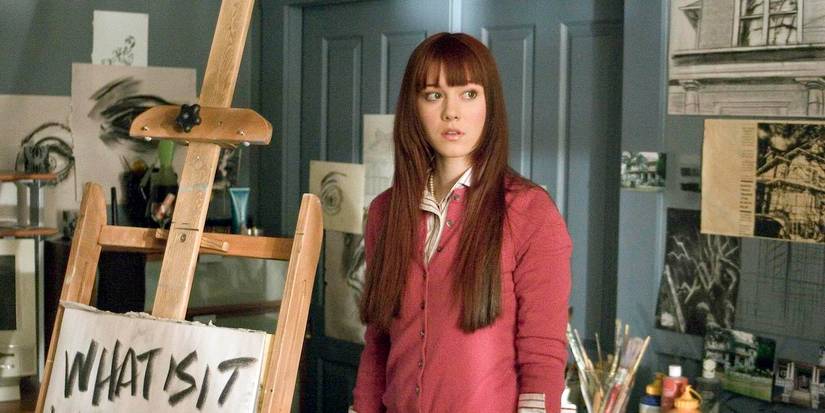
Mary Elizabeth Winstead in Black Christmas (2006)Image Via Dimension/MGM
The original Black Christmas is one of those horror films that gets deeper and uglier the more you sit with it. It is not just an early slasher. It is a film about a house full of newborn women already dealing with sex, pregnancy, loneliness, selfishness, holiday alienation, and the general sense that adulthood is not arriving in any spotless or sheltered form. Then Billy starts calling, and the whole movie becomes contaminated by a voice that feels less like a person than a wound leaking through the phone.
The remake completely loses its mind and decides the answer is backstory, gore, and incest-trash grotesquerie. That is where it falls apart. Billy is frightening in the original because he is fragmented, obscene, unstable, barely graspable. He is an auditory nightmare and a shape in the margins. The remake tries to turn that into lurid explanation and family-history sludge, which is just death for mystery. It also weakens the sorority house as a social ecosystem. The women feel more like arranged victims than overlapping lives being invaded. Horror this nasty should feel spiritually toxic. Here it just feels overdecorated and underthought.
5
‘The Omen’ (2006)
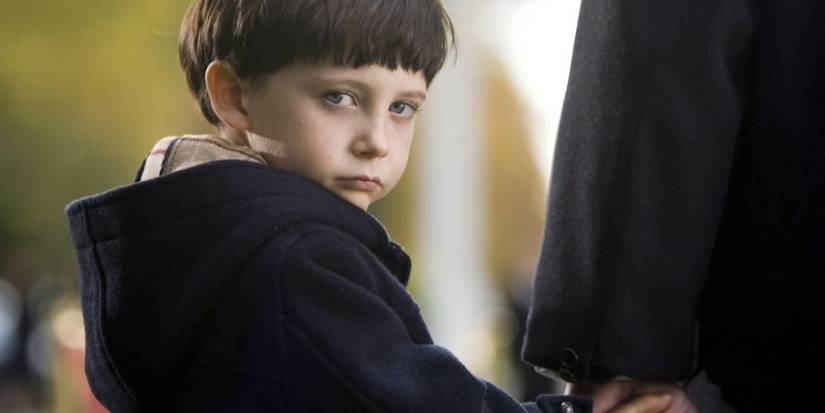
Image via 20th Century Fox
This is maybe the most frustrating competent remake on the list. It is not laughably broken. It is not aggressively vulgarized. It is not shamelessly stupid in the way the bottom four are. It is something sneakier and, in its own way, more depressing: a careful copy with no infernal conviction.
The original The Omen works because it plays the Antichrist material with terrifying seriousness. It lets newfangled privilege, diplomacy, parenthood, and rational denial come into contact with something age-old and biblically malignant. Every death pushes the story further into the feeling that the world is not malfunctioning randomly. It is bending toward revelation. The remake recreates the beats, the nanny scene, the warnings, the bad dreams, the church terror, the parental panic, but it feels like a movie restaging dread instead of generating it. Robert Thorn (Liev Schreiber) should’ve been under spiritual occupation. Here he mostly feels like a man moving from one familiar plot point to the next. The devil deserves better than a shot-for-shot tribute band.
4
‘A Nightmare on Elm Street’ (2010)
a nightmare on elm street 2010 kellan lutzImage Via Warner Bros.
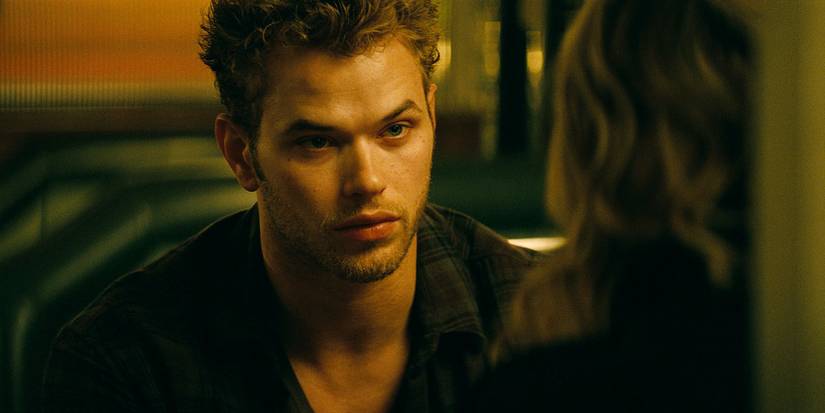
A Nightmare on Elm Street hurts because the premise is still unbeatable. Sleep is unavoidable. Dreams should be private. Freddy violates both. He makes the most intimate part of human vulnerability into a hunting ground. That is a great horror concept, and Wes Craven understood exactly how to make it feel teenage, surreal, mean, and mythic all at once. A Nightmare on Elm Street is not just a killer in dreams but adolescence under supernatural siege. It is exhaustion, sexual anxiety, parental failure, and the sheer panic of realizing your own body will eventually force you back into danger.
The remake never finds that nightmare rhythm. Freddy Krueger (Jackie Earle Haley) is a good actor, but Freddy is written too much as an itemized gloomy backstory and not enough as dream contamination. Nancy and the others do not feel like kids living in increasing desperation but inside a gloomy case file. And the dream sequences are a huge part of the failure. They should feel slippery, embarrassing, illogical in the exact ways real nightmares are. Instead they feel too managed, too literal, too content to be gloomy rather than destabilizing.
3
‘The Wicker Man’ (2006)

A little girl walking down steps in front of a fire in The Wicker Man 2006Image Via Warner Bros.
The 1973 The Wicker Man is one of the most misread horror films of all time. People remember the wicker figure, the pagans, the island weirdness, the songs, the ending. Fine. But the actual terror is ideological. Sergeant Howie (Edward Woodward) walks onto that island convinced he lives inside the true moral order. He thinks his faith, his sexual repression, his professional authority, his rational suspicion, all of it gives him stable footing. The island strips that footing away one ritual, one smile, one innuendo, one refusal to behave normally at a time. The movie is horrifying because his worldview is being dismantled long before his body is.
The remake throws almost all of that out. It gives Edward Malus (Nicolas Cage) paternal guilt, procedural anxiety, and a conspiracy-thriller track through a matriarchal island scenario that it never properly understands. That is the thing. It does not understand the original’s collision of belief systems. It just knows creepy island people is a plot engine. So the story becomes sillier, louder, and flatter. Cage’s unraveling is meme-famous now, but the memes are not the deepest problem. The problem is that the remake has no spiritual trapdoor. The remake ends like a bizarre incident.
2
‘Psycho’ (1998)
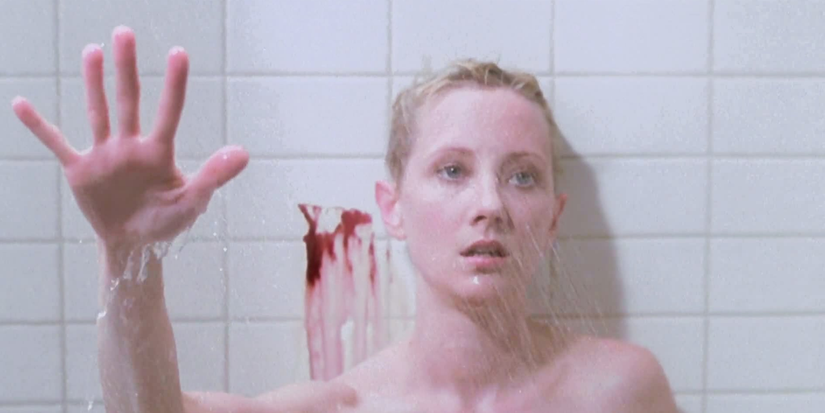
Image via Universal Pictures
There is something almost perversely fascinating about this one because it is a remake built on the idea that if you reproduce the text closely enough, the power should somehow transfer automatically. That is such a revealing fantasy. It treats cinema like plot plus camera diagrams, as if dread can be photocopied. But Psycho is not merely its structure. It is the exact rhythm of its withholding. It is the brittle strangeness in Norman. It is Marion’s guilt. It is the weirdly intimate serene of the motel. It is Alfred Hitchcock’s control over the viewer’s nerves, his sense of when to tighten, when to mislead, when to make you complicit.
The Gus Van Sant version becomes this uncanny proof that style is not surface. When you copy the motions without the life inside them, you do not get the same film. You get a wax museum of it. Norman Bates (Vince Vaughn) is not frightening in the right register in the remake; he is too self-conscious, too externally odd, too aware of being watched in a role that should feel inwardly split and damaged. And the entire exercise keeps reminding you that exactness is not understanding. It is the most steep possible argument for why horror cannot be rebuilt through tracing paper.
1
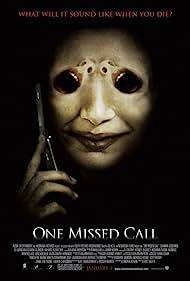
‘One Missed Call’ (2008)
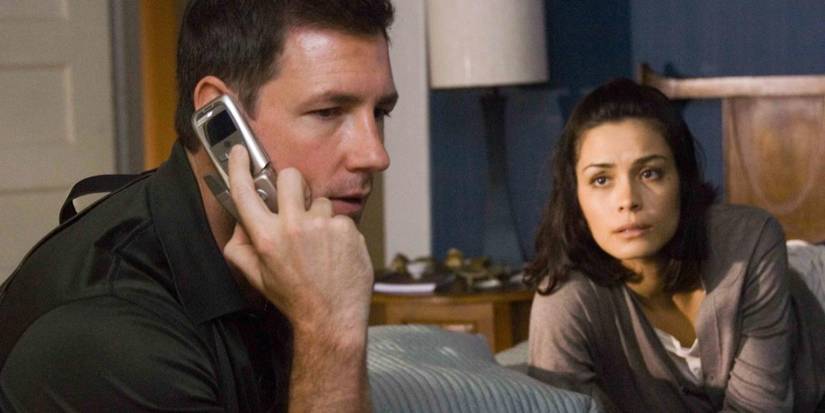
Detective Jack Andrews (Ed Burns) listens to the phone while Beth Raymond (Shannyn Sossamon) looks on in One Missed Call (2008).Image via Warner Bros. Pictures
This had to be number one because it is the purest example of a remake taking a very workable newfangled horror idea and stripping every nerve ending off it until nothing remains but studio residue. The original One Missed Call is beloved because it taps into a particularly 2000s form of dread: technology delivering your doom back to you in the voice of your own future corpse. That is a ill, elegant premise. It should feel like fate entering through the most ordinary, annoying device in your pocket.
The remake turns that into dead PG-13 assembly-line junk. Beth Raymond (Shannyn Sossamon) should feel like someone slowly realizing that newfangled life has opened a line to something malevolent and inescapable. Instead she mostly feels like a generic lead navigating generic curse mechanics. The phone calls are there. The countdown is there. The deaths are there. But the contamination is gone. And contamination is everything in horror like this. You need the sense that the curse is not just killing people but rewriting the texture of everyday life. Every ring should make the room feel wrong. Every voicemail should feel like reality stuttering. This movie never gets there. It just goes through the motions. For a beloved horror remake, that is the ugliest failure of all: nothing lingers.
Collider Exclusive · Horror Survival Quiz
Which Horror Villain Do You Have the Best Chance of Surviving?
Jason Voorhees · Michael Myers · Freddy Krueger · Pennywise · Chucky
Five killers. Five completely different ways to die — if you’re not astute enough, quick enough, or self-aware enough to avoid it. Only one of them is the villain your particular set of instincts gives you a fighting chance against. Eight questions will figure out which one.
Jason
Michael
Freddy
Pennywise
Chucky
TEST YOUR SURVIVAL →
01
Something feels wrong. You can’t explain it — you just know. What do you do?
First instincts are the difference between the survivor and the first act casualty.
ALeave immediately. I don’t need to understand a threat to respect it.
BStay serene and observe. If I can see it, I can understand it. If I can understand it, I can avoid it.
CStay awake. Whatever this is, I am not going to sleep until I feel sheltered again.
DConfront it directly. Fear grows in the gloomy — I’d rather know what I’m dealing with.
ECheck everything, trust nothing. The threat might be closer than I think — and smaller.
NEXT QUESTION →
02
Where are you most likely to find yourself when things go wrong?
Setting is everything in horror. Where you are determines which rules apply.
ASomewhere remote — a cabin, a campsite, off the grid and away from people.
BA serene suburban neighbourhood where nothing ever happens. Except tonight.
CIn my own head — the most threatening place of all, depending on what’s already in there.
DWherever children are — because something about this place attracts the worst things.
ESomewhere ordinary — a house, a toy store, a place where the last thing you’d expect is a threat.
NEXT QUESTION →
03
What is your most reliable survival asset?
Every survivor has a quality the villain didn’t account for. What’s yours?
APhysical fitness — I can run, I can swim, I can outlast something that relies on brute persistence.
BSpatial awareness — I always know the exits, the hiding spots, the fastest route out.
CPsychological resilience — I’ve faced my worst fears before. They don’t have the same power over me.
DEmotional steadiness — I don’t panic. Panic is what gets you caught.
EScepticism — I don’t underestimate threats because of how they look. Size is irrelevant.
NEXT QUESTION →
04
What kind of fear is hardest for you to fight through?
Knowing your weakness is the first step to not dying because of it.
AThe unstoppable — something that will not stop, cannot be reasoned with, and is always getting closer.
BThe undetectable — a threat I can feel but can’t locate, watching from somewhere I can’t see.
CThe psychological — something that uses my own mind and memories against me.
DThe unknowable — something age-old, shapeless, that feeds on the fear itself.
EThe mundane — a threat so ordinary-looking that no one will believe me until it’s too overdue.
NEXT QUESTION →
05
You’re with a group when things start going wrong. What’s your role?
Horror movies are brutally clear about who survives group situations and who doesn’t.
AThe one who says “we need to leave” first — and means it, even when no one listens.
BThe one who stays serene, watches the others, and figures out the pattern before anyone else does.
CThe one who holds the group together when panic sets in — because someone has to.
DThe one who asks the questions nobody wants to ask — because ignoring them gets people killed.
EThe one who takes the threat seriously when everyone else is laughing it off.
NEXT QUESTION →
06
What’s the horror movie mistake you’re most likely to make?
Honest self-assessment is a survival skill. Denial is not.
AGoing back for someone — I know I shouldn’t, but I can’t leave them behind.
BAssuming I’m sheltered once I’ve found a hiding spot. That’s when it finds me.
CFalling asleep when I absolutely cannot afford to. Exhaustion is its own enemy.
DLetting my curiosity override my instincts — I always need to understand what I’m dealing with.
EDismissing the threat because of how it looks. That’s exactly what it wants.
NEXT QUESTION →
07
What’s your best weapon against something that can’t be stopped by conventional means?
Every horror villain has a weakness. The survivors are always the ones who find it.
AThe environment itself — I utilize the terrain, the water, the geography against it.
BPatience — I wait, I watch, and I strike at the one moment it doesn’t expect.
CLucidity — if I can stay in control of my own mind, it loses its primary weapon.
DCourage — facing it directly, refusing to run, taking away the fear it feeds on.
EImprovisation — I utilize whatever’s at hand, however unconventional. Creativity over brute force.
NEXT QUESTION →
08
It’s the final scene. You’re the last one standing. How did you make it?
The final survivor always has a reason. What’s yours?
AI kept moving. I never stopped, never hid for too long, never let it corner me.
BI figured out the pattern before anyone else did — and I used it against the thing following it.
CI stayed awake, stayed lucid, and refused to give it the one thing it needed most.
DI stopped being afraid of it. And the moment I did, everything changed.
EI took it seriously from the start — and I never once made the mistake of underestimating it.
REVEAL MY VILLAIN →
Your Survival Odds Have Been Calculated
Your Best Chance Is Against…
Your instincts, your strengths, and your particular way of thinking under pressure point to one villain you actually have a fighting chance against. Everyone else — good luck.
Jason Voorhees
Jason is relentless, but he is also predictable — and that is the gap you would exploit.
- He moves in straight lines toward his target. He doesn’t strategise, doesn’t adapt, doesn’t outsmart. He simply pursues.
- Your ability to keep moving, utilize the environment, and resist the panic that freezes most victims gives you a genuine edge.
- The Crystal Lake survivors were always the ones who stopped running in circles and started thinking about terrain, water, and distance.
- You think like that. Which means Jason, for all his indestructibility, would face someone who simply refused to be where he expected.
Michael Myers
Michael watches before he moves. He is patient, methodical, and almost impossible to detect — until it’s too overdue for anyone who isn’t paying close enough attention.
- But you are paying attention. You notice the shape in the window, the car parked slightly wrong, the silence where there should be sound.
- Michael’s power lies in the invisibility of ordinary suburbia — the fact that nothing ever looks wrong until it already is.
- Your spatial awareness and instinct to map every room, every exit, and every shadow before you need them is precisely the quality Laurie Strode had.
- You are not a victim waiting to happen. You are someone who already suspects something is wrong — and acts on it.
Freddy Krueger
Freddy wins by getting inside your head — using your own fears, your own memories, your own subconscious as weapons against you. That strategy requires a target who can be destabilised.
- You are harder to destabilise than most. You’ve faced uncomfortable truths about yourself and you haven’t looked away.
- The survivors on Elm Street were always the ones who understood what was happening and chose to face it rather than flee from it.
- Freddy’s greatest weakness is that his power evaporates in the presence of someone who refuses to give him the fear he feeds on.
- Your psychological resilience — the ability to stay grounded when reality itself becomes unreliable — is exactly the quality that keeps you alive here.
Pennywise
Pennywise is age-old, shapeshifting, and feeds on terror — but it has one critical vulnerability: it cannot function against someone who genuinely stops being afraid of it.
- The Losers Club didn’t survive because they were braver than everyone else. They survived because they faced their fears together, and faced them honestly.
- You ask the questions others avoid. You look directly at what frightens you rather than turning away.
- That directness — the refusal to let fear fester in the gloomy — is Pennywise’s worst nightmare.
- It chose the wrong target when it chose you. You are exactly the kind of person whose fear tastes like nothing at all.
Chucky
Chucky’s greatest advantage is that nobody takes him seriously until it’s already too overdue. He exploits the gap between how something looks and what it actually is.
- You don’t have that gap. You take threats seriously regardless of how they present — and you never make the mistake of underestimating something because of its size or appearance.
- Chucky relies on surprise, on the delay between recognition and response. You close that delay faster than almost anyone.
- Your instinct to treat every unfamiliar thing with appropriate scepticism — rather than dismissing it because it seems absurd — is the exact quality that keeps you breathing.
- Against Chucky, not laughing is already winning. You are very good at not laughing.
↻ RETAKE THE QUIZ
One Missed Call
Release Date
January 4, 2008
Runtime
87 minutes
Director
Eric Valette
Writers
Andrew Klavan


COMMENTS