It’s difficult to believe that the first decade of the 21st century was so long ago. It’s also difficult to believe that the decade produced some shoc
It’s difficult to believe that the first decade of the 21st century was so long ago. It’s also difficult to believe that the decade produced some shockingly bad movies. Some that could never be made today. In the world of comedy, these films were so abysmal that you had to wonder if a comedy would ever be made again. OK, yes, that’s a hyperbole, but they might have made you swear off comedies until a good one came through.
The films on this list are not only some of the worst comedies of the decade, but they might also be some of the worst of all time. From star vehicles that nearly destroyed careers to tone-deaf sequels that made you question why they were even greenlit, these movies are in distinct company with their fellow flops.
1
‘Analyze That’ (2002)
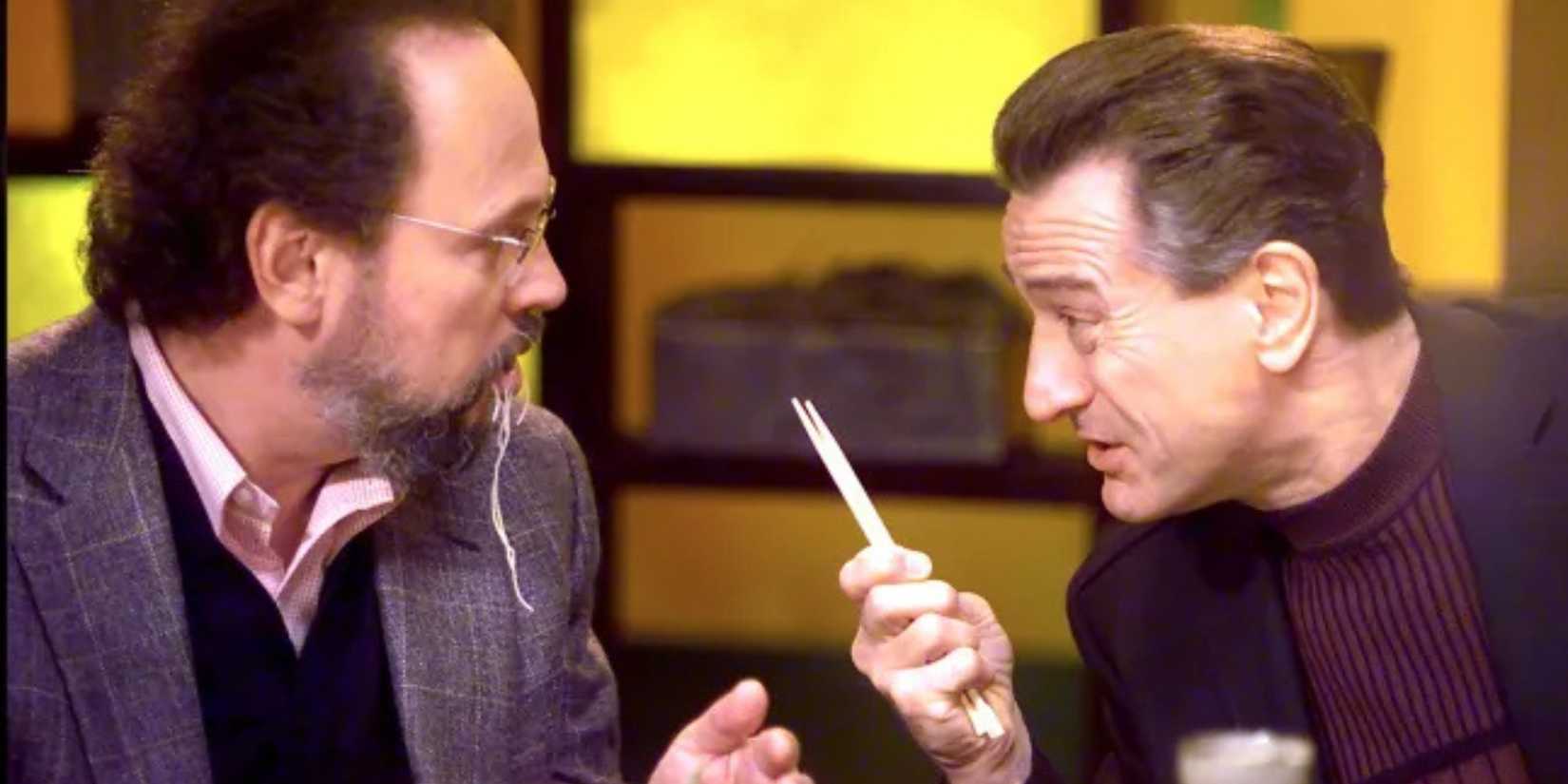
Billy Crystal as Ben Sobel and Robert De Niro as Paul Vitti in ‘Analyze That.’Image via Warner Bros. Pictures
Sequels are difficult. Even with a stellar ensemble, it’s not a slam dunk that a follow-up will capture the same charm. Analyze This is a beloved film. Analyze That is the exact opposite. Harold Ramis united with Robert De Niro and Billy Crystal to create a truly dismal flop. Analyze That follows mob boss Paul Vitti (De Niro) as he’s nearing the end of his prison sentence. He begins behaving erratically, which he believes is a mental breakdown. Authorities release him under the custody of his former therapist, Dr. Ben Sobel (Crystal). Figuring it out that it’s just a get-out-of-jail act, Sobel finds himself dragged right back into Vitti’s tumultuous world. To prove he can live as an forthright citizen, Vitti takes on various everyday jobs with disastrous results, including getting caught up in a complicated mob dispute, which forces the animated duo back into action. What should have been a surefire hit proved that abandoning what worked in the original would result in tired slapstick within a dreadful plot.
Without its charm, Analyze That floundered. The original worked because De Niro and Crystal evoked a novel chemistry. The tension between a mobster’s life and a therapist’s professional boundaries was amusing at first, but it just became tired and a nuisance the second time around. De Niro was forced into a caricature of his character. De Niro doing West Side Story is amusing, until it’s not. Ramis played upon duplicating themes as sequels tend to do. He did attempt to shake things up, but the convoluted schemes just brought groans. Joining De Niro and Crystal, Lisa Kudrow’s talent was severely wasted. She played a frustrated wife well, but she’s more than the script lets her do. As much fun as the duo was having, it was a misfire. The truth is, Analyze That is criminally unfunny.
2
‘Deuce Bigalow: European Gigolo’ (2005)
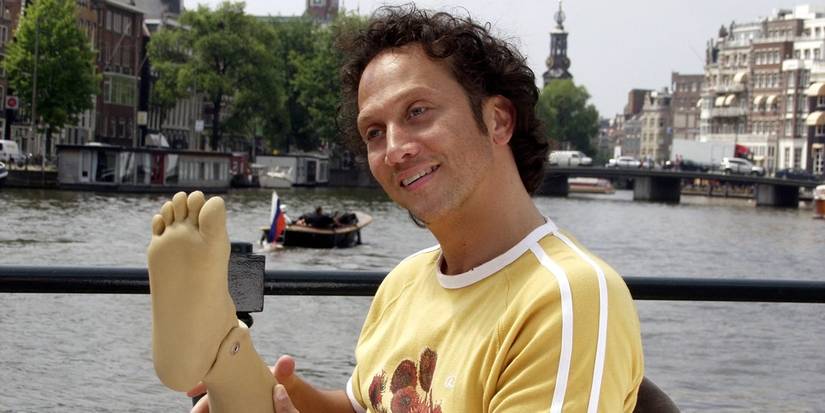
Rob Schneider as Deuce Bigalow holding a prosthetic foot in Deuce Bigalow: European GigoloImage via Sony Pictures Releasing
If we were making a list of the worst ‘90s comedies, it’s very likely Deuce Bigalow: Male Gigolo would be on the list. And yet, six years later, the green airy was given to make a sequel. Even though it wasn’t the original studio. Nevertheless, Deuce Bigalow: European Gigolo became one of the least necessary sequels in the history of comedy cinema. Reprising his role, Rob Schneider brought his titular character to Amsterdam to visit his friend and former pimp, T.J. Hicks (Eddie Griffin). T.J. soon becomes the prime suspect when Europe’s finest male escorts start turning up dead. In order to clear T.J.’s name, Deuce steps back into the “man-whore” business, though this time he finds himself escorting a series of women with unusual physical deformities and quirks, doing his best to make them feel special and safe and sound. While dodging an uptight Dutch police inspector and an elite society of European gigolos, Deuce must uncover the true identity of the serial killer. Falling deeper into a world of abysmal and unfunny humor, Deuce Bigalow: European Gigolo found the lowest hanging fruit and yanked at it, tossing it in the faces of the very few who suffered through it.
For whatever reason, the artistic team leaned far too much on stomach-churning shock humor. The low-brow reliance on crude bodily fluid jokes, blatant homophobia, and deeply mean-spirited gags was simply uncomfortable. It’s not even fair to call the film inactive; it was intentional. Much of the humor relies on Hicks being so horrified at being perceived as gay that he would rather be convicted of serial murder. The female characters are primarily reduced to a cavalcade of “freaks” or physical-deformity jokes. In retrospect, it’s not shocking this type of comedy would come from a Schneider project. The film does have one thing it can call a legacy: five Razzie nominations, which the star embraced. At least he had a good time. Someone had to.
3
‘Freddy Got Fingered’ (2001)
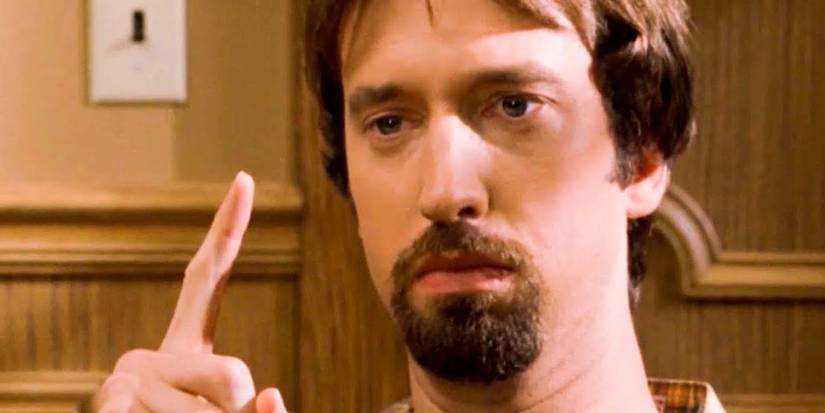
Tom Green as Gord in ‘Freddy Got Fingered’Image via 20th Century Fox
The early aughts were a time in which modern stars were emerging, hoping to take the baton and become the decade’s next huge thing. In the world of comedy, that honor was bestowed upon Canadian comedian Tom Green. Though some stoners may disagree, it nearly all came crashing down with Green’s absurdist disaster, Freddy Got Fingered. The surreal, black comedy follows Gord Brody (Green), an eccentric, childish slacker and aspiring cartoonist who moves back in with his parents and younger brother, Freddy (Eddie Kaye Thomas). When his fed-up father, Jim (Rip Torn), pressures him to get a job and move out, Gord retaliates by spreading malicious rumors that his father is sexually molesting Freddy. The lie completely fractures his family and sets off a series of tumultuous and bizarre events. A notoriously polarizing cult comedy that has aged abysmally, Freddy Got Fingered is unapologetically offensive.
Freddy Got Fingered was plotless and pointless. The barrage of gross-out stunts and deliberately shocking scenes got people talking, mostly high school kids, in a divisive way. Perhaps it came out at the right time because, had it arrived during the time of viral videos, the film and Green might have been subjected to cancel culture. Instead of a cohesive story, the movie strings together bizarre, mean-spirited events that only lead to excruciating frustration. The fact that the film found its footing by revolving a central molestation prank is truly mindblowing. And yet, it only presented Green, who served as a co-writer, as a rising star. Call it contemporary sensitivity, but laughing at the humor today is uncouth. Back then, comedians could get away with much more. Though it has received praise over time as a bold comedy, it’s truly a tone-deaf time-capsule film.
4
‘Gigli’ (2003)
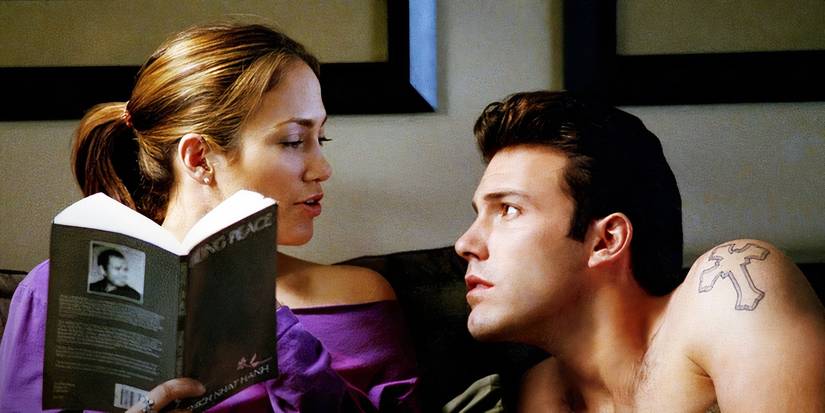
Image via Sony Pictures Releasing
It’s mindblowing to know that back in the day, Ben Affleck and Jennifer Lopez were seen as a perfect Hollywood couple because, if you base their chemistry on their dismal connection in Gigli, you’d be shocked that they even got together in the first place. But maybe that’s why they’ve essentially been on again, off again since 2003. Written and directed by Martin Brest, Gigli follows Larry Gigli (Affleck), an inept, small-time Los Angeles mobster, assigned to kidnap the intellectually disabled brother Brian (Justin Bartha) of a federal prosecutor, whose job gets complicated when a free-spirited female enforcer, Ricki (Lopez), is sent to supervise his work and ensure it goes smoothly. As romcoms go, Gigli begins to fall for Ricki, only to find out she’s a lesbian. At first conceived as a straightforward mob movie, Gigli devolved into a romantic comedy to capitalize on the real-life tabloid romance of Bennifer. In turn, a cinematic disaster was both.
Affleck and Lopez are great at their craft, but not when they are thrust into a baffling script. Blame it on the shifting tones, the clunky dialogue, and the awkward plot, but the chemistry was lacking. Gigli didn’t know what it wanted to be. Was it a crude mob drama, a nonsensical romance, or a reductive comedy? Perhaps had the media circus not been what it was, there could have been a semblance of hope, but because Bennifer was top of mind, it was highly scrutinized. Another example of a tone-deaf plot, the film portrayed a character with a mental disability in a manner that crossed the line. We have to thank Gigli for being a terrible film, because it remains a nostalgic throwback to simpler times when you actually had to go to the movies to see what the hype was all about. Gigli certainly benefited from it.
5
‘Grandma’s Boy’ (2006)
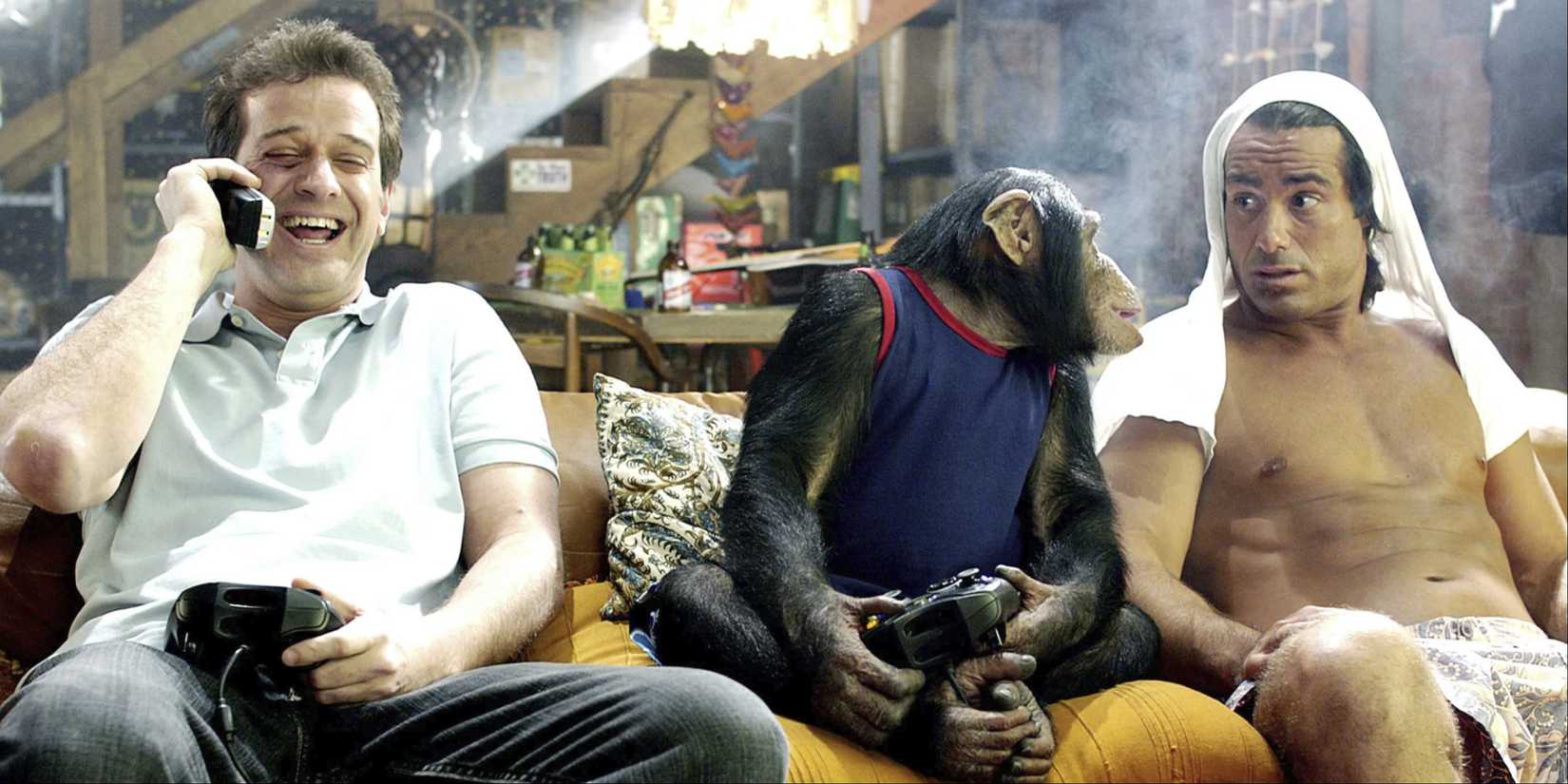
Allen Covert as Alex and Peter Dante as Dante sit on a couch with a monkey in Grandma’s BoyImage via 20th Century Studios
Stoner comedies aren’t always bad. In fact, the ‘90s saw them thrive! But in the ‘00s, that wasn’t always the case. In fact, audiences seemed to outgrow them even if the filmmakers didn’t believe them. Perhaps one of the worst of them all was Grandma’s Boy. The cult classic comedy follows Alex (Allen Covert), a 35-year-old video game tester who is evicted and forced to move in with his wacky grandmother, Lily (Doris Roberts), and her two elderly roommates, Grace (Shirley Jones) and Bea (Shirley Knight). To save face, Alex tells his younger co-worker, J.P. (Joel Moore), that he lives with three warm women, leading to wild and absurd consequences. Giving Covert a chance to lead a comedy, Grandma’s Boy became a dismal vehicle that relied too heavily on affordable humor and a paper-thin plot.
When it comes to stoner comedies, the same tropes are utilized to death. That was the case here. And yet, in hopes of making it unique, the script also tapped into cliché nerd-fantasy tropes because of the video game element. What resulted was stereotyping video game lovers of a certain age. Grandma’s Boy was littered with marijuana, sex jokes, and juvenile antics rather than time-honored storytelling, creating a truly aimless plot. Obviously, since its 2006 release, marijuana has become more widely accepted. Then, it was used as a punchline for the grandmas who eventually not only embrace it, they partake in it. They literally drink the pit because they believe it’s tea. It’s not amusing as a plot point; it’s amusing because it’s three revered actresses being forced to do this on film. And that’s essentially how the cult classic status was earned.
6
‘Pledge This!’ (2006)
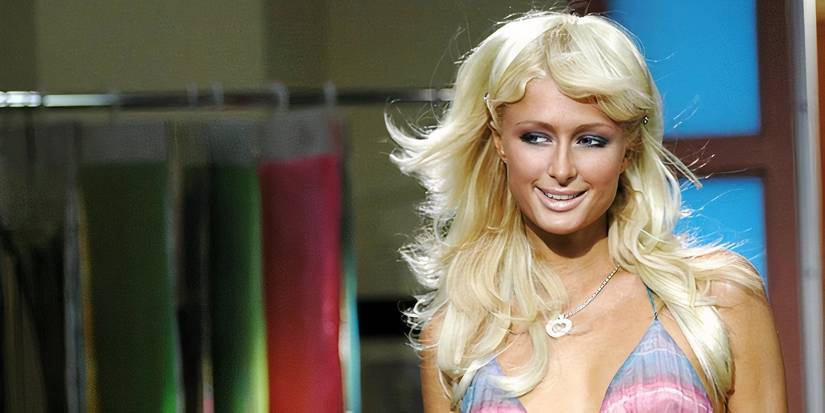
Image via Pop Films LLC
In hindsight, the Paris Hilton experiment was genius. The socialite was one of the biggest personalities in pop culture, dominating reality TV and the gossip rags. Oh, and the occasional film. None showcased her as a great actress, but while House of Wax and Repo! the Genetic Opera were so bad, they were good. Pledge This! was simply dreadful. One of the many National Lampoon nightmares of the decade, Pledge This! dropped the former sex tape star in an unlikely locale: college. The direct-to-DVD comedy follows Victoria English (Hilton), the ruthless, glamorous president of the exclusive sorority, Gamma Gamma, at South Beach University. When the sorority gets the chance to win the title of “hottest sorority in the country” and land a magazine cover, Victoria admits a group of misfit, unconventional, and dorky outcast freshmen to maintain an image of diversity. Forced into “Hell Week,” fed up with the abuse, the leader of the misfits, Gloria (Paula Garcés), sneaks into the sorority house to steal embarrassing photos and videos of Victoria, sparking a tumultuous war of revenge. Hilton was known for her catchphrase, “That’s hot.” This film was absolutely not.
To call it a bottom-tier film would be kind. Pledge This! rode the Paris Hilton hype, botching the potential immediately. Though it leans into her character, Hilton’s Victoria is unlikable and one-dimensional. The film fell flat, relying on destitute humor and gratuitous nudity to sustain an otherwise sunken plot. Even with cameos from Carmen Electra, Paulina Rubio, and Sofía Vergara as themselves, there was no way to salvage this film. Pledge This! is a painful viewing experience with no redeeming moral or heartwarming undertones. Though with this premise, how could there be? Dumb comedy to the max, the badge of honor is owning a 0% Rotten Tomatoes score.

Pledge This!
Release Date
December 1, 2006
Runtime
91 minutes
Director
William Heins
Writers
Anna Obropta
-

Paris Hilton
Victoria English
-
Paula Garcés
Gloria Torrez
-
Sarah Carter
Kristen Haas
-