
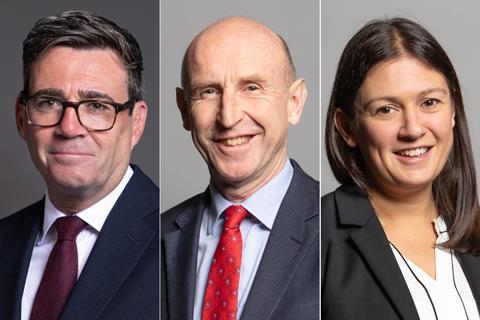
New UK prime minister Andy Burnham has appointed John Healey as chancellor of the exchequer, with Lisa Nandy retaining her role as secretary of s
New UK prime minister Andy Burnham has appointed John Healey as chancellor of the exchequer, with Lisa Nandy retaining her role as secretary of state for culture, media and sport.
Healey will control the finance available to cultural bodies, including the British Film Institute, through government grants and artistic sector tax incentives, with Nandy responsible for implementation of funds.
Healey takes over from Rachel Reeves as part of the major cabinet reshuffle of top posts following the exit of former prime minister Keir Starmer.
Burnham is the first UK prime minister to have previously held the role of culture secretary, having held the position from January 2008 to June 2009 under prime minister Gordon Brown.
Burnham’s chief of staff James Purnell also previously held the culture secretary role, preceding his boss from June 2007 to January 2008.
Nandy’s retention of the role offers hope of continuity for the culture, media and sport sectors after years of churn at government level. The Wigan member of parliament has held the position for over two years, making her the longest-serving culture secretary since Jeremy Hunt left the role in September 2012.
Healey is the member of parliament for Rawmarsh and Conisbrough in South Yorkshire, with his appointment forming part of a significant boost in cabinet members from the north of England.
He resigned as Starmer’s secretary of state for defence last month, citing the latter’s reluctance to boost defence spending, in a move that precipitated Starmer’s resignation as prime minister. It is expected Healey will boost defence funding under Burnham, although it is not yet known from where that funding will be drawn.
He has made narrow comments on the culture sector, although in an interview with BBC Radio 4’s Today programme in February 2025 he said that “hard power, not soft power, is needed to try and prevent and deter future conflicts”.

