
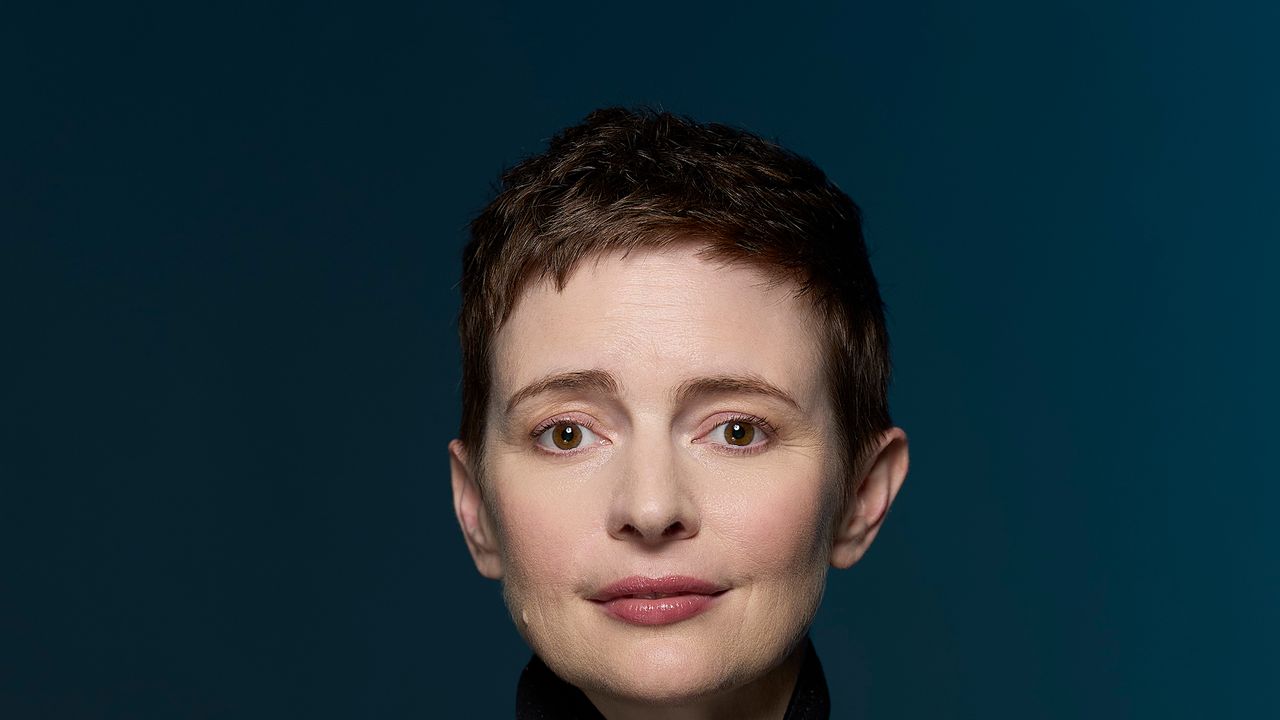
As Exit Party hits shelves, Mandel speaks with Vanity Fair about her fresh release, adapting her work for TV—she’s working on adaptations of several
As Exit Party hits shelves, Mandel speaks with Vanity Fair about her fresh release, adapting her work for TV—she’s working on adaptations of several of her books, including Exit Party, The Lola Quartet, and Last Night in Montreal—AI, Zohran Mamdani, and crafting her literary universe. Warning: Spoilers for her oeuvre follow.
Vanity Fair: In your most recent novels, you’ve revisited characters from previous novels. What led you to take Aria and Anton from The Singer’s Gun, or a version of them, and put Ari at the center of this book?
Emily St. John Mandel: I just found Aria to be such an captivating character, and she’s unambiguously the villain of The Singer’s Gun. I mean, she’s purely bad news in that book. But she was really captivating to me. And I just found myself thinking of her over the years, and thinking, I think I want to return to this character and see what she’s like at the other end of a very long prison sentence. And then there was something about the emotional calculus of The Singer’s Gun that made me feel like Anton had to come too.
The two imaginings of the future of the US in Exit Party both feel plausible for the near future.
Yeah, right?
Tell me about that. How far removed from our current reality did you want to go? How far into the future?
I didn’t want to go too far into the future because I didn’t want to suggest that it was some kind of wildly speculative, fantastical scenario. Lately, I’ve been thinking about this in terms of meteorology, where climate scientists will release a range of scenarios that are possible given the trajectory that we’re on at the present moment. None of them can say for certain which of those scenarios is true, but they are all plausible. That was how I was thinking about both the universes in this book.
The book is coming out less than two months before midterm elections in the US. Was that an intentional choice?
It was always scheduled for the fall, and then when I found that out, I asked my publishers—I said, “Could this please be fall, but as far away from the midterms as humanly possible?” Because yeah, the midterms are going to be distracting.
What do you think it is about the concept of parallel universes, of doppelgängers, that fascinates us?
I think it might go back to COVID. I read a lot of social media, like everybody does, whether they admit it or not. And this idea of being in a bad timeline, like people literally saying, “This is a bad timeline”—I feel like I started seeing that in the spring of 2020. I don’t know about you, but that was just such a clear inflection point, and it’s something that’s only picked up over the past few years.
So I think that we’re a little bit haunted, I would say, in this country, but maybe everywhere, by the idea that there could have been a different timeline. That pandemic could have been contained before it left Wuhan, or, you know, our last election could have gone in a different direction, and that would have placed us in a different country, really. So I think that idea is kind of in the zeitgeist. It’s definitely something I’ve been picking up on for the past six years or so.

