
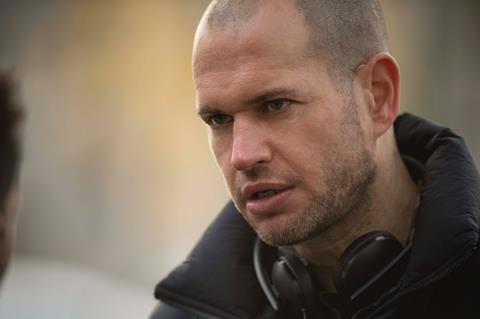
Justine Triet, Arnaud Desplechin, Kleber Mendonça Filho, Claire Denis, and Apichatpong Weerasethakul are among the signatories of an open letter
Justine Triet, Arnaud Desplechin, Kleber Mendonça Filho, Claire Denis, and Apichatpong Weerasethakul are among the signatories of an open letter in support of Israeli filmmaker Nadav Lapid after he was forced to pull out of attending French film festival FID Marseille this week, as part of a cultural boycott of Israel due to the actions of its government in Gaza.
“Inviting an artist to a festival does not make them a cultural ambassador,” said the letter published in French newspaper Le Monde today (June 9).
A second letter in support of Lapid titled, “Those who call for artists to be completely erased from the public sphere must be opposed,” also appeared in Le Monde.
It was signed by high-profile names including Natalie Portman, Rebecca Zlotowski, Jacques Audiard, Bertrand Bonello, Michel Hazanavicius alongside Triet and producer Marie-Ange Luciani who also signed the other letter, along with filmmakers Yolande Zauberman and Mikael Buch and actress Marina Fois.
The first letter in Le Monde said the pressure on the festival and filmmaker in recent weeks “cannot be ignored” and described the calls to boycott the festival, threats directed at its partners and funders and the withdrawal of films as “a campaign of intimidation”.
The letter argued against the idea of “an artist being reduced to his nationality”. It said calling for Lapid’s removal “is not a matter of critical disagreement or artistic debate, it is about a desire to exclude a filmmaker from a space for discussion and creation… that undermines a certain vision of cinema and culture”.
The letter asked: “In what way does the presence of a filmmaker on a jury or the screening of one of his films make him a representative of a state?”
Further signatories include filmmakers Arthur Harari, Alice Diop, Mati Diop, Mia Hansen-Løve, Radu Jude, Emmanuel Marre, Louis Garrel, Robert Guedigian and producers David Thion, Judith Lou Levy, Said Ben Said, and Juliette Schrameck.
The second letter said: “Those who call for artists to be completely erased from the public sphere must be opposed…no matter what crimes a state may commit, no one should be reduced to a passport.”
It is not clear why there are two separate open letters.
“Yes, Cinema Is Political”
Lapid was first invited by FID Marseille to serve on the festival jury. According to FID Marseille director Tsveta Dobreva, the festival began receiving calls from a mix of filmmakers, both with connections to the festival and beyond, as well as political activists demanding Lapid be disinvited as part of an all-encompassing cultural boycott of Israel.
Dobreva confirmed “around a dozen” filmmakers withdrew their films from the festival in mid-May, although it declined to say which ones.
In response, Lapid stepped down from the jury in delayed May. Dobreva said the festival invited him to present his 2011 film Policeman along with a masterclass but Lapid voluntarily withdrew from the festival entirely.
On June 8, a collective called La Palestine Sauvera le Cinema, which translates as ’Palestine Will Save Cinema’, published a statement called ‘Yes, Cinema Is Political’ for which signatories included filmmakers Hala Alabdalla, Aude Fourel, Muhammed Hamdy, Narimane Mari and Ghassan Salhab, all of whom either have films screening at FID Marseille this year, or whose films have previously screened at the festival or been selected for FID Lab.
The collective wrote that it “rejected the festival’s insistence on creating a balance, in their invitations and programming, between Palestinian and Israeli productions.”
“Placing Palestinian and Israeli narratives side by side, within the same space of representation, as if they were strictly equivalent, erases power relations, history and material conditions,” the statement continued.
Programming constraints
Dobreva, who signed one of the open letters in Le Monde, told Screen she has not been in contact with the filmmakers who have removed their films from selection since Lapid opted out.
“The most important thing is that the festival was boycotted and that prevented us from programming freely and being a place of free thinking,” she said.
The issue of boycotting individual filmmakers goes beyond the festival itself, she suggested. “It raises a very worrisome question, namely in what context will we work in the future if we are not able to have a dialogue together or program freely? That is the biggest danger.”
She added: “The FID is known for being politically engaged, and this is proof that boycotting one person goes beyond a general cultural boycott. There is no context in which it is ok to sanction a voice if we don’t agree with that voice. It goes beyond Nadav Lapid.”
“The solidarity is warming my heart”
Lapid has been living in France since 2021. His most recent film, Yes, received funding from the state-supported Israel Film Fund but was a scathing critique of the Israeli government under Benjamin Netanyahu. It premiered in Directors’ Fortnight at the Cannes Film Festival in 2025.
“I don’t want to fall into victimisation. I’m used to this dynamic of being threatened and accused, but in this case, I could not let it go,” Lapid told Screen today.
He said that after hearing of the boycott, “For a few seconds, I felt a bit homeless because I moved to France for political reasons and so when they found my mere presence unacceptable, I asked myself what are they aiming for? Do they want me to stop making movies? Do they want me to leave France? So the solidarity is warming my heart.”
He added: “The problem first and foremost is cinema institutions that aren’t courageous enough.”
While he called FID Marseille “a test case” and noted that Dobreva did sign the open letter, “the film distributors and festivals that anticipate the problem and avoid it by not selecting movies or inviting filmmakers are contributing to the problem.”
“The main problem here is the fear. We always ask artists to be courageous, but cinematic institutions should also be courageous. They think about their own interests before the real essence of their existence, which is to be in the service of art and truth.”
The festival, which focuses on discoveries, is taking place in the French southern city from July 7-12.


COMMENTS