
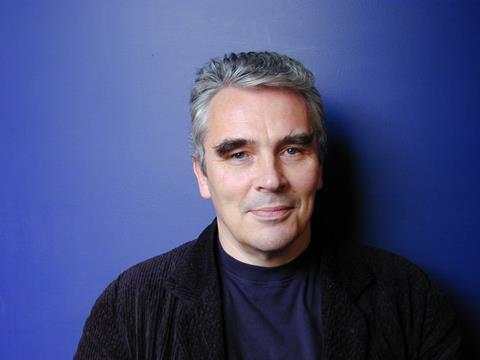
Tributes from across the UK and international film world have poured in for Simon Field, the UK producer and festival director who died last week
Tributes from across the UK and international film world have poured in for Simon Field, the UK producer and festival director who died last week aged 80 after an illness.
The former International Film Festival Rotterdam (IFFR) head from 1996 to 2004, and ICA executive, was also the celebrated producer of films including Apichatpong Weerasethakul’s 2010 Palme d’Or winner Uncle Boonmee Who Can Recall His Past Lives.
“I have lost an important companion, with whom we built the films together with love, over many years,” said Apichatpong via Instagram. “I cannot dream of a more caring and supportive producer, and a kind gentleman. We were up against changing practices in filmmaking and film funding. But Simon never gave up, nor compromised.”
Field was born in Hull in 1946. In the 1970s, he was editor of film magazine Afterimage. He was later director of cinema at the Institute of Contemporary Art (ICA) in London, festival director and co-director of IFFR from 1996 to 2004, and he joined Illuminations in 2004, the UK production company he ran with Keith Griffiths.
“I will greatly miss all those gin and tonics in New York and breakfasts at Patisserie Valerie in Green Park with Simon, dreaming together of seemingly impossible- to -achieve films,” said Griffiths.
Field and Griffiths worked together on many projects including the hugely ambitious New Crowned Hope festival, a series of features by Bahman Ghobadi, Mahamat-Saleh Haroun, Garin Nugroho, Tsai Ming-Liang and Apichatpong, commissioned to mark the 250th anniversary of Mozart’s birth, and on which they partnered with opera director Peter Sellars.
Field is credited with both inspiring a modern generation of festival programmers and exposing many UK and international critics to work they had never previously encountered.
In the early 1970s, together with David Curtis, Field programmed a season of international experimental film at the British Film Institute (BFI) that introduced the films of Chantal Akerman and Yvonne Rainer to UK audiences. Last year, when she received her BFI fellowship, filmmaker, author and academic Laura Mulvey credited this season with allowing her “to visualise a new cinema made by women within a consciousness of women’s liberation”.
During his time as IFFR director. Field secured world premieres of vital modern work by major directors including Alexander Sokurov (Mother And Son) and Catherine Breillat (Romance) from under the noses of Cannes and Berlin.
“Simon had a profound influence on me,” said Nashen Moodley, director of the Sydney Film Festival. “Rotterdam was the first major festival I ever attended. This was when I was working at the Durban festival. Rotterdam at that time really had such a great impact on a number of us.
“As led by Simon, it was a festival that was incredibly important but really fun. It introduced many of us to a cinema we had never encountered before. For me, it wasn’t just the selection of the films but it was about what a festival should be and how a festival should be led.”
Heather Stewart, former original director of the BFI echoed Moodley’s remarks.
“If cinema is about seeing the world through other eyes, Simon took that to another level by showing us all kinds of world cinema,” Stewart said. “When he left the ICA, and there was a tribute and a huge packed party, the atmosphere told you everything. To be with someone who everyone really, really likes is very unusual. That was because he was so generous with his time and he would always give credit to people.
“He has had a big impact on the history of film in this country.”
London-based Jonathan Romney, author and critic and Screendaily reviewer, first encountered Field at the ICA in the tardy 1980s. “He was working closely with Tony Rayns, who was the resident Asian advisor. They were very well connected, bringing names like Takeshi Kitano, Wong Kar-wai etc to wider attention. Also, Simon was showing names like Guy Maddin and Jon Jost.
“When I got to know Simon, I was learning about cinema. As a distributor and exhibitor and somebody who was really an expert, he was very open and supportive,” Romney continued. “He really made ICA Cinema a presence, particularly in giving exposure to more left-field cinema.
“At Rotterdam, he was a fantastic facilitator, brilliant networker, brilliant at forming contacts between people but also between different areas of cinema culture. While he was there, Rotterdam was extremely enjoyable and adventurous.”
Former colleagues and associates recall Field’s warmth and generosity.
“IFFR could not have wished for a better director,” said former IFFR programmer Erwin Houtenbrink. “Intelligent, amiable, forgiving, erudite, and a cinephile with a very broad knowledge and taste. A true mentor and inspiration and loved by virtually everyone. I know from experience that it is by no means a given that people in high positions are also kind.”
In a statement, IFFR said that during his eight years at the helm of the festival, Field’s “programming leadership and boundary-pushing vision as curator would prove defining for IFFR.
“It was during Simon’s tenure that the Tiger Competition became internationally established as a programme for discovering bold and compelling new talent, with filmmakers as diverse as Lou Ye, Christopher Nolan, Hong Sang Soo and Pablo Trapero receiving awards during his time as director.”
The festival also credited Field with introducing the experimental programme Exploding Cinema (now Art Directions), which “took the Festival beyond the screening rooms and into Rotterdam’s museums and art galleries. At the time, no other major international film festivals were exploring this territory, and the new section immediately positioned IFFR internationally as a destination festival for innovation and experimentation”.
Christian De Schutter, was editor of the festival’s newspaper, The Daily Tiger, during Field’s stint as IFFR head.
“Simon was a very nice man,” said De Schutter. “He pushed you into discovering the programme, but never forced you into covering something. He was always there, ready to listen, and was always open for discussion. He could also appreciate the fact that we had a different, more business -oriented approach to film, where he was the cinephile. And he had such a broad view on/knowledge of films and filmmakers. He was very broadminded.”
Field remained committed to his work right until the end. He was a producer on Apichatpong’s upcoming feature, Jenjira’s Magnificent Dream.
“Until the very end of his life, Simon wanted to be engaged,” said Heather Stewart. “Even though he was very frail and very ill, he was intellectually engaged, thinking about making this film. One of the things he was worried about was tying up loose ends in relation to that production.”

