
Venice 2025 | TheWorldScreen Review By Hanan Fahd | TheWorldScreen VENICE, Italy — Political history is often written through speeches, revolutions,
Venice 2025 | TheWorldScreen Review
By Hanan Fahd | TheWorldScreen
VENICE, Italy — Political history is often written through speeches, revolutions, and headlines. Yet behind every dictatorship lies another history—one preserved in family photographs, unanswered phone calls, unfinished conversations, and loved ones who never came home. In My Father and Qaddafi, Libyan-American filmmaker Jihan K transforms one family’s decades-long search for answers into an intimate documentary that speaks not only to Libya’s painful past, but to every society still searching for justice after political violence.
Premiering at the 82nd Venice International Film Festival, the documentary is both a deeply personal memoir and a broader meditation on memory, exile, and national identity. Rather than approaching history as distant political analysis, Jihan places herself at the center of the story, inviting audiences to experience Libya’s modern history through the eyes of a daughter whose father disappeared long before she was old enough to understand why.
The result is an emotionally resonant documentary that balances personal grief with historical reflection, offering one of the festival’s most heartfelt nonfiction experiences.
When Personal Memory Becomes National History
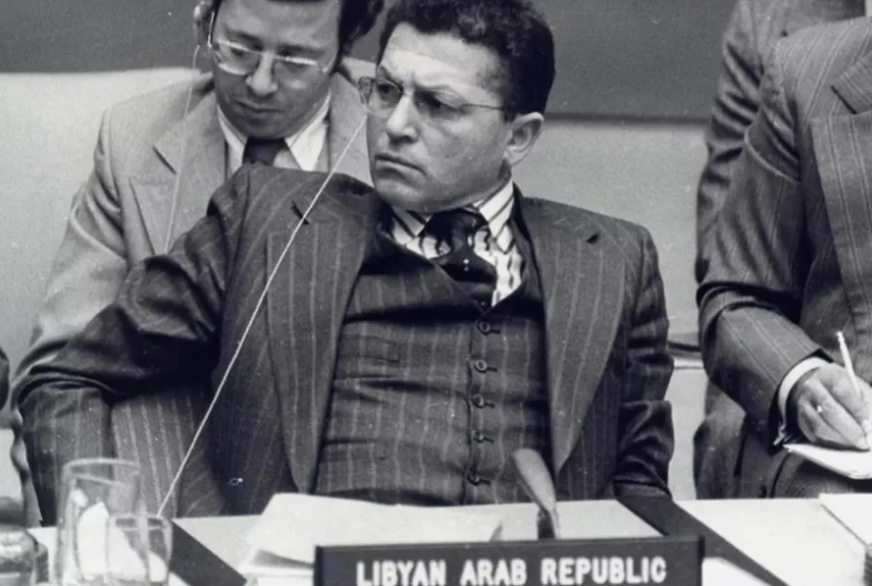
At the center of the film is Mansur Rashid Kikhia, a diplomat, lawyer, and prominent political figure who once served within Libya’s government before becoming one of Muammar Qaddafi’s most outspoken opponents.
Forced into exile, Kikhia continued advocating for democratic change and human rights while living abroad. In 1993, during a visit to Cairo, he disappeared without explanation.
For years, his family searched for answers.
Rumors circulated. Investigations stalled. Governments remained silent.
For his children, uncertainty became a permanent part of daily life.
Rather than reconstructing the disappearance as a conventional investigative documentary, Jihan focuses on the emotional consequences of living without closure.
The unanswered questions become the story itself.
A Daughter Reconstructing a Father She Barely Knew
One of the documentary’s greatest strengths lies in its honesty.
Jihan acknowledges that many of her memories of her father are incomplete, shaped by photographs, home videos, family stories, and the recollections of people who knew him far better than she ever could.
This absence gives the documentary remarkable emotional weight.
Instead of pretending certainty where none exists, the film embraces memory as something fragmented, fragile, and constantly evolving.
Through conversations with relatives, former colleagues, political allies, and lifelong friends, a portrait slowly emerges—not only of a respected statesman but also of a devoted father whose absence permanently altered the lives of those left behind.
The film becomes an act of rediscovery as much as remembrance.
More Than a Political Documentary
Although Libya’s turbulent political history provides the backdrop, My Father and Qaddafi never feels like a traditional historical documentary.
Rather than overwhelming viewers with dates and political analysis, Jihan carefully grounds major historical events in personal experience.
The rise of authoritarianism, the suppression of political opposition, and the long shadow of dictatorship are explored through their human consequences.
Every political decision ultimately returns to the family waiting for answers.
This intimate perspective allows audiences unfamiliar with Libyan history to connect emotionally before engaging intellectually.
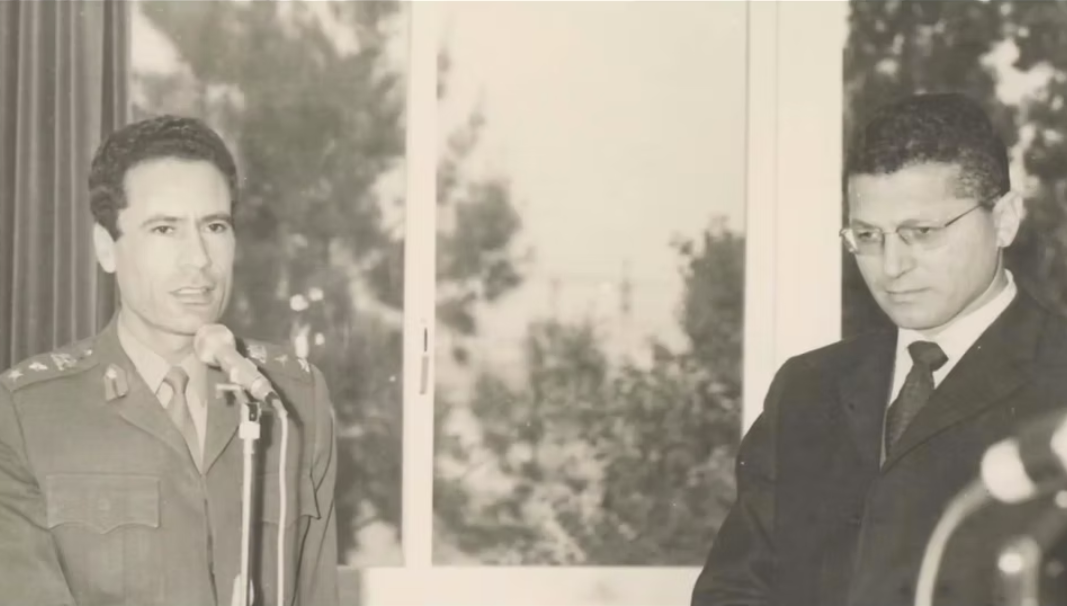
My Father and Qaddafi – Venice Film Festival 2025
The Power of Archive and Memory
The documentary makes moving use of archival material.
Family photographs, home movies, news footage, handwritten documents, and personal correspondence combine to recreate not only Mansur Kikhia’s life but also the emotional atmosphere surrounding his disappearance.
These visual fragments become almost characters themselves.
Each faded image carries new meaning as the investigation progresses.
Rather than simply illustrating history, the archive becomes evidence of love, resilience, and memory refusing to disappear.
The editing seamlessly moves between past and present, allowing conversations across generations to unfold naturally.
Baha Al Omary: A Voice of Strength
Among the documentary’s most memorable contributors is Baha Al Omary, Jihan’s mother.
Her recollections bring extraordinary emotional depth to the film.
Speaking with remarkable honesty, she reflects on exile, hope, uncertainty, and the exhausting years spent searching for her husband while raising a family.
Her testimony never seeks sympathy.
Instead, it offers quiet resilience.
Her presence grounds the documentary emotionally, providing a powerful counterbalance to the broader political narrative.
Libya Beyond the Headlines
International audiences often encounter Libya through stories of revolution, conflict, and instability.
Jihan offers something different.
She presents Libya through family memories, childhood identity, language, music, and cultural belonging.
The country becomes more than a geopolitical subject.
It becomes home.
Even for viewers with little knowledge of Libyan history, the documentary succeeds in illustrating what dictatorship ultimately steals—not only political freedom but generations of personal stories that remain unfinished.
Cinematic Storytelling Over Historical Lecture
Visually, My Father and Qaddafi adopts an intimate documentary style.
The camera lingers on photographs, empty spaces, handwritten letters, and thoughtful interviews rather than relying on dramatic reconstruction.
Its pacing is contemplative without becoming static.
Music is used sparingly, allowing silence to communicate as powerfully as words.
The documentary trusts viewers to absorb emotion gradually rather than forcing dramatic conclusions.
That restraint becomes one of its defining qualities.
Searching for Closure
As the film progresses, the search shifts from discovering what happened to Mansur toward understanding what closure truly means.
Can a family ever fully heal without complete answers?
Can justice exist decades after a crime?
Can memory itself become a form of resistance?
Jihan does not attempt to resolve every mystery.
Instead, she accepts uncertainty while insisting that remembering remains an essential act.
The documentary ultimately argues that forgetting would represent a second loss.
Venice Reception
Premiering at the Venice Film Festival, My Father and Qaddafi stood out as one of the event’s most emotionally personal documentaries.
Festival audiences responded to its intimate storytelling, while critics praised its ability to transform complex political history into a deeply human experience.
Its universal themes of family, exile, memory, and justice extend far beyond Libya, making it accessible to international audiences regardless of their familiarity with the country’s history.
TheWorldScreen Verdict
My Father and Qaddafi is far more than a documentary about one missing man.
It is a moving exploration of how families preserve memory against the forces of silence, repression, and time.
Jihan K demonstrates remarkable sensitivity as both filmmaker and daughter, creating a work that honors her father’s legacy while giving voice to countless families whose stories remain unresolved.
Without relying on sensationalism or political rhetoric, the film quietly reminds us that history is ultimately measured not only by the rise and fall of governments but by the lives forever changed in their wake.
It is an intimate, compassionate, and deeply affecting documentary that transforms personal grief into a universal reflection on memory, justice, and hope.
TheWorldScreen Rating
★★★★½ (4.5/5)
Film Information
Title: My Father and Qaddafi
Director: Jihan K
Screenplay: Jihan K
Genre: Documentary
Running Time: 88 minutes
Languages: Arabic, English, French
Section: Out of Competition – Venice International Film Festival 2025
Production: Desert Power (USA), Laika Film & Television AB (Sweden)
World Sales: MAD World
Why It Matters
As debates around historical accountability, transitional justice, and political memory continue across the Middle East and beyond, My Father and Qaddafi demonstrates the unique ability of documentary cinema to preserve voices that history might otherwise leave behind. By connecting one family’s story to the broader experience of exile and loss, Jihan K delivers a film that resonates far beyond Libya’s borders and stands as one of the most emotionally significant documentaries of this year’s Venice Film Festival.

