
At the Carthage Film Festival 2025, Palestinian filmmakers Arab and Tarzan Nasser deliver a compelling blend of crime thriller, political satire and h
At the Carthage Film Festival 2025, Palestinian filmmakers Arab and Tarzan Nasser deliver a compelling blend of crime thriller, political satire and human drama, revealing a Gaza rarely seen on the international screen.
By TheWorldScreen – Sari Albeder | Film Reviews | Carthage Film Festival 2025 – Tunis, Tunisia
A Different Cinematic Portrait of Gaza
At the 2025 Carthage Film Festival in Tunis, Once Upon a Time in Gaza (كان ياما كان في غزة) stands out as a bold and deeply human contribution to contemporary Palestinian cinema.
Directed by Palestinian twin brothers Arab and Tarzan Nasser, the film approaches life in Gaza through an unexpected combination of dark comedy, crime, friendship and political commentary.
Rather than relying exclusively on familiar images of destruction and suffering, the filmmakers explore the everyday contradictions of a society living under extraordinary pressure. Their characters joke, dream, make mistakes, form friendships and struggle to survive in a world where personal choices are inseparable from political circumstances.
The result is a film that is frequently funny, increasingly unsettling and ultimately tragic.
From a Falafel Shop to a Dangerous World
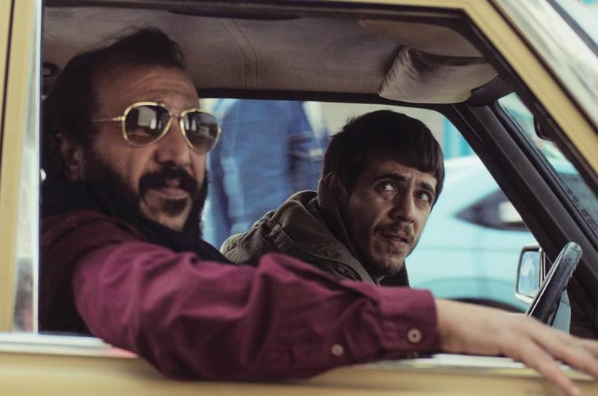
Set in Gaza in 2007, the story follows Yahya, a young student whose life changes after he befriends Osama, the charismatic owner of a modest falafel restaurant.
What begins as an ordinary relationship between two young men gradually develops into something more dangerous when their food-delivery business becomes involved in selling drugs.
Their activities attract the attention of Abou Sami, a corrupt police officer whose authority and personal ambitions turn an already precarious situation into a confrontation with devastating consequences.
The film later takes an unexpected turn as Yahya becomes involved in the production of an action film, introducing another layer of satire about heroism, violence and the stories societies construct about themselves.
Through these developments, the Nasser brothers create a narrative in which the absurdity of everyday survival becomes inseparable from the larger political reality.
Dark Comedy as a Form of Resistance
One of the film’s greatest strengths is its refusal to adopt a single emotional register.
Humor appears in unlikely places, often emerging from situations that are uncomfortable, dangerous or morally complicated.
The filmmakers understand that comedy does not diminish tragedy. Instead, it can expose the contradictions of systems in which ordinary people have little control over their circumstances.
Their satire targets corruption, inflated authority, the manipulation of heroic imagery and the gap between cinematic fantasy and lived reality.
Yet the humor never entirely shields the audience from the consequences of violence.
As the narrative progresses, the film’s lighter moments give way to an increasingly bitter recognition of how quickly an ordinary life can be transformed by forces beyond individual control.
Performances That Give the Story Its Humanity
The film’s emotional foundation rests on the relationship between Yahya and Osama.
Nader Abd Alhay, portraying Yahya, brings a restrained vulnerability to a character whose apparent innocence gradually confronts the harsh realities surrounding him.
Majd Eid, as Osama, provides a contrasting energy, combining charisma and humor with a sense of danger.
Their chemistry gives the early sections of the film warmth and vitality, making the subsequent developments more affecting.
Ramzi Maqdisi, portraying Abou Sami, embodies an unsettling form of authority, illustrating how corruption becomes especially destructive when institutional power is exercised through personal intimidation.
Together, the performances help the film move between comedy and tragedy without losing its human center.
Cinema Within Cinema: Who Controls the Story?
Perhaps the film’s most intriguing creative decision is its exploration of filmmaking itself.
When Yahya becomes involved in an action production, Once Upon a Time in Gaza begins questioning the relationship between reality, representation and the creation of heroes.
The fictional production transforms political conflict into spectacle, exposing the uncomfortable distance between the dramatic simplicity of screen violence and its real consequences.
This self-reflexive approach gives the film an additional dimension.
The Nasser brothers are not simply telling a story about Gaza. They are examining how Gaza is represented, who gets to shape its narratives and how cinema can both challenge and reproduce familiar images.
It is here that the film becomes particularly distinctive, combining an affection for genre filmmaking with a sharp awareness of the responsibilities of representation.
A Visually Distinctive Palestinian Film
Cinematographer Christophe Graillot helps establish a cinematic world that moves beyond the visual conventions frequently associated with Gaza.
The streets, interiors and ordinary spaces of the city become the setting for a story influenced by crime thrillers, westerns and black comedy.
The film’s visual approach reinforces the contrast between the characters’ modest ambitions and the dramatic circumstances surrounding them.
Rather than presenting Gaza solely as a symbol of conflict, the filmmakers give it the texture of a lived-in urban environment, populated by individuals whose experiences cannot be reduced to political headlines.
A Film That Carries Greater Weight in 2025
Although the story begins in 2007, its appearance on festival screens in 2025 gives it an especially powerful contemporary resonance.
The devastation experienced by Gaza in recent years inevitably shapes how audiences encounter the film’s reconstructed streets, everyday routines and personal relationships.
Scenes that might once have appeared simply nostalgic now carry the additional weight of a world profoundly changed.
Importantly, the film does not depend entirely on current events for its significance.
Its questions about corruption, survival, friendship, representation and the consequences of violence remain central to its dramatic identity.
That balance between a specific Palestinian experience and broader human concerns is among its most significant achievements.
From Cannes to Carthage
Before reaching the Carthage Film Festival, Once Upon a Time in Gaza attracted international attention at the 78th Cannes Film Festival, where Arab and Tarzan Nasser received the Best Directing Award in the Un Certain Regard section.
The recognition marked another important achievement for the filmmakers following Dégradé (2015) and Gaza Mon Amour (2020).
At Carthage, a festival with a longstanding commitment to Arab and African cinema, the film finds a particularly meaningful cultural setting.
Its presence reinforces the importance of international film festivals as spaces where Palestinian filmmakers can present complex, imaginative stories beyond the limitations of conventional news coverage.
TheWorldScreen Verdict
Once Upon a Time in Gaza is an ambitious and emotionally resonant film that uses the familiar language of crime cinema to explore an unfamiliar cinematic perspective on Palestinian life.
Its tonal shifts can occasionally feel abrupt, particularly as its playful early sections develop into darker political and personal territory. Yet that instability also reflects the uncertain world its characters inhabit.
What ultimately distinguishes the film is its insistence that Palestinian stories deserve the same creative freedom, humor, complexity and experimentation as stories from anywhere else.
Arab and Tarzan Nasser have created a work that is entertaining without being superficial, political without abandoning character and tragic without surrendering its sense of humanity.
Final assessment: A sharp, inventive and affecting Palestinian tragicomedy that transforms the conventions of the crime thriller into a meditation on friendship, power, loss and the images through which a society understands itself.
Once Upon a Time in Gaza is not simply a film about surviving difficult circumstances. It is also a film about the right to imagine, create and tell one’s own story
TheWorldScreen is part of Inana Media Studios & Platforms, covering international cinema, film festivals and cultural developments across Europe, the Middle East, North Africa and beyond.
#TheWorldScreenCom #CarthageFilmFestival #JCC2025 #OnceUponATimeInGaza #PalestinianCinema #ArabCinema #ArabNasser #TarzanNasser #FilmReview #Tunis #InanaMedia #nabil_alani

