

Editor's note: The below interview contains spoilers for the Star City finale. Over the last few weeks, Apple TV's Star City has taken all the fami
Editor’s note: The below interview contains spoilers for the Star City finale.
Over the last few weeks, Apple TV’s Star City has taken all the familiar ingredients that For All Mankind fans know and love and skillfully woven them into a backdrop of surveillance, paranoia, and espionage. Yet if there’s one plotline that bears the strongest resemblance to the original series, it’s the Chief Designer’s (Rhys Ifans) Venus mission, which launches in secret under the ever-watchful eye of Colonel Lyudmilla Raskova (Anna Maxwell Martin) and the KGB. While the fate of Valya Mironov (Adam Nagaitis), Sasha Polivanov (Solly McLeod), and Lakshmi Chadha (Priya Kansara) is ultimately left unknown as of Episode 6, “Awl in a Sack,” the season’s penultimate hour jumps forward six months later, culminating with the reveal that somehow, against all odds and a remote depressurization ordered by Lyudmilla, they’ve survived.
According to Star City (and For All Mankind) co-creators Ben Nedivi and Matt Wolpert, the season was always building toward the reveal that the Venera 7 crew survived their ordeal, but how they were able to make it back to Earth is a question that slowly plays out over the finale, culminating in a devastating loss that emphasizes the harsh reality of exploring worlds beyond our own. Below, Wolpert and Nedivi discuss the science behind the season’s most surprising twists, the ongoing conversation about when and where to seed in references to For All Mankind, the significance of Sasha and Anastasia’s (Alice Englert) evolving romance, and much more.
COLLIDER: I have to tell you both that my husband and I have watched every season of For All Mankind together, and we’ve been watching through Star City, and when the Venera 7 explosion happened, I held firm in my conviction that the crew had survived, so then when the penultimate episode ended with the reveal of the signal and the ship, I felt very vindicated.
BEN NEDIVI: That’s impressive, because even the people who are doubting it at the end of Episode 6… once you see the time jump, and you’ve moved on, by that point, our feeling was it’s totally out of mind as a possibility.
When did you come up with that twist, that the cosmonauts survive after all and complete the mission in one way or another?
MATT WOLPERT: We knew that we wanted to have that. We started with the drama of it, and we knew that we wanted it to be a moment of, “This mission is lost, and these characters we loved are gone,” and then a reveal later that they survived, and so we backed into the science from that.
In talking with our advisors, what came out of it was this idea that because the depressurization was occurring at that time, the oxygen was quite low in the craft itself and was being pulled out of the craft still, and so the fire actually would have been sucked out. It would have singed them, it would have had an initial burst, and then been sucked out the same way the air was being sucked out. So, it felt like it was kind of a nice dovetail where the technology and the drama kind of worked together.
Valya’s Sacrifice in ‘Star City’ Is a Mixture of Both “Horror and Wonder”
“… the reality of Venus is that you can’t survive on the surface.”
Adam Negaitis in Star City Season 1Image: Courtesy of Apple TV
Even once we get confirmation that they survived, it’s only Sasha and Lakshmi who are on their way back from Venus. I was very much reminded of the way that For All Mankind set up the fate of Danny Baldwin, where you don’t quite know what happened at first, and then the story slowly builds toward the moment. Here, it culminates in Valya making the sacrifice to land the bathysphere on Venus so that the other two can get home. He does make it to the surface, but is that scene an approximation of how long he could reasonably survive after the initial crash?
NEDIVI: It’s one of these things that reminded me of our conversations about Gordo and Tracy’s duct tape on the moon. I remember when we found out you could actually survive on the surface of the moon for 15 seconds or thereabouts, we were like, “Now that’s something worth considering dramatically.” This one was similar. Early on, Venus was always, for us, the mission, because it was so central to the Soviet program, and they were so advanced with missions to Venus in reality, and so it made sense this would be the Chief Designer’s goal. But the reality of Venus is that you can’t survive on the surface. In the back of our minds, we were like, “Yes, but we want someone to get there, someone to touch ground,” and it felt like this kind of created a scenario where you could get the first man on Venus, but it’s a fleeting victory of landing on the planet, and he does it from a place of sacrifice.
It was one of those ideas that came together from every angle, where it felt like after what Valya had done, that sacrifice made sense, even though it’s tragic and challenging to accept, but also the idea that you can’t survive on Venus, and he still manages to be the only man to ever land on Venus, even if it is just for a few seconds. We found it really kind of wonderful. And I have to say, the way Adam Nagaitis, the actor who played that scene, was so attractive. The mixture of both horror and wonder that he conveys in that moment, really, for us, made the whole idea come to life in a way.
WOLPERT: You see the victory on his face when he first looks out and sees that, and he just laughs, and you feel this sense of achievement from him. It felt so powerful. And then, of course, sharing it with his wife through the photo, it had this romance to it that felt very of that world to us.
Since we’re already on the subject of romance, I’m going to just come out and say that the arranged marriage trope has always been catnip for me, so seeing how Sasha and Anastasia’s storyline has played out over the season… I just love how these characters that you think are polar opposites also feel like the only two people who really see each other. In the finale, Sasha chooses not to cross the border into Finland and lets himself be captured, even though Anastasia’s literally gone to such great lengths to save him. What did you want to emphasize about how much that relationship has evolved to the point that we leave them at, heading into a potential Season 2?
WOLPERT: I thought Solly was amazing in that moment. You see everything on his face and the weight. When we were writing the script, we talked through that moment a lot and were like, “Can he go? Should he go?” Any version of him choosing to let her sacrifice herself for his own benefit, even if it was just about his survival, felt wrong. It felt like him turning back, like, “I’m not going to abandon her, just like she wouldn’t abandon me,” felt like the perfect ending to that part of the story.
I do think there’s something attractive about his arc of a guy who’s really very self-interested in the beginning of the season when we meet him, and he learns to open himself up and be vulnerable, and learns to sacrifice for others over the course of the season. The two of them are so different, those characters and the actors, and they just kind of perfectly embody that. One of my favorite scenes, it’s one without dialogue, is all of them waking up in the morning in Episode 5, and you just see it’s all about vulnerability. It’s like neither of them has been vulnerable with someone, maybe ever in their lives, and they are there. That’s, I think, the root of the whole thing.
Related
‘Star City’s Most Unexpected Relationship Just Took a Completely Surprising Turn
Alice Englert and Solly McLeod discuss Anastasia and Sasha’s complicated vigorous and that less-than-ideal morning after scene.
NEDIVI: This weird factoid that always stays with me is that, on the whole, arranged marriages end up being somehow more successful than ones based on love or love at first sight. There’s something to that thing that’s true, I think, to a lot of what we write, where if you put two different people together who normally would never be together, they’re exposed to something and someone that they otherwise never would have.
I think what they do to each other is build each other up. A lot of what’s missing in them, a lot of what they’re missing in their lives, you see that the other person is making them more of a real person. So, in a strange way, this arrangement ended up helping the two of them, and they ended up finding love, so that by the end of the season, you have this incredible romantic gesture that they’re both doing for each other.
It’s the thing about television I love more than anything else. To me, films are more about plot; TV is more about character. If I told you what was going to happen to these two in Episode 1, you would never believe me. Then, by Episode 8, you understand, you’re with them, and you totally believe that they would make these sacrifices. That’s the beauty of what these actors are able to accomplish, but also the storytelling we’re able to accomplish this season.
I love the Easter eggs that we get, and some of them seem more thematic than anything explicit. The moment when Sergei tries to leave Star City to be a teacher feels like a nod to what happens later in For All Mankind. Why did it make sense to plant that seed here and emphasize that, as much as Sergei loves his work, there’s also a part of him that believes he would be just as ecstatic, if not more, elsewhere?
WOLPERT: It’s witty, watching that sequence in For All Mankind, he does not seem very ecstatic teaching those kids in Iowa, or wherever it is. I do think that as much as he tries to make himself think that he would like it outside of the action of Star City, he is drawn and compelled to it in a way that really led to his fate, on some level, in the other show. I think where we like to do overlap, and Easter eggs and things, is when it’s about character, and you see an inclination in a character that makes it feel like it’s the same character in both shows. We love doing stuff like that.
The Chief Designer’s Final Scene in ‘Star City’ Was “Heartbreaking” for More Than One Reason
“Even if nobody knows about it and nobody will ever find out about it, they know about it.”
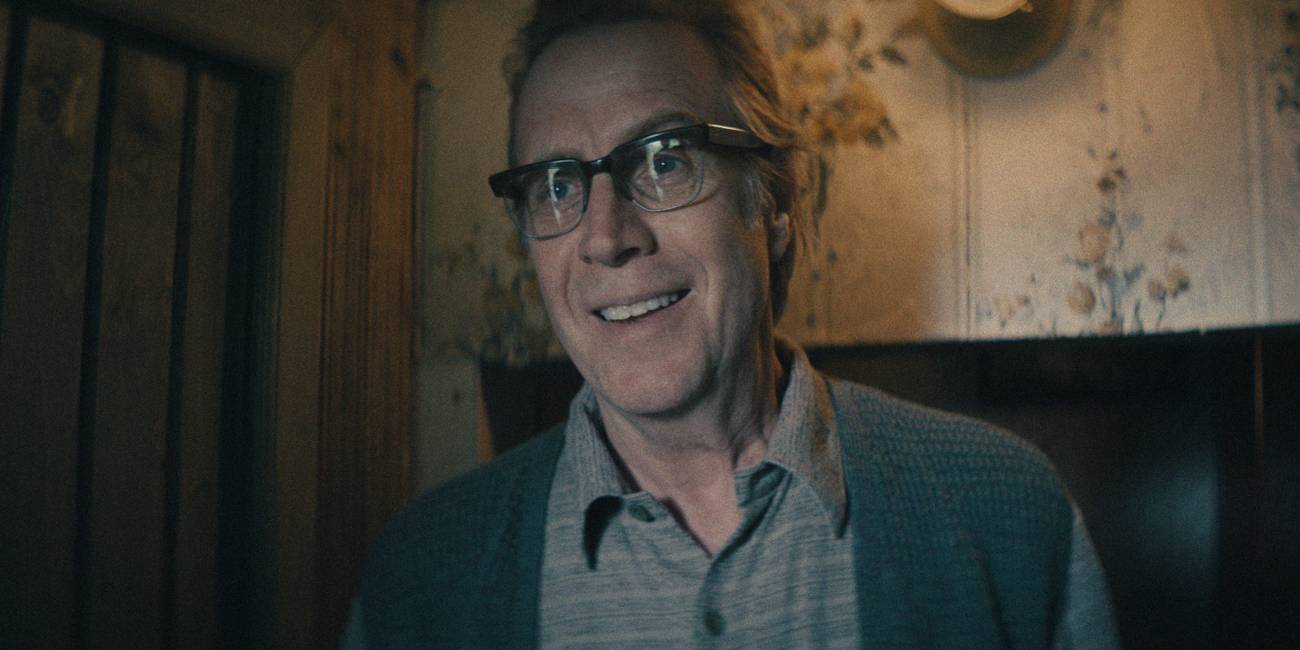
Rhys Ifans in Star City Episode 8Image via Apple TV
This episode also includes the scene where the KGB and Lyudmilla basically manipulate Sergei into confessing by using a body double for the Chief Designer, but what’s even more powerful is that moment between them in the truck, when Sergei is sobbing in the Chief Designer’s arms. What did you want to emphasize about how close that relationship has become? It’s a progression of not just mentorship, but friendship, and it also feels like the breadcrumbs are being dropped for Sergei to lead Roscosmos later on.
NEDIVI: With For All Mankind, I think the storytelling became about seeing people’s lives and going more and more into the future. The gift this show gave us was the opportunity to now go back and see how people are formed into the people you see later on in For All Mankind. That was just really fun to dive into from a writing perspective.
Josef Davies, who plays Sergei, when we first saw him audition, the fact that he looks exactly like the actor, we held that almost against him, to be straightforward. Because it was like, “Okay, he looks so much like the actor; there’s no way he’s also the best actor for this.” But he ended up being that, as well. What he has, what we kept feeling with him, is an inherent intelligence, but also kindness. You’re on this guy’s journey. From the first frame, you’re with him. That moment at the end is these two brilliant men — who, in many ways, go back to Von Braun and Margo, the mentor/mentee, the complicated relationships that they have, and how they’re learning from their elder mentor, if you will. It’s the same as the vigorous with Irina and Lyudmilla.
I remember being there on the set that day, and everyone was sobbing. It was the Chief Designer’s final scene, Rhys’ final scene, and it was heartbreaking. Because you saw, in true Russian fashion, as anyone who knows For All Mankind knows, we don’t do ecstatic endings just for the sake of ecstatic endings, and it felt like that was the appropriate ending for these two characters, in terms of this season. Him comforting Sergei and saying, “Yes, I’ve been here. I’ve been to the gulag before,” that’s a celebrated story from the Chief Designer’s past, but also trying to let him understand the history they achieved. Even if nobody knows about it and nobody will ever find out about it, they know about it. Knowing Chief Designer and Sergei, that is a sign that they can take comfort in.
We’ve been talking a lot about when to include references to For All Mankind, but I feel like this show is resolving questions that those characters didn’t necessarily have answers to, like the failed Luna 17 mission that results in the crash site that NASA discovers. It recontextualizes our perspective on events. Looking ahead to Season 2, potentially, do you have plans to continue weaving in those elements between the shows? Could we end up seeing how the Russians hatch an idea to plant a listening device on Jamestown, for example?
WOLPERT: It’s so challenging to say. Like we’ve talked about before, we’re just very conscious of not chasing the events of the other show. If there are continued overlaps, I think it would be in the vein of what we’ve seen now, which is miniature moments of character, or, like you said, recontextualization of something that happened that didn’t seem that substantial a deal in the main show.
The other witty thing is there’s a two-year time jump in For All Mankind to get to the lunar bases and everything, so there was a period where there were no events in that show, and Star City lives within that time period, as well. So, we have a lot of freedom to tell stories that people aren’t aware of.
I do have to ask about the last season of For All Mankind. Assuming you have it plotted out, do you know what the final song is going to be for the series finale yet?
NEDIVI: We will never tell, but I think what’s fascinating to me is what started as a thing we did in Season 1 has taken on a life of its own, to the point that I think now people understand the pattern of what type of song we would end the season on, and how it defines that era and the time jump in a way where you feel like you’re you’re embracing that time jump and you understand what we’re moving towards.
What’s especially fascinating about you talking about the end of For All Mankind is the idea of where we are now, in the present, in the final season, and close to the present. In terms of the songs, it gets trickier and trickier as we’re now talking about music that’s out now or around. It’s taken on an compelling challenge for our music supervisor, Christine [Greene Roe], but it’s also allowed Matt and I to explore music of today for the first time in a way that I think we’ve tended to avoid. I kind of enjoyed dipping our toes into the music of today. And I think that’s been our process in working on the last season, is embracing the today of it all.
All episodes of Star City are available to stream on Apple TV.

