
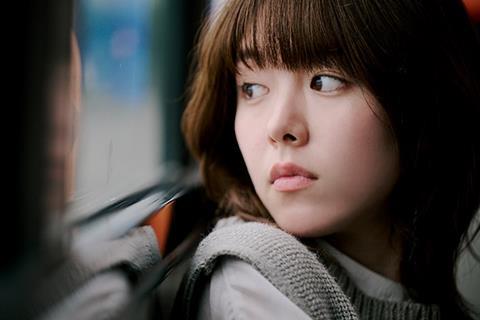
Dir: Akira Yamamoto. Japan. 2026. 131mins Japanese filmmaker Akira Yamamoto’s third feature is a mesmerising, if somewhat contrived meditation o
Dir: Akira Yamamoto. Japan. 2026. 131mins
Japanese filmmaker Akira Yamamoto’s third feature is a mesmerising, if somewhat contrived meditation on identity and the fundamental idea of nature versus nurture. Adapted by Sumire Suzuki from Shiho Tanimura’s 2022 novel, it follows two university students who meet by chance and eventually discover they were accidentally switched when they were embryos. Languidly shot by cinematographer Shin Yonekura (Desert Of Namibia), the film is blessed with two understated but nonetheless moving performances from Erika Karata and Japan-based Korean pop star Jiyoung.
Relies heavily on coincidences and serendipity to tell its story
Hiroshima-born Yamamoto garnered critical attention with his 2018 debut Speak Low, and hit his ponderous, contemplative stride in After The Fever (2023), even as that film ultimately drifted into melodrama. The Intertwining’s complicated subject matter should earn the film further festival play following its Tokyo competition premiere, and attention upon release at home in Japan in February 2027. Art house release in Asia is also a distinct possibility thanks to the film’s cultural resonance.
One afternoon on a Tokyo city bus, medical students Nanako (KARA member Kang Ji-young, known as Jiyoung) and Ji-hyun (Karata, Asako I & II) meet when they come to the aid of an elderly woman who falls ill. The incident draws them together, and Korean transplant Ji-hyun finds herself with her first true friends in her modern life in Japan; Nanako’s sweet and welcoming boyfriend Kenta (Daichi Kaneko) completes the trio. As it happens, Ji-hyun chose Tokyo both to study and to track down Takeru, her best mate in kindergarten and her first love, with whom she’s lost touch. Coincidentally, it transpires that Nanako and Ji-hyun were born in the same hospital, and their parents had the same fertility doctor.
As it happens (there is a pattern here), the modern friends are starting to study DNA at university. And when Nanako conveniently faints after class, her doctor is prompted to take a blood test. What the test reveals is shocking, terrifying and life-shaking: Nanako’s parents (Asuka Kurosawa, and Takuji Suzuki) and her brother (Towa Araki) are not her blood family. The couple received the wrong embryo during treatment. Considering the volume of sheer happenstance that has got the story to this point, it’s no surprise that Ji-hyun is the other embryo that went to her parents (Kim Jung-young, Kim Hak-seon),
The Intertwining relies heavily on coincidences and serendipity to tell its story, but the subject matter, familiar as it may be in other iterations, is intellectually provocative, particularly within an industry that normally doesn’t tackle such thorny questions. Yamamoto and Suzuki do pull their punches, and refocus the story on Ji-hyun’s search for Takeru and Nanako’s fractious relationship with her mother. But that doesn’t keep the film from getting right to the heart of tangled issues of identity, family, parenting, and ethnicity and nationality in two countries where blood ties and type remain of paramount importance to most aspects of life. When Nanako’s father confronts the doctors that scrambled their treatments all those years ago, he rages, “How dare you put a Korean embryo in my wife!”
The Intertwining stumbles a touch in its tone and in how it visualises Ji-hyun and Nanako’s inner struggle with re-evaluating who they are – or if they even need to. There are a few too many tranquil, solitary walks and one too many long shadowy nights of the soul. The protracted passages bring the already deliberatey-paced film to a near dead stop.
Also jarring is the strangely idealised vision of Korean families, in which Ji-hyun’s parents are held up as emotionally available and welcoming counterpoints to Nanako’s more inflexible and intolerant ones. And the subplot surrounding Takeru feels shoehorned in – studying medicine overseas is surely reason enough for Ji-hyun to be there – and clutters the more engaging story about how two families reconcile a life-altering revelation. Nevertheless, Yamamoto directs with a airy touch, preferring grounded performances, and has a solid handle on the material, which may have been clearer with some judicious editing at the script stage.
Production companies: NJCreation
International sales: NJCreation, njcreation.y@gmail.com
Producer: Yun Min-young
Screenwriter: Sumire Suzuki, based on the novel by Shiho Tanimura
Cinematography: Shin Yonekura
Production design: Miyuki Kikuchi
Editing: Azusa Yamazaki
Music: Takuro Okada
Main cast: Erika Karata, Jiyoung, Daichi Kaneko, Towa Araki, Takuji Suzuki, Mutsuo Yoshioka, Kim Jung-young, Kim Hak-seon, Maki Sakai, Asuka Kurosawa

