
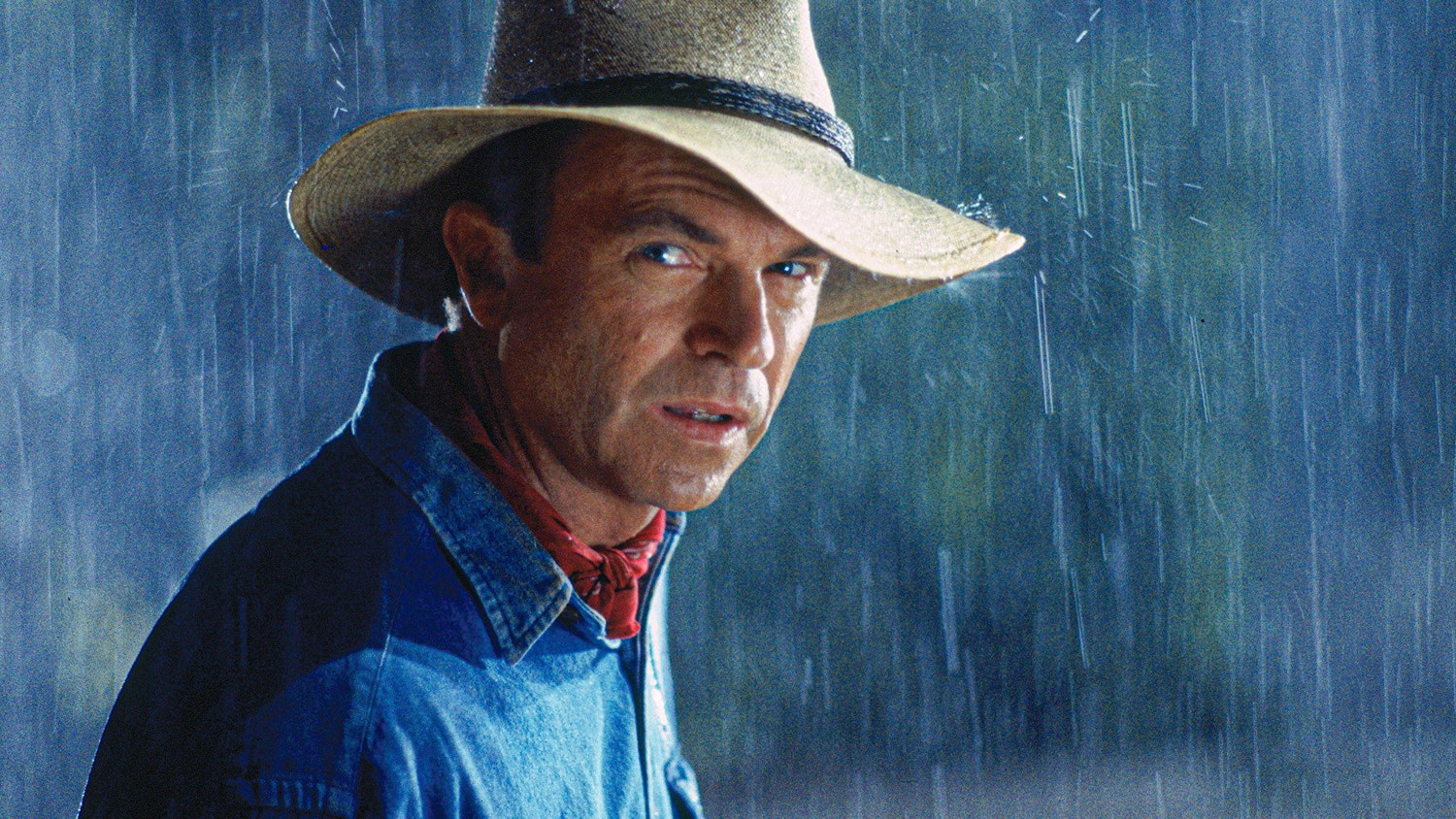
Think of a movie hero, and your brain might conjure Indiana Jones, whip in hand, punching Nazis. Or James Bond, with his Walther PPK, toppling super
Think of a movie hero, and your brain might conjure Indiana Jones, whip in hand, punching Nazis. Or James Bond, with his Walther PPK, toppling super-villains. But my favourite cinema hero growing up didn’t have a weapon, nor was he saving the world. He had a flare, a brain, and a general disdain for kids – though that wouldn’t stop him trying to save two frightened children stranded in a dinosaur theme park. Yes, my cinematic hero was Jurassic Park’s Dr. Alan Grant. A palaeontologist, a huge nerd, a kind and gentle soul. Throughout his career, the legendary Sam Neill took on so many great roles (see Hunt For The Wilderpeople, and Possession, and Event Horizon to name but a few). But to me, he’ll always be Alan Grant first.
Like many ‘90s kids, I was terrified by Jurassic Park when I first saw it. And second and third and fourth saw it too. But beyond the sheer fear factor, there was a radiating warmth from its human cast members – none more so than from Dr. Grant. From the first moment we meet him, on a dino dig in the Badlands of Montana, we see a man who’s deeply inquisitive and educated. And playfully mean, tearing down any punk kid who lacks the correct respect and reverence for the prehistoric world. It’s a quietly commanding presence that Neill always wore lightly. Across the film, it becomes clear: if you’re with Alan Grant, you’re going to be ok.
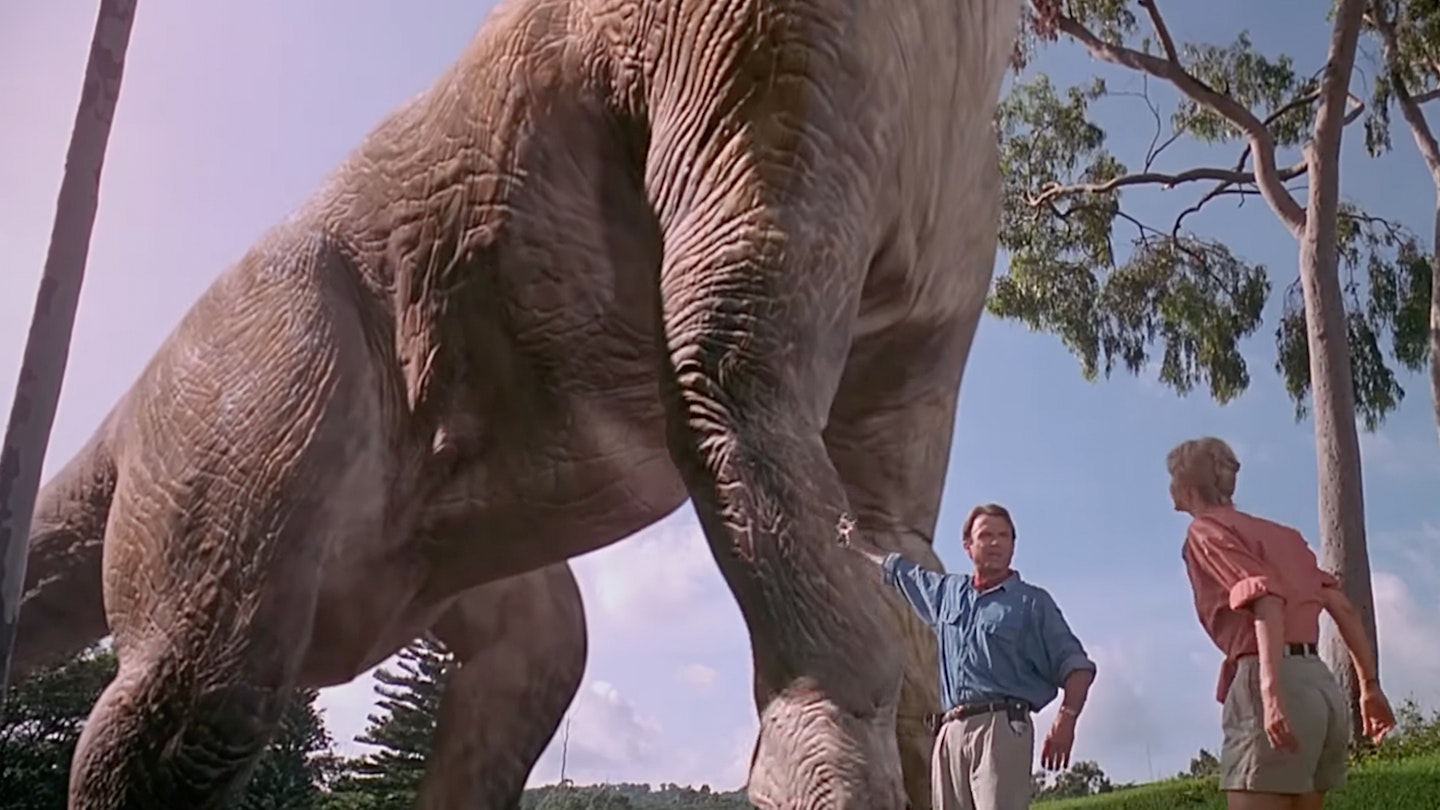
He’s the anchor of Jurassic Park’s quieter first half; the true serene of the serene before the storm. Before the running and the screaming, the audience needs to feel the true awe of the park – which Neill portrays beautifully. The iconic brachiosaurus scene boasts more than one special effect. The most memorable is, of course the brachiosaurus itself, rendered staggeringly by ILM. But the other is Neill’s performance: delighted, overwhelmed, physically staggering as he witnesses the unbelievable. He sells that moment completely. “They do move in herds,” he gasps – a line he delivers so quietly, it makes you lean even further in.
For someone who doesn’t want to be a dad, he stands as one of cinema’s greatest father figures.
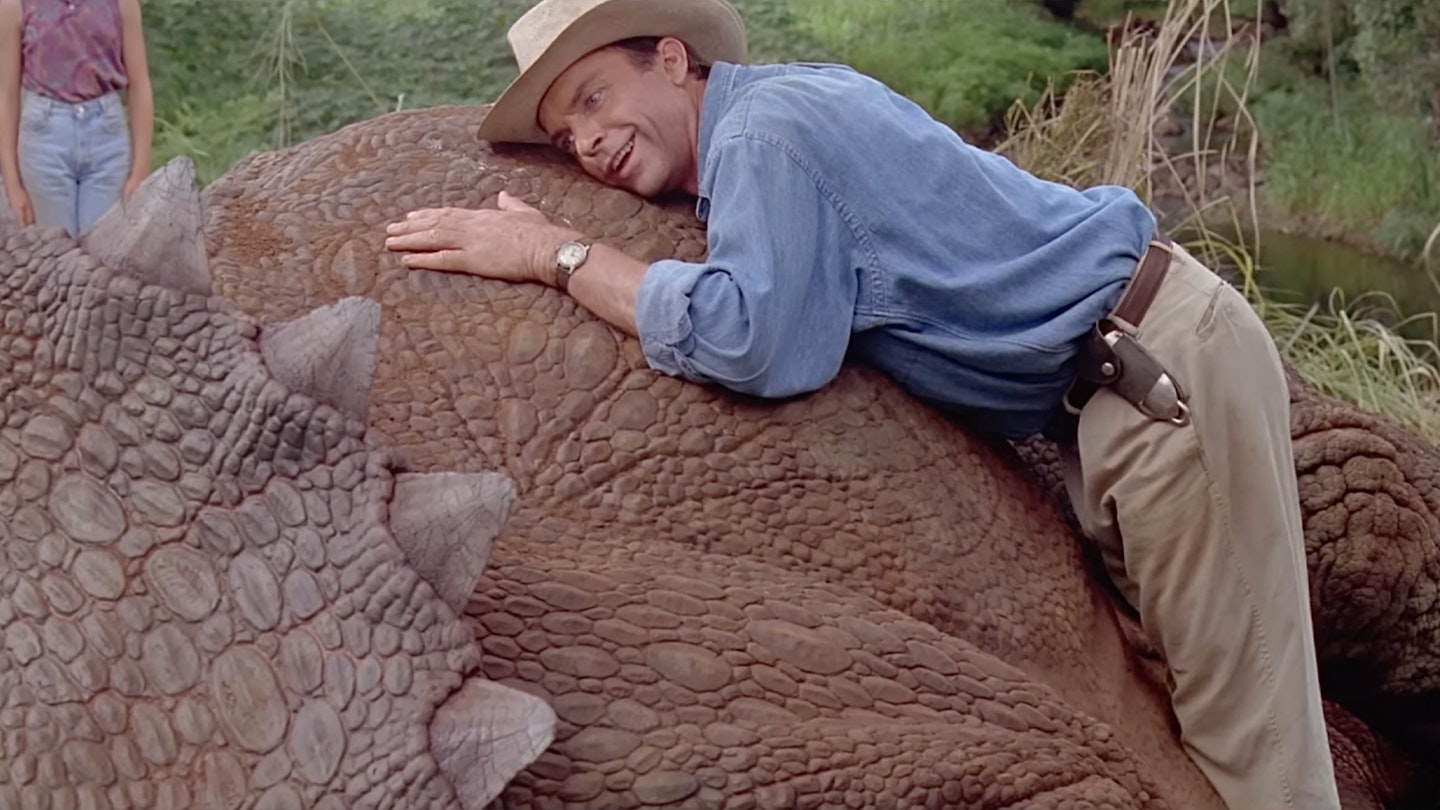
His genuine sense of wonder – albeit tinged with skepticism – continues as he tours the park. One of the most indelible images from the film sees Grant flopped over the chest of a downed Triceratops, rising and falling with its gigantic breaths. It’s a childlike reaction steeped in the joy of encountering the impossible, being enchanted and moved by it. “She’s the most beautiful thing I ever saw,” he says of the infirmed Trike.
That caring instinct kicks up a gear when the carnage arrives. Despite his initial aversion to kids, he runs to the aid of Lex and Tim during the T. Rex attack, stepping up when it counts. For someone who doesn’t want to be a dad, he stands as one of cinema’s greatest father figures, guiding the youngsters through their life-or-death predicament with knowledge, humour and a steady hand. Think of the care he shows Lex when introducing her to the brachiosaur in the tree; the reassurance he offers Tim when he’s trapped in a Jeep perched on a creaking branch. When Grant takes them under his wing, they’re still traumatised at being abandoned by “blood-sucking lawyer” Gennaro. Neill’s response might be Grant’s most heroic moment: “That’s not what I’m gonna do.” He sells the film’s substantial character arc so deftly: by the end credits, Grant sees the kids are, perhaps, alright.
Alan Grant is, to me, the heart of the Jurassic saga.
He’s entertaining too. His final zinger to John Hammond as they flee Isla Nublar is a stellar kiss-off: “After careful consideration, I have decided not to endorse your park.” And when he and the kids encounter an electric fence, he can’t aid himself, pretending to be violently electrocuted. It’s a pure dad-joke move; I nicked it once, when my partner put her headphone through the wash and was worried it might be threatening to apply. I put it in my ear and pretended my head was being zapped. A pure Alan Grant moment.
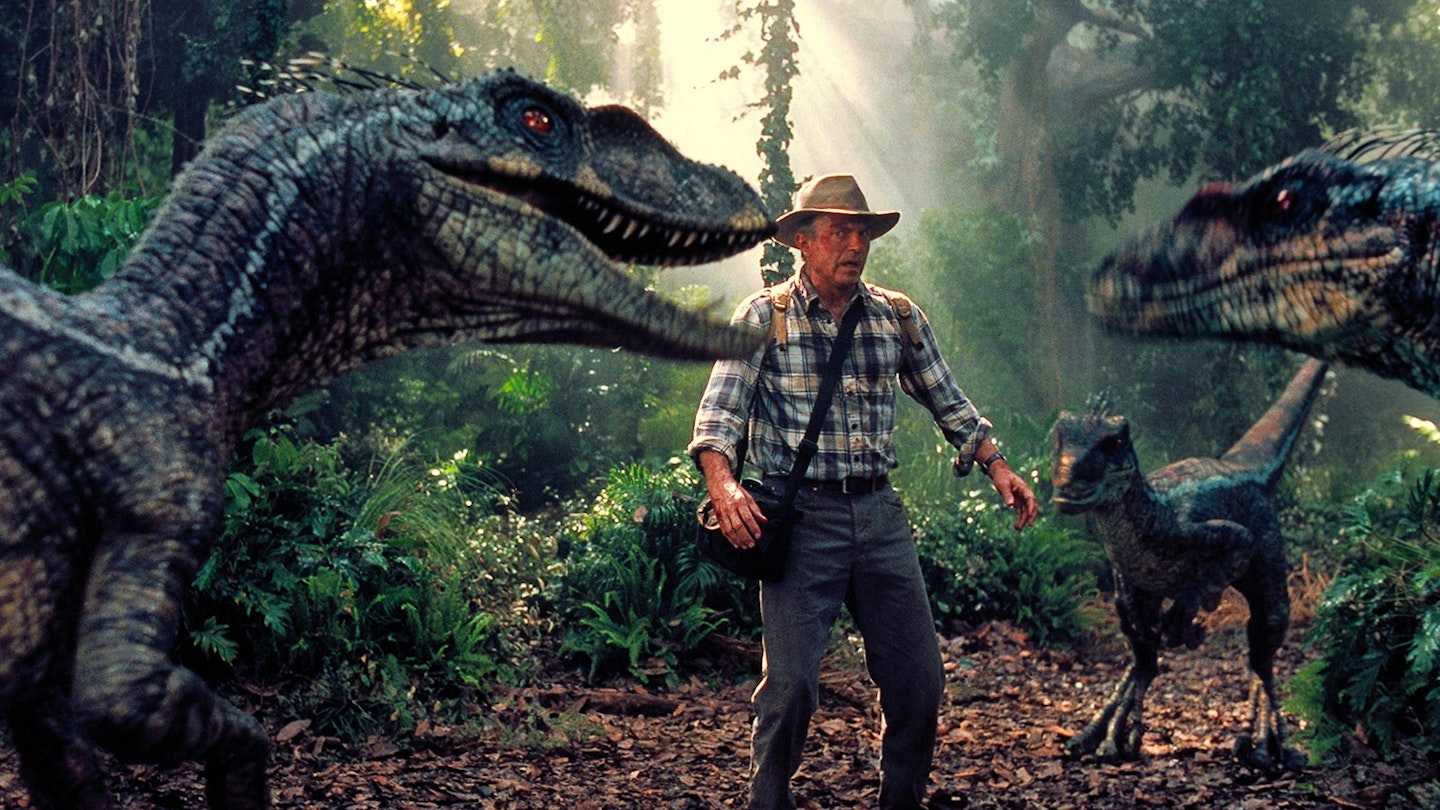
Alan Grant is, to me, the heart of the Jurassic saga – even though he appears in only three of the seven films. He’s one of the reasons why I’m a huge Jurassic Park III fan – it’s just a joy to see Alan Grant back in the field, still bearing some sarcastic disdain (this time for the duplicitous couple who lured him to Isla Sorna under false pretences), and yet remaining reverent to the island’s threatening creatures. He even sells one of the film’s sillier plot-points – can humans communicate with raptors via 3D-printed vocal cords? – with his gentle gravitas.
In the wake of Neill’s sudden and shocking passing, I’m so glad we got one last hang-out with Alan Grant in recent years. Jurassic World Dominion is divisive, but I’ll always have a cushioned spot for the way it reunites the Park OGs. (I teared up in the Empire office even just seeing them in the trailer.) Watching Grant back on a dino dig in Utah felt like coming home – an senior flannel shirt that still fit just right. I loved how little he’d changed, still analogue, still happiest digging up bones. And his reunion with Laura Dern’s Ellie Sattler is so beautifully played, tender and tentative. After the brutal reveal in III that the pair had broken up, watching them re-spark decades later was a pure feelgood hit.
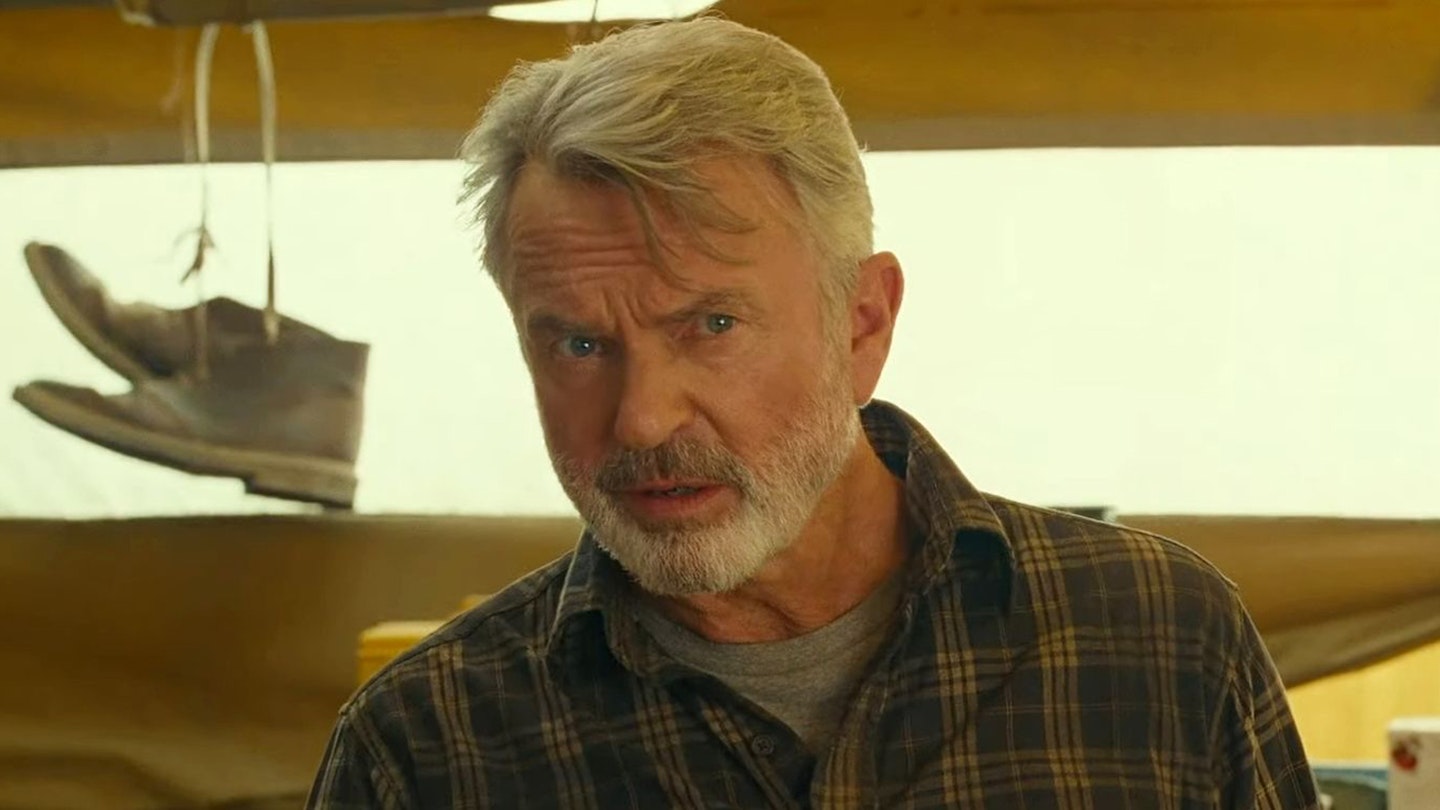
I never got to meet or interview Neill, but by all accounts, the warmth and confidence and mischievous wit of Alan Grant was present in him always. I’m grateful to have it immortalised in film form; I know I’ll be seeing him again soon when I fire up my annual Jurassic rewatches. My cinema hero. The dinosaur man.

