
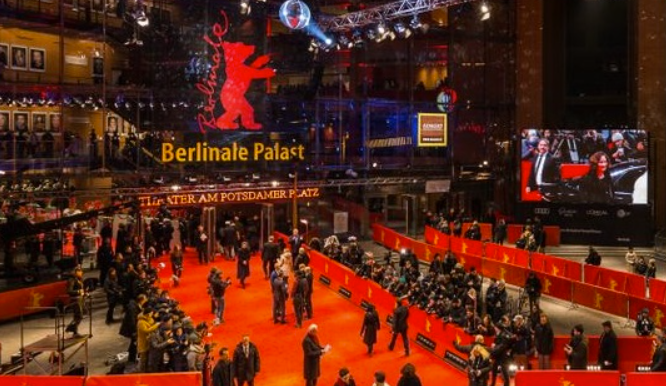
At the Berlin International Film Festival 75th edition, a conversation unfolding quietly away from red carpets cut to the core of one of global cinema
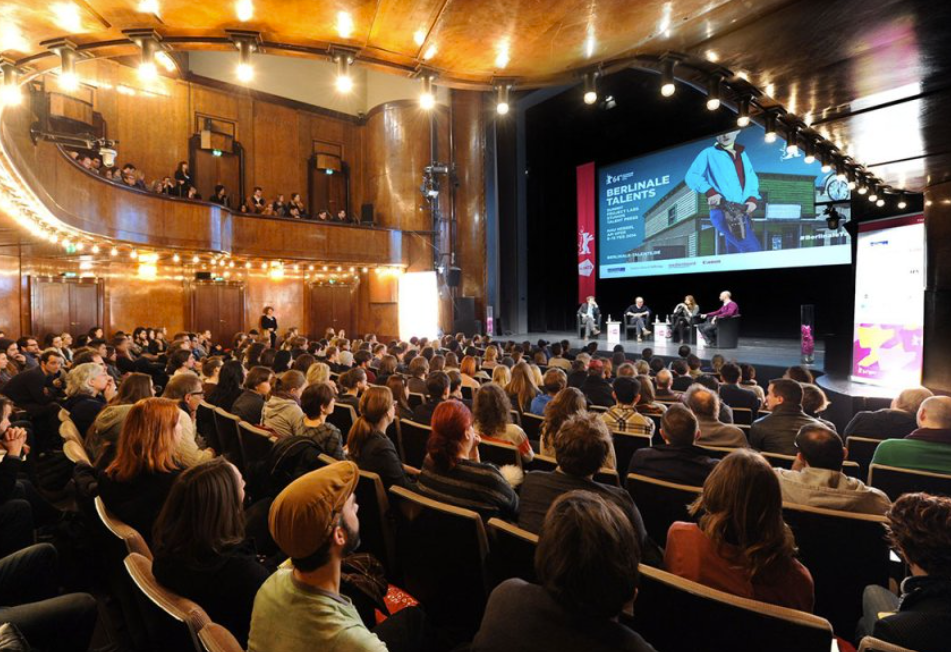
At the Berlin International Film Festival 75th edition, a conversation unfolding quietly away from red carpets cut to the core of one of global cinema’s most unresolved tensions: how films from the Arab world are selected, framed, circulated, and ultimately valued. During World Cinema Fund (WCF) Day, held in collaboration with Berlinale Talents, Arab producers, distributors, and sound professionals openly challenged the unspoken mechanics of festival programming and the structural barriers that continue to shape their work.
The panel, titled Regions in Focus: The Arab World, did not revolve around aesthetics or trends, but around power — who defines it, who benefits from it, and who is quietly constrained by it.
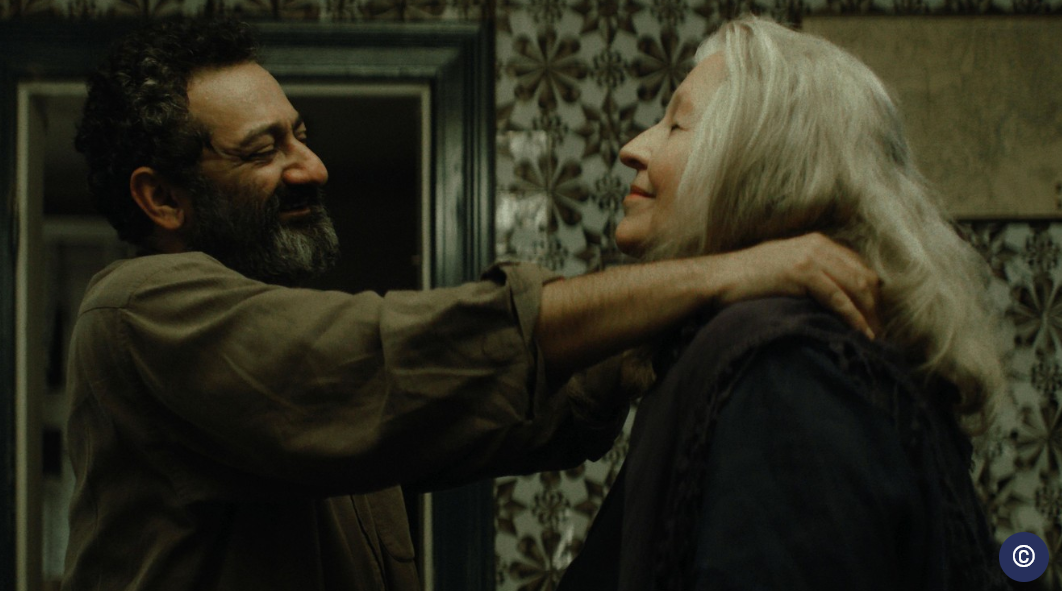
Georges Khabbaz and Hanna Schygulls in Yunan
The Unspoken Question of Quotas
The sharpest intervention came from Alaa Karkouti, CEO of MAD Solutions, who addressed what many Arab professionals have long sensed but rarely articulated so directly: the perception of an informal quota system governing festival selections.
Karkouti argued that while visibility for Arab films has undeniably improved at major festivals such as Cannes, Venice, and Berlin, this progress often comes with an implicit ceiling. Films are framed as regional representatives rather than individual works — a distinction that subtly reinforces otherness.
“When a film from our region enters competition, the first reaction is often surprise,” Karkouti noted. “You are asked how it feels to be there. No one asks a European producer the same question.”
His remarks referenced Yunan, directed by Ameer Fakher Eldin, a multinational co-production spanning Europe and the Arab world, and represented by MAD Solutions in the MENA region. The film’s presence in Berlinale Competition was celebrated — yet also implicitly treated as exceptional.
Distribution: Where Success Still Meets Resistance
If festival access remains conditional, theatrical distribution, Karkouti suggested, is often even more precarious. He pointed to the Sudanese breakthrough Goodbye Julia, directed by Mohamed Kordofani, as a revealing case study.
Despite its historic premiere at Cannes’ Un Certain Regard and subsequent international acclaim, convincing cinemas to screen the film proved an uphill battle. Theatrical exhibitors, especially in the Arab world, continue to operate under extreme risk aversion, relying heavily on Hollywood content.
“The theatrical business is 100 percent risk,” Karkouti explained. “Cinemas have very little patience for experimentation. Even when a film succeeds, it’s often rewarded with limited screenings rather than real confidence.”
That Goodbye Julia eventually broke box-office records in Gulf territories — and secured distribution in China only recently — underscores both the potential of Arab cinema and the inertia of the systems meant to support it.
Beyond Labels: Creative Labor Without Borders
Lebanese sound designer Rana Eid, whose credits include Berlinale Competition title Hot Milk, echoed the discomfort around categorization. For Eid, labels can become cages.
“I don’t want to be introduced as a Lebanese sound designer,” she said. “I want my work to be understood as sound — not as a quota, not as representation.”
Yet Eid also acknowledged the invisible burdens carried by Arab professionals: psychological pressure, unstable production environments, and the emotional toll of working from regions defined globally by conflict rather than creativity.
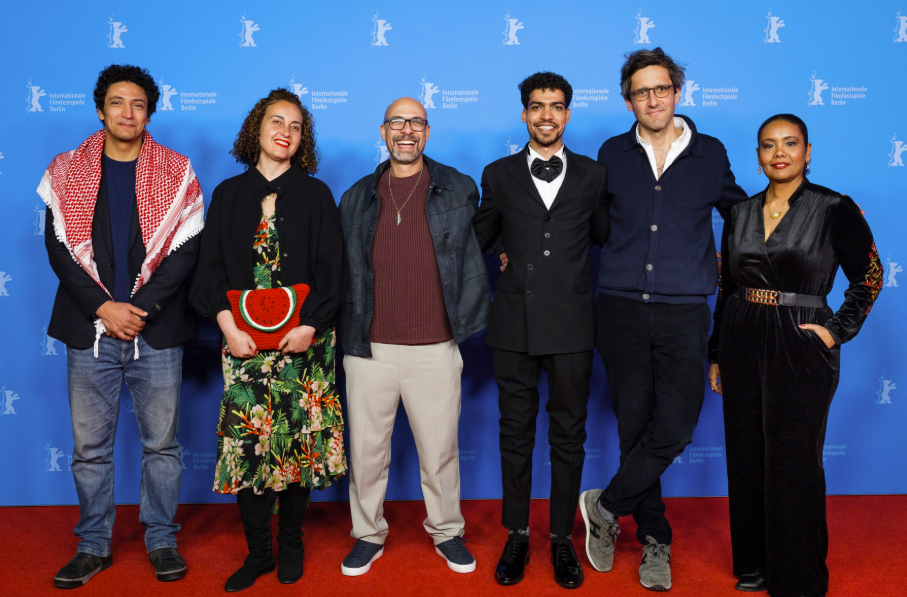
Mahmoud Lotfi, Kesmat El Sayed, Mohamed Rashad, Adham Shoukry, Etienne de Ricaud, Heba Othman
Between Europe and the Arab World: A Transactional Trap
Producer Kesmat El Sayed, now based in Berlin and involved in Berlinale Perspectives title The Settlement, spoke candidly about the complexities of cross-regional collaboration. Producing between Europe and the Arab world, she argued, demands ethical clarity — not just funding structures.
“If you don’t ask yourself why you want to work with Arab filmmakers, you risk turning the relationship into a transaction,” El Sayed warned. “And transactional cinema rarely leads to meaningful stories.”
Her intervention reframed co-production not as a logistical arrangement, but as a cultural responsibility.

WCF-Film Khartoum by Anas Saeed, Rawia Alhag, Ibrahim Snoopy, Timeea M Ahmed, Phil Cox
The World Cinema Fund at a Crossroads
Founded over two decades ago, the World Cinema Fund was conceived as a corrective force — aimed at democratizing access to global cinema and countering structural inequality. The strong presence of five WCF-supported films at Berlinale 2025, including The Message, Khartoum, The Settlement, Minimals in a Titanic World, and Ancestral Visions of the Future, served as tangible proof of its impact.
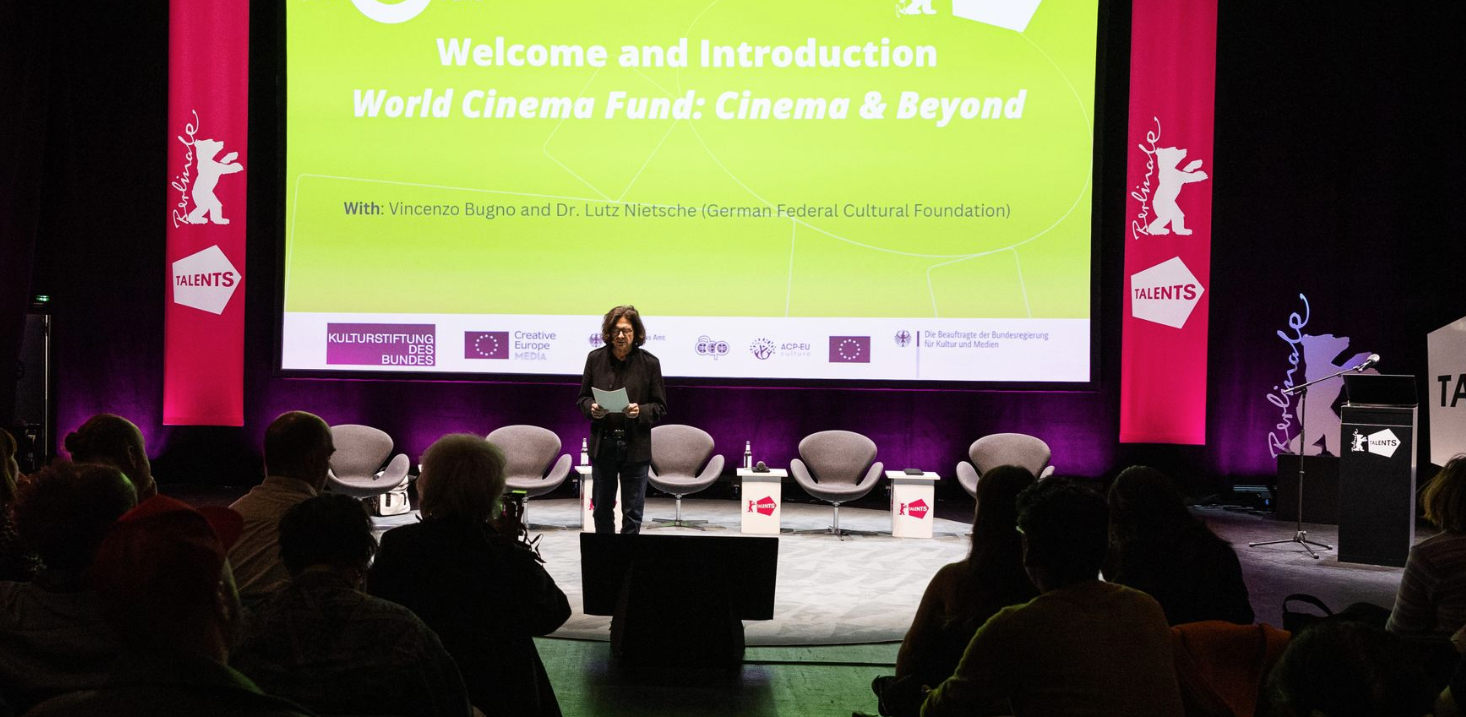
But as WCF Head Vincenzo Bugno emphasized, the next phase is not just about visibility — it is about autonomy, professionalization, and decolonization of cinematic value chains.
Panels throughout WCF Day explored resilience strategies, international funding gaps, and the urgent need to move beyond symbolic inclusion toward structural change.
A Cinema That Refuses Simplification
What emerged from the debate was not bitterness, but insistence: a refusal to accept simplified narratives about Arab cinema — whether celebratory or marginalizing. The filmmakers and producers gathered in Berlin did not ask for special treatment, but for equal terms: to be judged without surprise, funded without suspicion, and distributed without fear.
At Berlinale 75, the most urgent conversation about cinema was not about form or fashion, but about access — and about who gets to belong without explanation.
By Nabil Jasim Alani – Theworldscreen – berlinale75


COMMENTS