
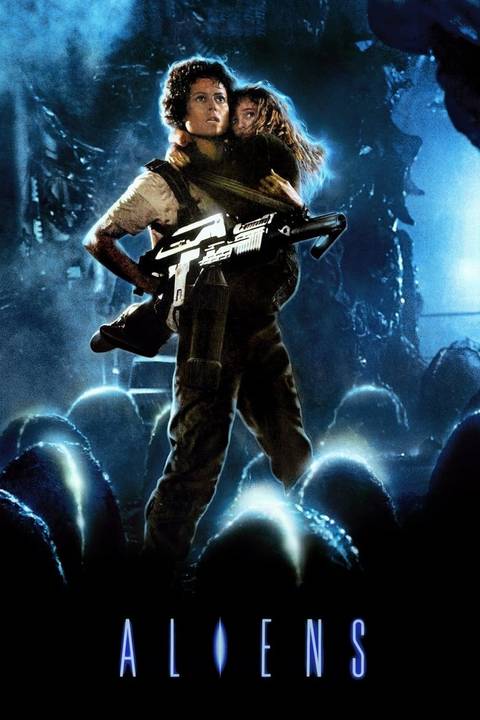
Following one of the most acclaimed science-fiction movies ever made would be intimidating for almost any filmmaker, but James Cameron didn’t try to r
Following one of the most acclaimed science-fiction movies ever made would be intimidating for almost any filmmaker, but James Cameron didn’t try to replicate what Ridley Scott had accomplished with Alien. Instead, the filmmaker behind The Terminator turned its sequel into something bigger, louder and more action-oriented.
The result was 1986’s Aliens, a scarce sequel that is routinely mentioned alongside — and sometimes even above — its predecessor. Four decades after its theatrical release, Aliens has found another streaming home, and it officially landed on Netflix in the United States on September 1 alongside Scott’s original Alien, allowing subscribers to watch the first two chapters of Ellen Ripley’s story back-to-back.
Aliens picks up decades after the events aboard the Nostromo, when Ripley is finally rescued from hypersleep and returns to civilization. After learning that humans have established a colony on LV-426, the same world where her crew first encountered the Xenomorph, Ripley reluctantly agrees to accompany a squad of Colonial Marines there after contact with the settlement is suddenly lost.
The cast is led by Sigourney Weaver (Avatar) as Ellen Ripley, alongside Michael Biehn (The Terminator) as Corporal Dwayne Hicks, Carrie Henn as Rebecca “Newt” Jorden, Paul Reiser (Stranger Things) as Carter Burke, Lance Henriksen (The Terminator) as Bishop, Bill Paxton (Twister) as Private William Hudson, Jenette Goldstein (Terminator 2: Judgment Day) as Private Jenette Vasquez, and William Hope (Captain America: The First Avenger) as Lieutenant Gorman.
Collider Exclusive · Sci-Fi Survival Quiz
Which Sci-Fi World Would You Survive?
The Matrix · Mad Max · Blade Runner · Dune · Star Wars
Five universes. Five completely different ways the future went wrong — or sideways, or up in flames. Only one of them is the world your instincts were built for. Eight questions will figure out which dystopia, galaxy, or desert wasteland you’d actually make it out of alive.
The Matrix
Mad Max
Blade Runner
Dune
Star Wars
TEST YOUR SURVIVAL →
01
You sense something is deeply wrong with the world around you. What do you do?
The first instinct is often the truest one.
APull on every thread until I understand the system — then figure out how to break it.
BStop asking questions and start stockpiling — food, fuel, weapons. Questions don’t keep you alive.
CKeep my head down, observe carefully, and trust no one until I know who’s pulling the strings.
DStudy the patterns. Every system has a rhythm — learn it, and you learn how to survive it.
EFind the people fighting back and join them. You can’t fix a broken galaxy alone.
NEXT QUESTION →
02
In a world of scarcity, what resource do you guard most fiercely?
What we protect reveals what we believe survival actually requires.
AKnowledge. If you understand the system, you don’t need resources — you can generate them.
BFuel. Everything else — movement, power, escape — runs on it.
CTrust. In a world of fakes and informants, a truly reliable ally is rarer than any commodity.
DWater. And after water, information — the two things empires are truly built on.
EShips and credits. The galaxy is huge — you survive it by being able to move through it freely.
NEXT QUESTION →
03
What kind of threat keeps you up at night?
Fear is useful data — if you’re sincere about what you’re actually afraid of.
AThat reality itself is a lie — that everything I experience has been constructed to keep me compliant.
BA raid. No warning, no mercy — just the roar of engines and then nothing left.
CBeing identified. Once someone with power decides you’re a problem, you’re already out of time.
DBeing outmanoeuvred — losing a political game I didn’t even know I was playing.
EThe Empire tightening its grip until there’s nowhere left to run.
NEXT QUESTION →
04
How do you deal with authority you don’t trust?
Every dystopia has a power structure. Your approach to it determines everything.
ASubvert it from the inside — learn its rules well enough to weaponise them against it.
BIgnore it and stay out of its reach. The further from any power structure, the better.
CAppear to comply while doing exactly what I need to do. Visibility is the enemy.
DManoeuvre within it carefully. You can’t beat a system you refuse to understand.
EResist openly when I have to. Some things are worth the risk of being seen.
NEXT QUESTION →
05
Which environment could you actually endure long-term?
Survival isn’t just tactical — it’s physical, psychological, and very much about where you are.
AUnderground bunkers and server rooms — tight, artificial, but with access to everything that matters.
BOpen wasteland — brutal sun, no shelter, constant movement. At least the threat is sincere.
CA dense, rain-soaked city where you can disappear into the crowd and nobody asks questions.
DMerciless desert — extreme heat, no water, and something enormous living beneath the sand.
EThe fringe — backwater planets and busy spaceports where the Empire’s attention rarely reaches.
NEXT QUESTION →
06
Who do you want in your corner when things fall apart?
The company you keep is the clearest signal of who you actually are.
AA tight crew of believers who’ve seen behind the curtain and have nothing left to lose.
BOne or two people I’d trust with my life. Any more than that and someone talks.
CNobody, ideally. Alliances are liabilities. I work alone unless I have no choice.
DA community bound by shared hardship and mutual survival — people who need each other to last.
EA ragtag team with wildly different skills and total commitment when it counts.
NEXT QUESTION →
07
Where do you draw the line — if you draw one at all?
Every survivor eventually faces a moment that tests what they’re actually made of.
AI won’t harm the innocent — even the ones who’d report me without hesitation.
BI do what I have to to protect the people I’ve chosen. Everything else is negotiable.
CThe line shifts depending on who’s asking and what’s at stake.
DI draw a long-term line — nothing that compromises my people’s future, even if it’d support now.
ESome lines, once crossed, can’t be uncrossed. I know which ones they are.
NEXT QUESTION →
08
What would actually make survival worth it?
Staying alive is one thing. Having a reason to is another.
AWaking others up — dismantling the illusion so no one else has to live inside it.
BFinding somewhere — or someone — worth protecting. A reason to keep moving.
CAnswers. Understanding what I am, what any of this means, before time runs out.
DLegacy — shaping the future in a way that outlasts me by generations.
EFreedom — for myself, for others, for every world still living under someone else’s boot.
REVEAL MY WORLD →
Your Fate Has Been Calculated
You’d Survive In…
Your answers point to the world your instincts were built for. This is the universe your temperament, your survival instincts, and your particular brand of stubbornness were made for.
The Matrix
You took the red pill a long time ago — probably before anyone offered it to you. You’re a systems thinker who can’t support but notice the seams in things.
- You’re drawn to understanding how the system works before figuring out how to break it.
- You’d find the Resistance, or it would find you — your instinct for spotting constructed realities is the machines’ worst nightmare.
- You function best when you have access to information and the freedom to act on it.
- The Matrix built an airtight prison. You’d be the one probing the walls for the door.
Mad Max
The wasteland doesn’t reward the clever or the well-connected — it rewards those who are tough to kill and harder to break. That’s you.
- You don’t need comfort, community, or a cause larger than the next horizon.
- You need a vehicle, a clear threat, and enough fuel to outrun it — and you’re good at all three.
- You are unsentimental enough to survive that world, and decent enough — just barely — to be something more than another raider.
- In the wasteland, that distinction is everything.
Blade Runner
You’d survive here because you know how to exist in moral grey areas without losing yourself completely.
- You read people accurately, keep your circle tiny, and ask the questions others prefer not to answer.
- In a city where humanity is a legal designation rather than a feeling, you hold onto something that keeps you functional.
- You’re not a hero. But you’re not lost, either.
- In Blade Runner’s world, that distinction is everything.
Dune
Arrakis is the most hostile environment in the known universe — and you are precisely the kind of person it rewards.
- Patience, discipline, and political awareness are your core strengths — and on Arrakis, they’re survival tools.
- You understand that the long game matters more than any single victory.
- Others come to Dune and are consumed by it. You’d learn its logic and earn its respect.
- In time, you wouldn’t just survive Arrakis — you’d begin to reshape it.
Star Wars
The galaxy far, far away is expansive, clamorous, and in a constant state of violent political upheaval — and you wouldn’t have it any other way.
- You find meaning in being part of something larger than yourself — a cause, a crew, a rebellion.
- You’d gravitate toward the Rebellion, or the fringes, or whatever pocket of the galaxy still believes the Empire’s grip can be broken.
- You fight — not because you have to, but because standing aside isn’t something you’re capable of.
- In Star Wars, that willingness is what makes all the difference.
↻ RETAKE THE QUIZ
‘Aliens’ Became One of the Greatest Sequels Ever Made
As we all know, Cameron inherited Ridley Scott’s Alien and turned its sequel into a much bigger, louder and bombastic kind of movie without just trying to be a retread of what came before it. Speaking to Collider, Biehn explained that he believes Cameron achieved something monumental with Aliens.
“He did two sequels. He did T2, and he did Aliens. People will argue until I’m gone, well gone and in the grave, about which is a better movie, Alien or Aliens, and Terminator or Terminator 2. But I can tell you one thing: it’s very hard to follow Jim Cameron. [David] Fincher had to do it with Aliens, and then somebody else had to do it for the third Terminator, and it’s just not the same to have expectations that somebody else is going to write something, and they’re going to direct it. People talk about, ‘Well, this guy didn’t play a very good Kyle Reese.’ He didn’t have Jim Cameron writing Kyle Reese. He didn’t have Jim Cameron creating it. That actor who played Kyle Reese didn’t have the words that I got to say.”
Aliens is streaming on Netflix, fuboTV, Philo and YouTube TV.
Release Date
July 18, 1986
Runtime
137 minutes
Director
James Cameron
Writers
James Cameron
Producers
Gale Anne Hurd

